Freelance income can be thrilling and terrifying in the same week. One month you feel unstoppable. The next month you are doing mental gymnastics at the grocery store checkout.
I have been there. I was not a freelancer when I paid off $45,000 of debt, but I did live through years of income that felt unpredictable because I was constantly playing catch-up with past choices. The anxiety is the same: you cannot relax, because you do not trust next month.
The good news is that budgeting with irregular income is absolutely doable. You just need a system that is built for variability, not a rigid plan that assumes the same paycheck lands every two weeks.
The mindset shift that makes this work
When your income fluctuates, the goal is not to predict perfectly. The goal is to create a plan that stays stable even when the numbers move.
- You budget from a baseline (a conservative income number you can count on).
- You prioritize cash flow (timing matters as much as totals).
- You build a buffer (so slow months feel boring, not scary).
- You give extra income a job (so big months do not quietly disappear).
Step 1: Find your baseline income
Pick a baseline income number that you can reasonably hit even in a slower season. This is the foundation of your budget.
How to calculate it
- Look back at the last 6 to 12 months of income minus business expenses (your monthly profit).
- Write down your lowest month, your average month, and your median month (the middle number when months are sorted).
- Choose a baseline that is conservative but realistic. For most people, the median or a little below the median is a great start.
Quick example: If your monthly profit ranged from $2,400 to $6,200 and your median month is $3,500, you might set your baseline at $3,200.
This is not you being pessimistic. This is you building a budget that will not collapse the first time a client pays late.
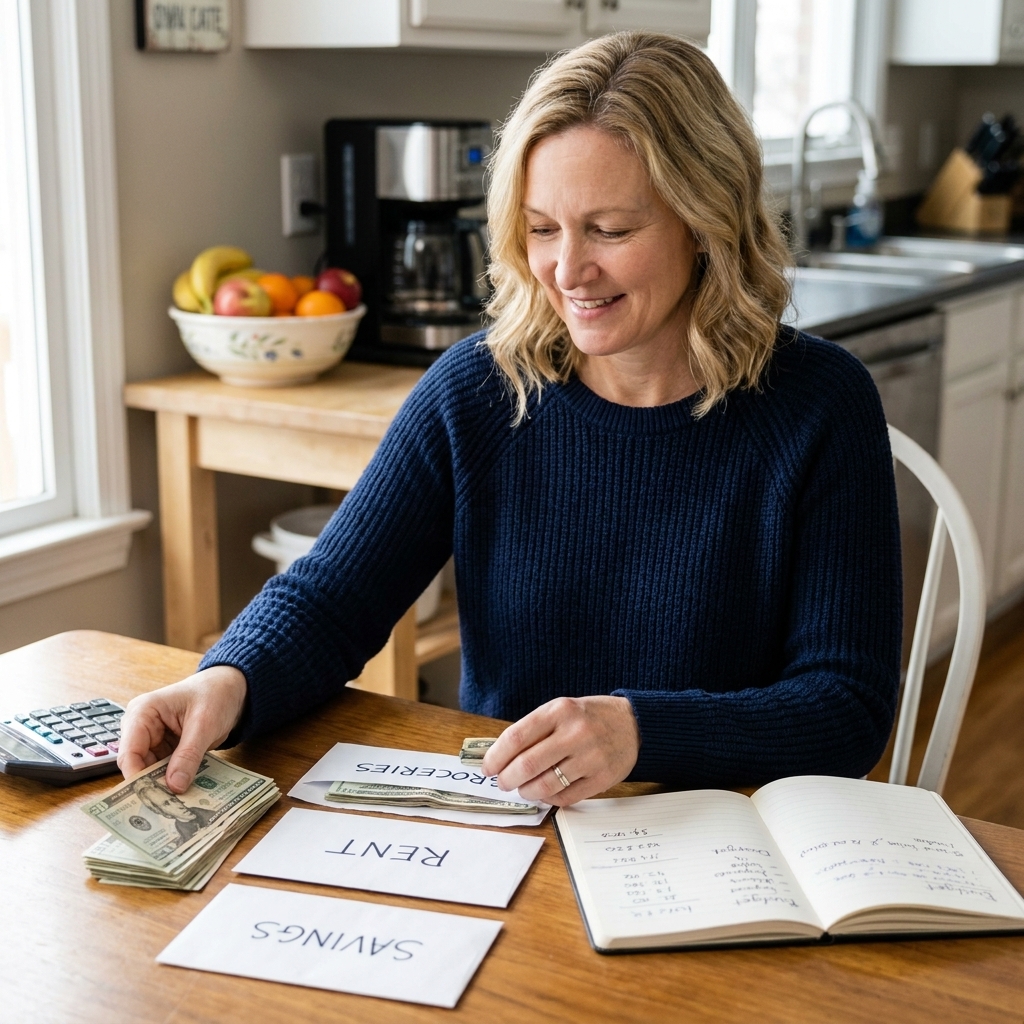
Step 2: Split your money into buckets
If you do nothing else from this article, do this. Variable income gets dramatically easier when you stop storing every dollar in one big pile.
One important note before we start: build your owner pay off profit (income after business expenses), not off gross receipts. Otherwise your budget is going to feel “fine” right up until software renewals, contractor invoices, and taxes show up at the same time.
The four buckets I recommend
- Income holding: where payments land (your business checking or a separate “incoming” account).
- Taxes: a dedicated savings account for federal, state, and local taxes.
- Owner pay: your personal checking, where you pay bills and live life.
- Buffer savings: your income-stability fund (more on this in Step 4).
If you are a brand-new freelancer and this feels like a lot, start simple: keep one account for business, one for personal, and one savings account for taxes. Add the buffer bucket next.

Step 3: Build a baseline budget
Now we budget as if you only earn your baseline number each month.
First, list your must-pay expenses
- Housing (rent or mortgage)
- Utilities
- Insurance
- Transportation (gas, transit, car payment)
- Minimum debt payments
- Basic groceries
- Childcare essentials
Then add your must-save categories
- Taxes (set aside every time you get paid)
- Sinking funds (car repairs, annual renewals, gifts, travel, medical costs)
- Healthcare costs (premiums, deductibles, copays, prescriptions if they apply to you)
- Emergency fund (separate from your freelance buffer)
Finally, add nice-to-have spending
This is where guilt sneaks in for a lot of freelancers because slow months can feel like you do not deserve joy. You do. We just set it up intentionally.
- Restaurants and coffee runs
- Streaming and subscriptions
- Fun money
- Non-urgent shopping
My rule: If your baseline budget cannot cover your must-pay items and your must-save items, you are usually dealing with a baseline and spending mismatch, and sometimes also an income problem. The fix is often some combination of raising rates, adding steadier retainers, trimming categories, or temporarily cutting back until the buffer is built.
Step 4: Build an income buffer
This is the game-changer: your buffer is a pool of money that lets you pay yourself consistently even when client payments are inconsistent.
What to aim for
- Starter buffer: $1,000 to $2,000 (enough to absorb small timing issues)
- Solid buffer: 1 month of baseline living expenses
- Stress-resistant buffer: 2 to 3 months of baseline living expenses
This is separate from your emergency fund. Your emergency fund is for true emergencies. Your buffer is for normal freelance life, like a slow month or a late invoice.
How to build it without feeling deprived
- Send a percentage of every payment to the buffer until it is fully funded.
- In big months, prioritize filling the buffer before upgrading your lifestyle.
- Use windfalls intentionally (a big project, a tax refund, a bonus).
Step 5: Pay yourself a steady paycheck
Once you have even a small buffer, you can start paying yourself consistently. This is how you create a normal-person budget with not-normal-person income.
Two simple options
- Monthly pay: Transfer your baseline amount from your income holding account to your personal account once a month.
- Biweekly pay: Transfer half of your baseline amount every two weeks.
Consistency is the point. If you pay yourself randomly, you will budget randomly.
Where the extra goes: Any money above your baseline can go to taxes (if needed), the buffer (until full), sinking funds, debt payoff, retirement, and then fun upgrades.
Step 6: Use a priority ladder for extra income
Big months are wonderful. Big months are also where budgets go to die because it feels like you can finally breathe.
I want you to breathe. I just want you to do it in a way that does not boomerang next month.
My favorite priority order
- Taxes: top off your tax bucket immediately.
- Catch up bills: anything overdue or upcoming within 30 days.
- Buffer: fill it to your target.
- High-impact sinking funds: car repairs, annual insurance premiums, medical.
- Debt payoff: especially high-interest debt.
- Retirement/investing: automate if you can.
- Intentional fun: guilt-free, planned, and enjoyed.
Notice “intentional fun” is still on the list. The goal is not to be a budgeting robot. The goal is to stop your future self from panicking.
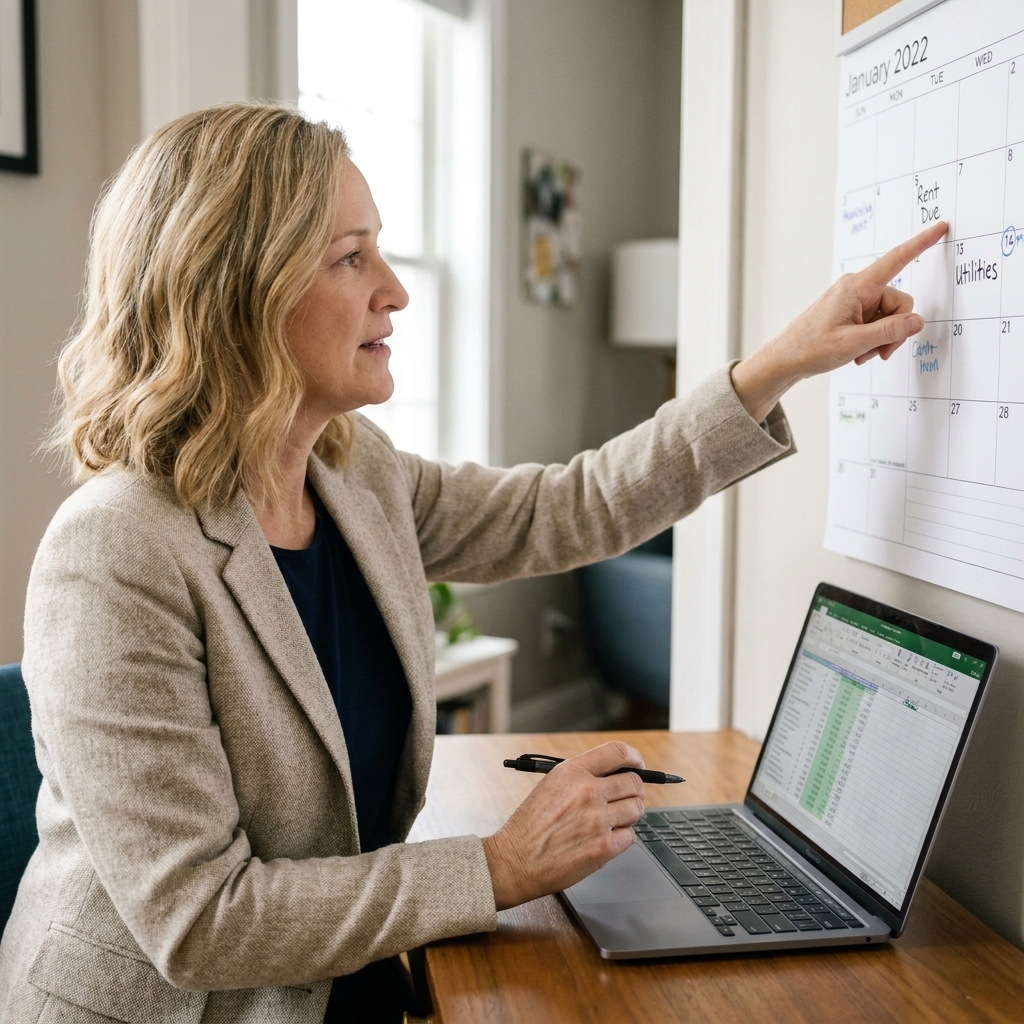
Step 7: Use a budget calendar
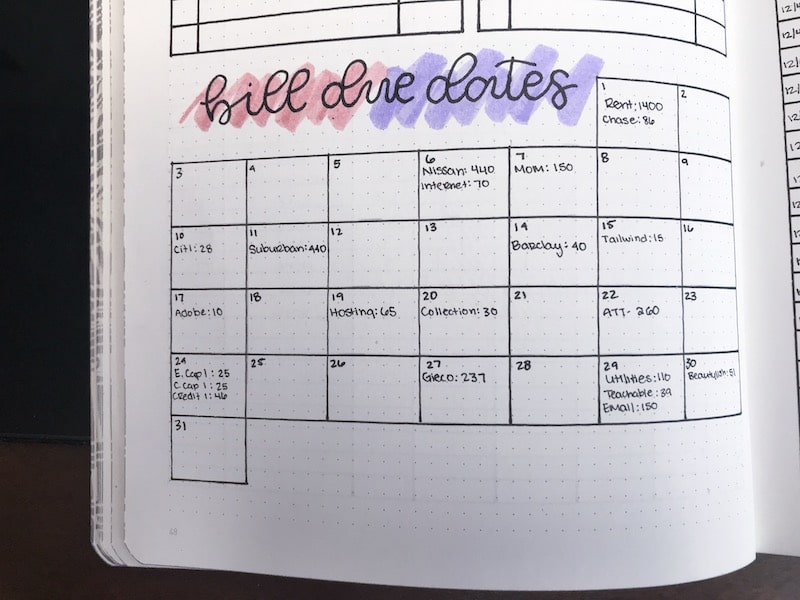
When income is irregular, timing is everything. A bill due on the 2nd is a very different problem than a bill due on the 28th.
Do this once a month
- List your bill due dates in order.
- Mark expected pay dates or typical invoice deposit timing.
- Decide which paycheck covers which bills.
If your income arrives unpredictably, assume it comes later rather than earlier. It is a small mental trick that prevents accidental overdrafts and last-minute credit card swipes.
Step 8: Plan for taxes
Taxes are the most common reason new freelancers feel like they are failing. You are not failing. You just need a system.
Simple tax habits that save your sanity
- Set aside a percentage of every payment into your tax account as soon as it hits. In the U.S., many freelancers use 20 to 30 percent as a starting point, but your safest number depends on your income, deductions, filing status, and state. If you have last year’s return, your effective tax rate can be a helpful reality check.
- Track business expenses weekly so you are not reconstructing your life at tax time.
- Plan for estimated taxes. In the U.S., if you expect to owe about $1,000 or more at filing, you will typically want to make quarterly estimated payments to avoid penalties. Outside the U.S., check your local rules.
If you are unsure what percentage to save, ask a tax professional once. One hour of guidance can save you years of stress.
Step 9: Get ahead of late payments
Late payments are not just annoying. They are a cash flow problem. A few small changes can reduce the chaos dramatically.
Simple safeguards
- Use deposits: even 25 to 50 percent upfront can smooth your month.
- Shorten terms when you can: net 7 or net 14 often beats net 30 for small businesses.
- Put the due date in writing: not just “net 14,” but the actual calendar date.
- Automate reminders: a reminder 3 days before due, on the due date, and 3 days after keeps you from having to “remember to be awkward.”
- Consider late fees if appropriate for your industry and client type, and only if you are willing to enforce them.
Most importantly, do not build your personal budget on money that has not landed yet. That is what the buffer is for.
Step 10: Make a slow-month plan
Slow months feel catastrophic when you have not decided ahead of time what to do. So let’s decide now, calmly, while everything is fine.
Create a three-level response plan
- Level 1 (mild dip): Pause extra debt payments, reduce fun spending, cook at home more.
- Level 2 (noticeable dip): Use the buffer for your paycheck, pause non-essential subscriptions, delay discretionary purchases.
- Level 3 (serious dip): Negotiate due dates, call lenders early, take temporary work, sell unused items, use a pre-written reactivation email to past clients.
Having a plan does not invite financial trouble. It prevents panic decisions.
Step 11: Do a weekly money check
You do not need to obsess over your budget daily. You do need a simple weekly check-in so little problems do not become big ones.
Most weeks, this takes 15 minutes. Some weeks, like when you are sending a batch of invoices or reconciling accounts, it might take a little longer. That is normal.
My weekly freelancer money check
- What payments came in?
- What invoices are outstanding, and when will I follow up?
- Did I move my tax percentage immediately?
- Do I have enough in the buffer to cover my next payday to myself?
- Are any bills due before the next expected income?
This is boring on purpose. Boring finances are peaceful finances.
Common mistakes with irregular income
- Budgeting based on your best month: it works until it does not, and then you feel like you failed.
- Forgetting business expenses: software, equipment, mileage, contractors, fees, and education add up.
- Using credit to smooth cash flow: it can quietly turn a slow month into long-term debt.
- Not separating tax money: if taxes sit in your spending account, they will get spent.
- Raising lifestyle spending too fast: upgrades are fine, but let your buffer lead the way.
A simple example budget
Let’s say your baseline monthly profit is $3,200.
- Must-pay bills: $2,100
- Groceries and basics: $450
- Transportation: $250
- Sinking funds: $200
- Buffer savings: $100
- Fun money: $100
Total: $3,200.
If you earn $4,800 this month, that extra $1,600 gets assigned using your priority ladder: taxes top-off, buffer fill, debt payoff, and then a planned treat that you actually enjoy, not a stress-spend that you barely remember.
FAQ
Should I budget monthly or per paycheck as a freelancer?
Monthly is simpler for planning bills, but only if you are paying yourself consistently. If income timing is chaotic, use a buffer plus a steady owner paycheck. That gives you the best of both worlds.
What if my income is so irregular I cannot find a baseline?
Start with a very conservative baseline and focus on building a starter buffer first. Then work on stabilizing the business side: retainers, recurring clients, a minimum monthly outreach goal, and clearer payment terms.
How do I handle late client payments?
First, use better terms going forward: clear due dates, deposits, late fees (if appropriate), and automated reminders. Second, do not build your personal budget on money that has not landed yet. Your buffer exists to protect you while you fix the business process.
Do I need a separate business bank account?
Legally, it depends on your business structure and location. Practically, it is one of the easiest ways to reduce money stress and simplify taxes. Even a separate checking account can make a huge difference.
A final pep talk
If your income is irregular, you are not “bad with money.” You are operating in a system that requires a different strategy.
Start with a baseline, build the buffer, and pay yourself consistently. Once those three pieces are in place, budgeting stops feeling like constant damage control and starts feeling like actual freedom.
If you want, tell me what kind of work you do and whether your biggest struggle is slow months, late payments, or overspending in big months. I can help you choose the best starting step.