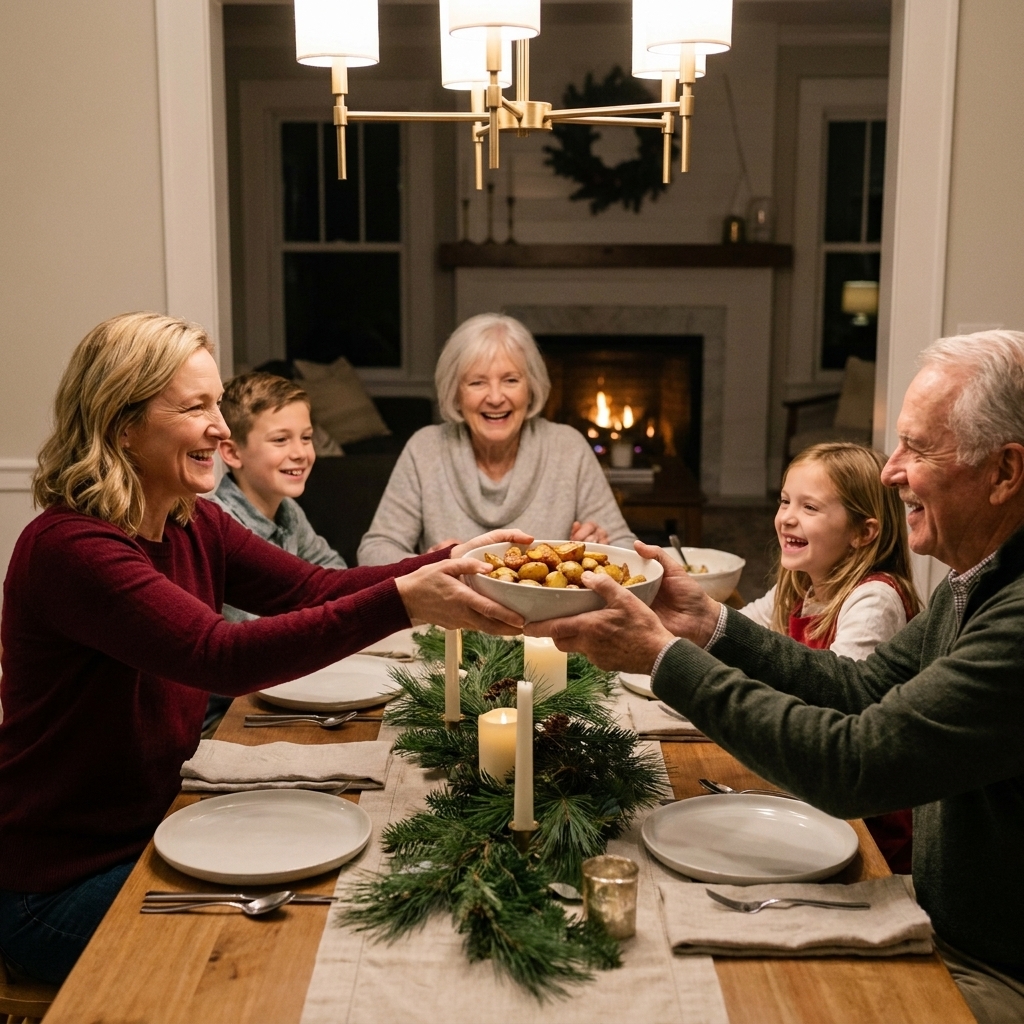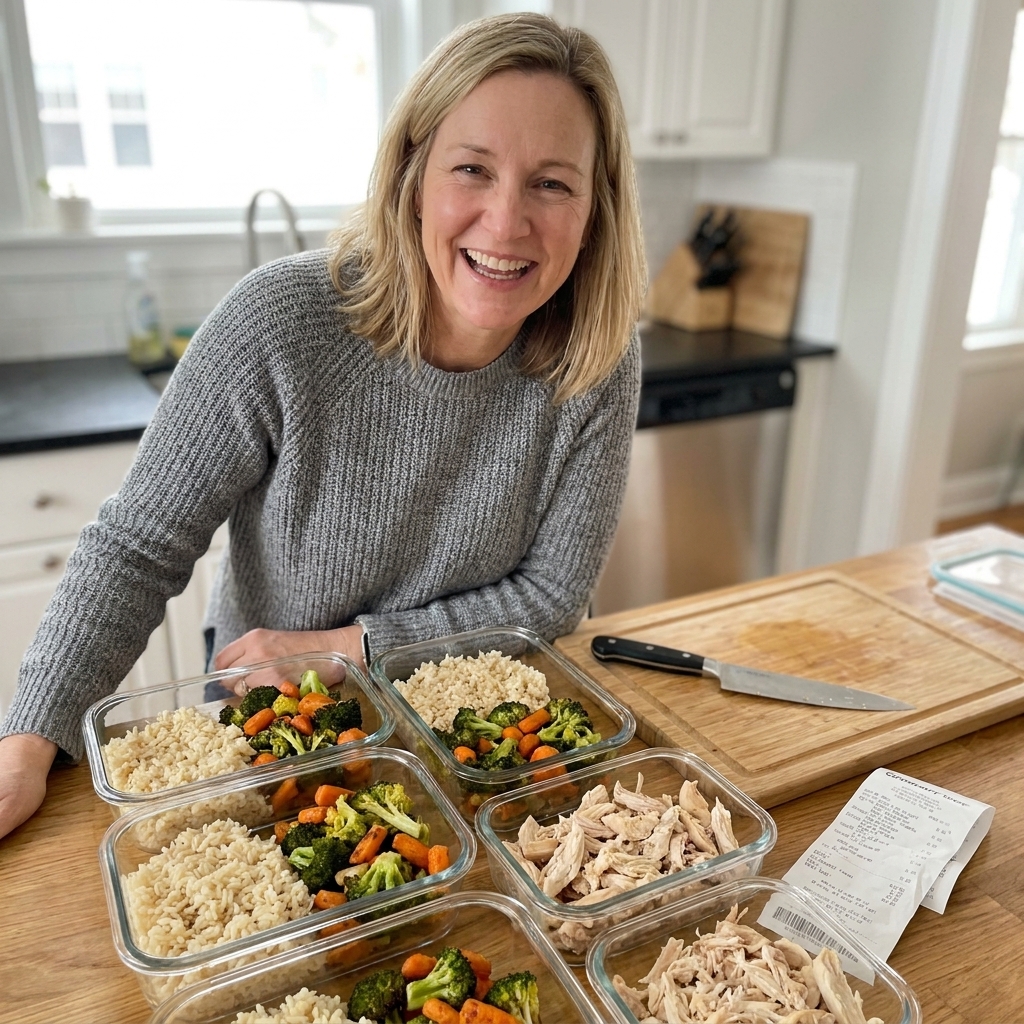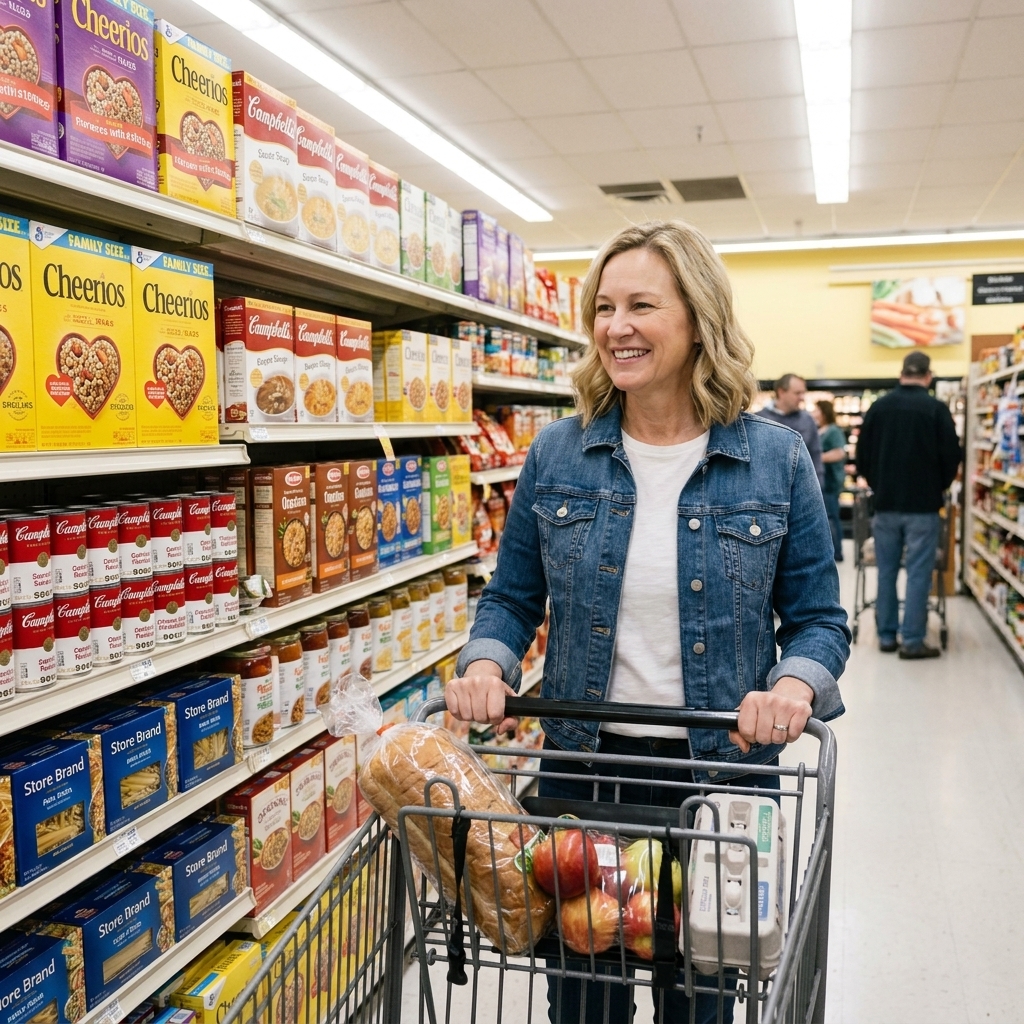
I used to think hosting a holiday dinner required a grocery cart overflowing with “just in case” extras, fancy centerpiece moments, and at least one panic run for whipped cream. Translation: I would overspend, stress-spend, and then feel guilty-spend. If that sounds familiar, I want you to know something: a festive holiday table is built on warmth and intention, not a receipt total.
This is my step-by-step system for hosting a holiday dinner that feels abundant, tastes amazing, and still respects your monthly grocery budget.
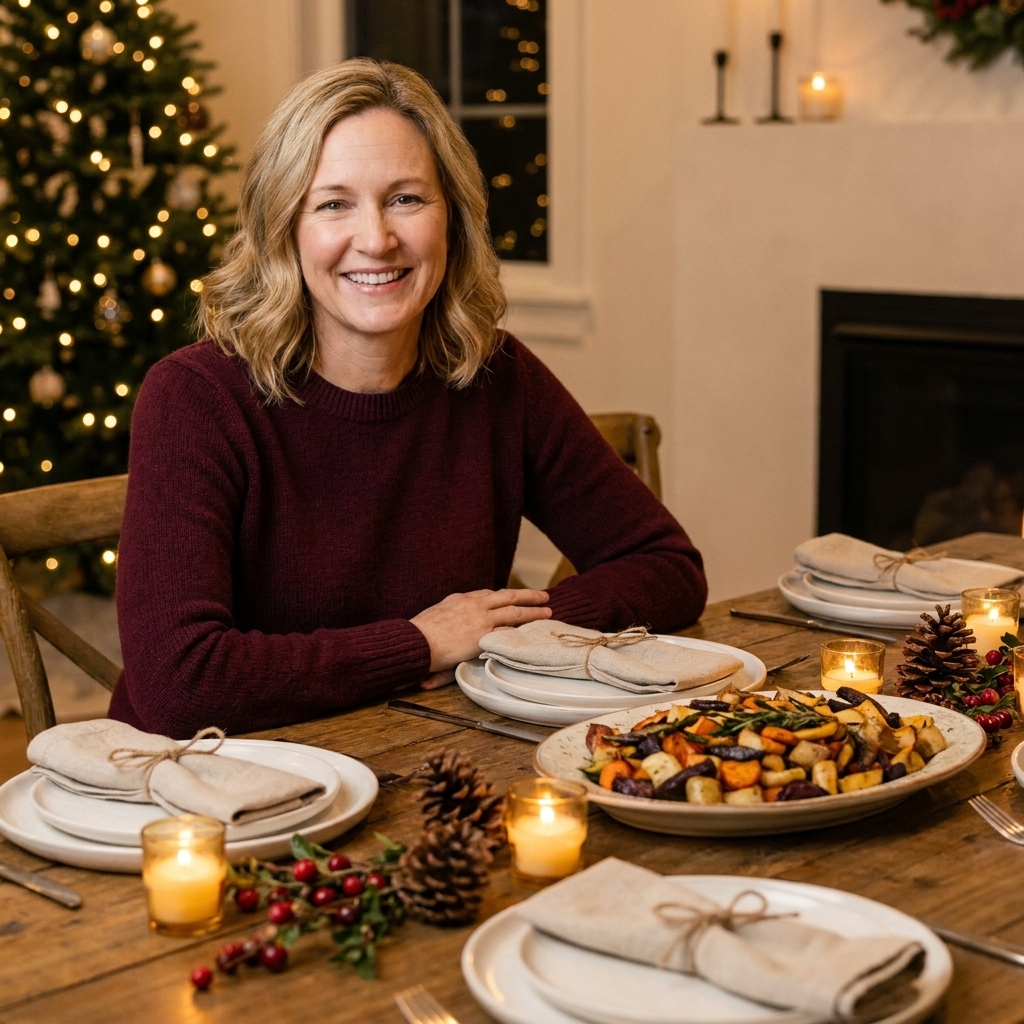
Step 1: Set a realistic dinner budget
Before you plan a single dish, decide what you can spend without borrowing from next week’s groceries. I like to use a simple “total dinner cap” and then divide it into mini caps.
- Total budget: the maximum you are willing to spend, all-in.
- Food budget: about 75% to 85% of the total.
- Non-food budget: 15% to 25% for paper goods, ice, a few candles, or ingredients you forgot.
Quick example: If your cap is $150, plan roughly $120 for food and $30 for non-food.
My frugal hosting rule: If you are already stocked on basics (salt, pepper, oil, flour), do not “count” them again. If you have to buy it specifically for the dinner (like a specialty spice you do not use), it goes in the budget. And if you are not stocked on basics yet, that is okay. Add only what you truly need and keep the rest of the menu extra simple.
Quick reality check
Ask yourself: “If I spend this amount, will I still be able to do my normal grocery trip next week?” If the answer is no, scale the menu now. Your future self will thank you.
Step 2: Pick a cost-friendly menu style
The biggest budget buster is an unfocused menu: too many proteins, too many sides, too many “cute” extras. A holiday meal feels generous when it’s cohesive, not when it’s endless.
Three frugal menu styles
- Single centerpiece: One main dish, 3 to 4 sides, 1 dessert.
- Two centerpieces: One main protein plus one vegetarian main, 3 sides, 1 dessert.
- Sides-forward: A smaller, affordable main and extra attention on hearty sides (great for big families).
Frugal main dish ideas
- Roast chicken (two smaller birds): often cheaper than one huge roast depending on sales and price per pound, and they cook faster.
- Ham: especially if you can find a sale and plan for leftovers (sandwiches, soup, fried rice).
- Turkey breast instead of a whole turkey: can mean less waste and less cooking stress for smaller groups, but it is sometimes pricier per pound and yields fewer leftovers.
- Vegetarian centerpiece: baked ziti, stuffed shells, lentil shepherd’s pie, or a big sheet-pan of roasted vegetables over polenta.
My confession: The year I stopped trying to serve “everything,” I finally enjoyed hosting. Nobody missed the fourth side dish. Everyone noticed that I was relaxed.
Step 3: Build around budget anchors
Budget anchors are inexpensive ingredients that make a table feel full. They stretch expensive items, and they are usually the dishes people reach for seconds.
My favorite budget anchors
- Potatoes: mashed, roasted, scalloped, or a baked potato bar.
- Rice and grains: brown rice, herbed rice pilaf, barley, or couscous.
- A little wild rice blended in: if you love that holiday flavor, mixing a small amount into brown rice can feel fancy without the price tag.
- Pasta: mac and cheese, baked pasta, or a simple buttered noodle side for kids.
- Beans and lentils: hearty soups, salads, and vegetarian mains.
- In-season vegetables: buy what’s abundant where you live and roast it well.
A table with one protein, one gravy or sauce, and two strong “anchor” sides feels like a feast. Add one bright item (salad, citrusy veggie, cranberry something) and it’s balanced.
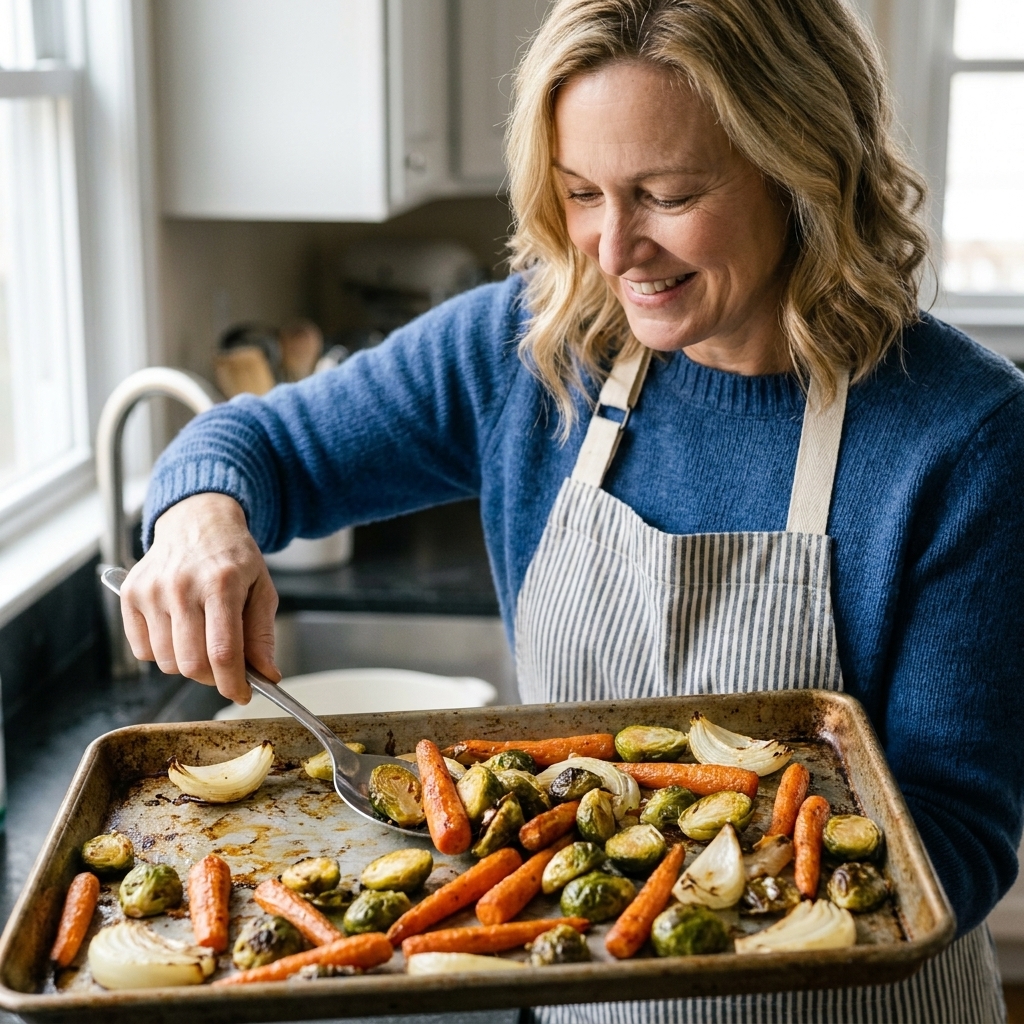
Step 4: Shop backwards
This is the trick that saved me the most money: start with what you already have, then build the menu around it.
Do a 10-minute pantry sweep
- Check for: rice, pasta, canned broth, frozen veggies, butter, flour, sugar, spices.
- Look for “almost there” ingredients: half bags of cranberries, frozen rolls, leftover nuts.
- Write it down so you do not buy doubles.
Make a menu map
List every dish, then list the ingredients under that dish. You will immediately see overlap.
- If three recipes call for celery, that is not “three purchases.” That is one bunch used smartly.
- If one recipe requires five specialty items, that recipe might not make the cut.
My frugal rule: The more specialty ingredients a recipe needs, the more expensive it tends to become. Choose recipes with shared ingredients to keep your cart simple.
Step 5: Use sales wisely
Sales are helpful, but they are not a scavenger hunt. The goal is to choose a few flexible dishes that can adapt to what is discounted.
What to buy on sale
- Protein: grab it when you see a strong sale and freeze it.
- Butter: freezes beautifully and holiday baking eats it fast.
- Broth and canned goods: stock up when it is discounted.
- Frozen vegetables: great backup when fresh produce prices spike.
Avoid the sale trap
If it is not on your menu map, a sale can still be expensive. I used to buy random “deals” and then scramble to use them. Now I only buy sale items that fit the plan.
Step 6: Make potluck feel easy
If you are feeding a crowd, the cheapest dinner is the one you do not fund alone. The key is to be clear and kind, not vague. People generally want to contribute. They just do not want to guess.
A no-stress potluck text
“I’m covering the main dish and a couple of sides. If you’d like to bring something, that would help a lot. Could you bring one of these: a salad, a veggie side, a dessert, or drinks? Tell me what sounds easy for you so we don’t duplicate.”
Assign categories, not recipes
- 1 to 2 desserts
- 1 salad or fruit plate
- 2 vegetable sides
- Drinks and ice
- Rolls or bread
This keeps your table balanced without you micromanaging anyone’s family-famous sweet potato situation.
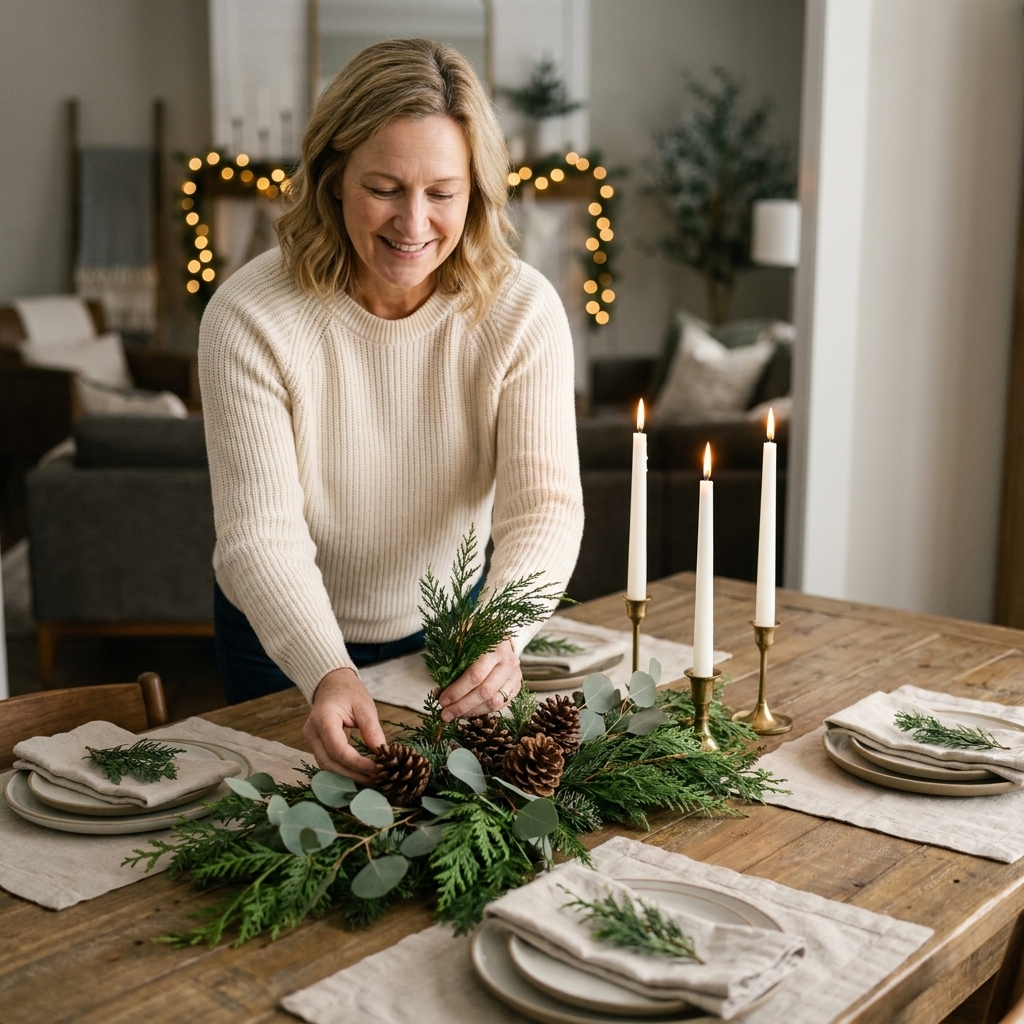
Step 7: Decor on a tiny budget
Frugal decor is about repetition and warm light. You do not need themed everything. You need a few simple elements used consistently.
My best “use what you have” ideas
- Candles: even inexpensive tea lights feel magical in clusters. Use a sturdy plate or tray you already own.
- Grocery bag luminaries (outdoors): cozy and budget-friendly, but use LED tea lights and follow local rules and basic fire safety.
- Nature centerpiece: a bowl of oranges, pinecones, or greenery clipped from your yard (only where it is allowed).
- Fabric napkins or mismatched cloth: thrifted cloth napkins look instantly elevated.
- One color story: pick two colors and stick with them (like white and green, or red and gold).
Skip the quiet cash drains
- Single-use holiday serving platters you will not store
- Trendy themed decor that only works one week a year
- Matching sets when you can mix what you already own
If you want one “splurge” that makes a big impact, pick string lights. They work year after year and make any room feel festive.
Step 8: Make a simple timeline
The most expensive hosting habit is last-minute chaos. Chaos leads to takeout, forgotten ingredients, and doubling recipes “just in case.” A simple timeline keeps the budget and your nervous system intact.
2 to 3 days before
- Shop for shelf-stable and freezer items first
- Make dessert if it holds well (cookies, pie crusts, bars)
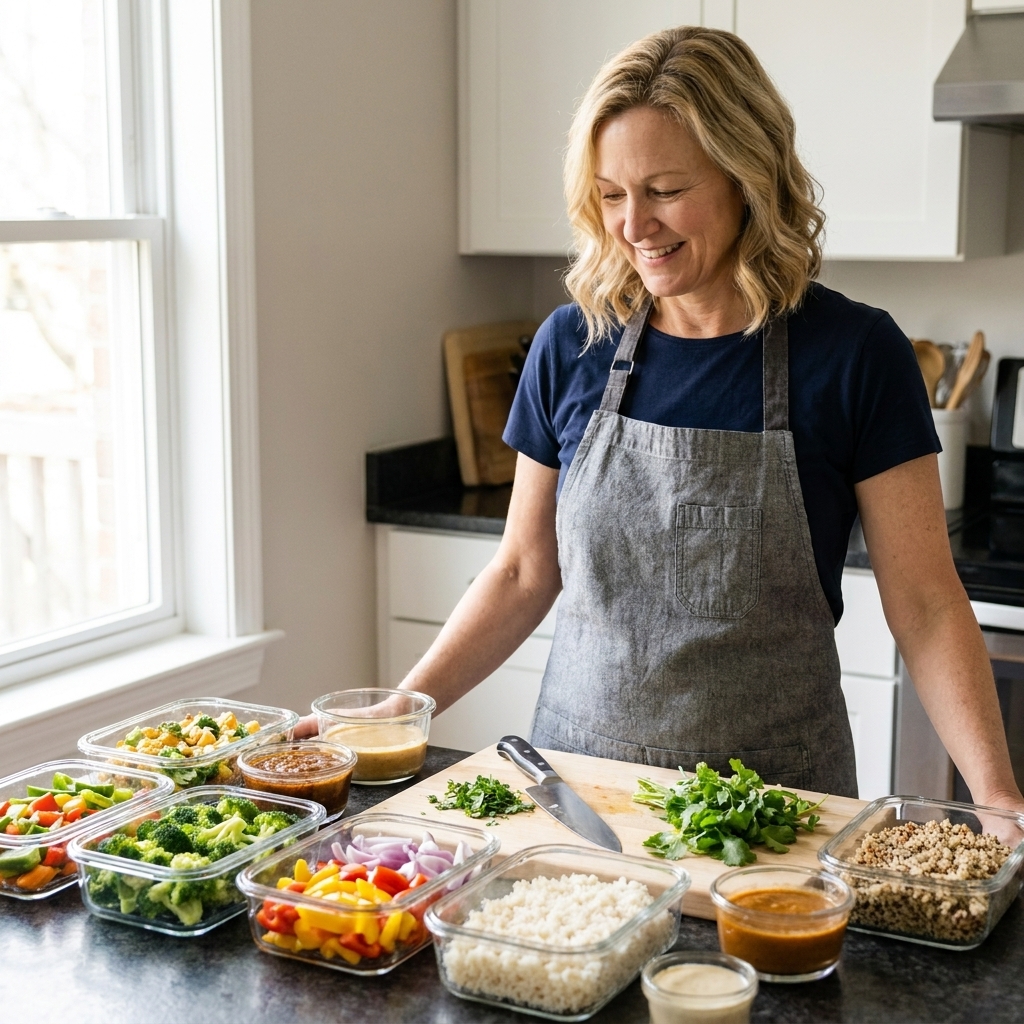
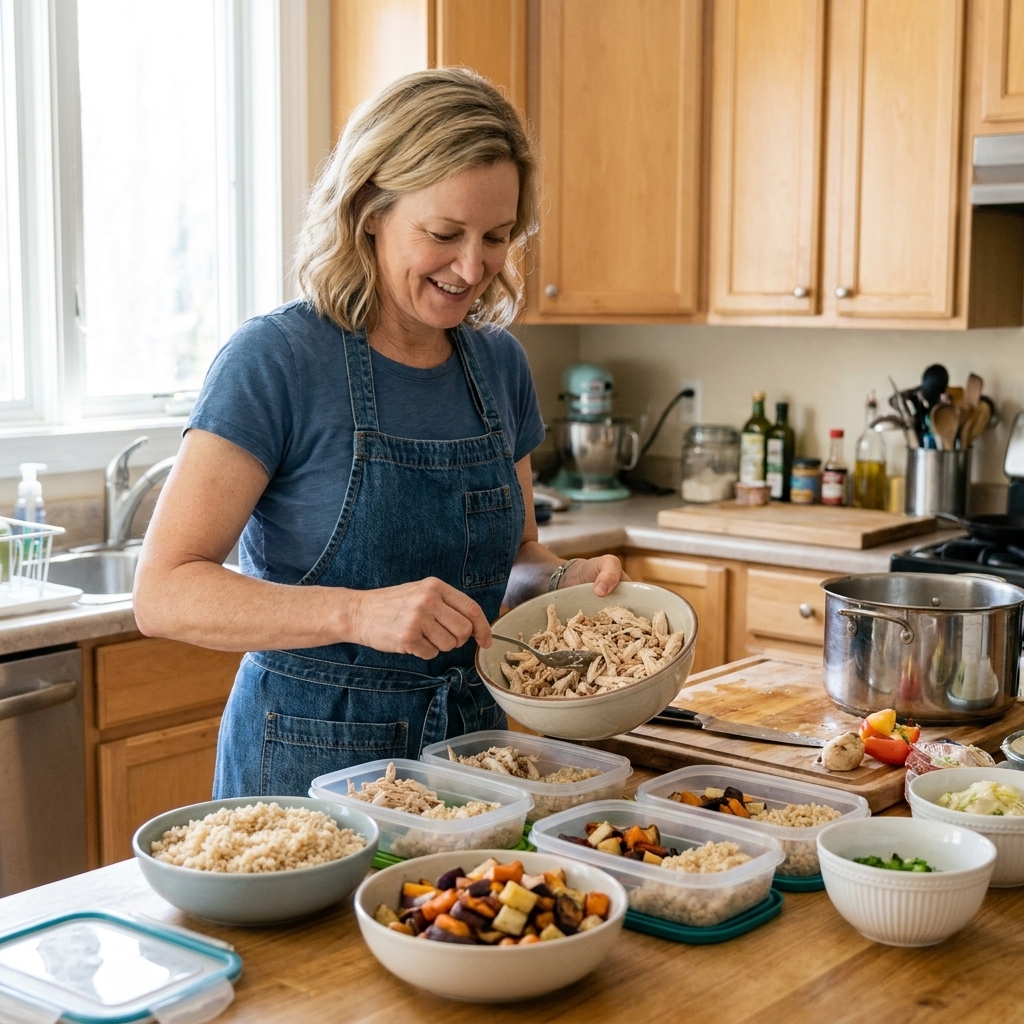
- Prep vegetables: wash, chop, store in containers
1 day before
- Set the table
- Make cold sides (salads without dressing, cranberry sauce)
- Assemble casseroles and refrigerate
Day of
- Cook the main dish early
- Use the oven for stackable items (roasted veggies, stuffing, rolls)
- Warm slow cooker items last to free up oven space
Pro-frugal tip: If oven space is your bottleneck, choose at least one side that uses the stovetop or slow cooker. It saves you from buying extra convenience foods.
Step 9: Serve so food stretches
How you serve matters. When food is set out in huge piles from the start, it disappears quickly and leftovers vanish.
My restock method
- Put out smaller serving portions first.
- Keep backup pans in the kitchen, ready to reheat if needed.
- Refill as the meal progresses.
Quick food safety reminder: Keep hot foods hot and cold foods cold. If something has been sitting out for a while, swap in a fresh warm pan from the kitchen instead of letting it hover at room temp all afternoon.
Step 10: Plan leftovers on purpose
Leftovers are not an accident. They are the frugal host’s victory lap.
Leftover plans that save money
- Turkey or chicken: soup, pot pie, enchiladas, sandwiches
- Ham: breakfast scrambles, split pea soup, fried rice
- Roasted veggies: toss into pasta, omelets, grain bowls
- Mashed potatoes: potato pancakes, shepherd’s pie topping
Send guests home without emptying your kitchen
I like to set out a few reusable containers or even clean jars and say, “Please take a little with you.” If you do not have extra containers, ask guests to bring one. People are usually happy to.
How much food per person
If you want a quick way to scale your menu without overbuying, use these rough targets and adjust for your crew (big eaters, lots of kids, or a crowd that loves leftovers).
- Protein: about 1/2 pound per adult (less if you have lots of hearty sides)
- Potatoes or another starch: 1/2 to 3/4 cup per person
- Vegetable sides: 1/2 cup per side, per person
- Salad: a small handful per person (salad always looks like more in the bowl)
- Dessert: one modest serving per person, plus a little extra if your family is dessert-serious
Diet needs without doubling the bill
You do not have to cook two separate holiday dinners to be a good host. A few small choices can cover a lot of common needs.
- Vegetarian: make one filling vegetarian main (baked ziti, lentil shepherd’s pie) so it is not just “sides for dinner.”
- Gluten-free: keep one naturally gluten-free side substantial (roasted potatoes, rice, a big salad) and serve gravy or dressing on the side when possible.
- Allergies: put nuts and cheeses in small bowls on the side so people can add their own.
Sample frugal holiday menu
If you want a simple blueprint, here’s a menu style that tends to be budget-friendly and very “holiday dinner” in vibe.
- Main: Roast chicken (two birds) or baked ham
- Sides: Garlic mashed potatoes, roasted carrots and onions, green beans (fresh or frozen) sautéed with butter and garlic
- Bonus side: Stuffing (homemade from day-old bread)
- Bright element: Simple salad with a tangy vinaigrette
- Dessert: Apple crisp or brownies with whipped cream
It is cozy, it is classic, and it uses overlapping ingredients so your shopping list stays tight.
Common questions
How do I host without feeling embarrassed about a simple menu?
I get it. I used to think “simple” meant “stingy.” But most people crave comfort food and connection. If you serve a few dishes done well, and you are present at the table, nobody is judging your green bean situation. They are just happy to be included.
What is the cheapest way to make the table feel festive?
Warm lighting and a tidy space. Candles or string lights plus a cleared table instantly looks intentional. Add one natural element (greenery, citrus, pinecones) and you are done.
How do I keep drinks from destroying the budget?
Choose one signature option and keep it simple: iced tea, lemonade, mulled cider, or a basic punch. For alcohol, consider BYOB or offer one affordable choice rather than stocking a full bar.
Is it okay to ask people to bring something?
Yes. It is normal, it builds community, and it keeps one person from carrying the whole cost. The trick is giving clear categories so you do not end up with six pies and no vegetables.
A quick pep talk
If the holidays have ever made you feel financially behind, I want to gently remind you: hosting is not a performance. It is an act of care. Your budget deserves care too.
Pick a plan. Stick to the list. Light a candle. Serve what you can comfortably afford. And then actually sit down and eat with the people you love. That part is free, and it’s the whole point.