If you have ever stood in front of a packed closet and still felt like you had “nothing to wear,” you are in excellent company. That used to be my signature move back when I was a serial spender. I would buy random tops on sale, duplicate basics in slightly different shades, and then wonder why getting dressed felt like a struggle.
A frugal capsule wardrobe flips that whole experience. Instead of chasing constant newness, you build a small collection of pieces that mix and match easily, fit your real life, and make you feel like yourself. And yes, you can do it without sacrificing style or spending designer money.
What a capsule wardrobe really is
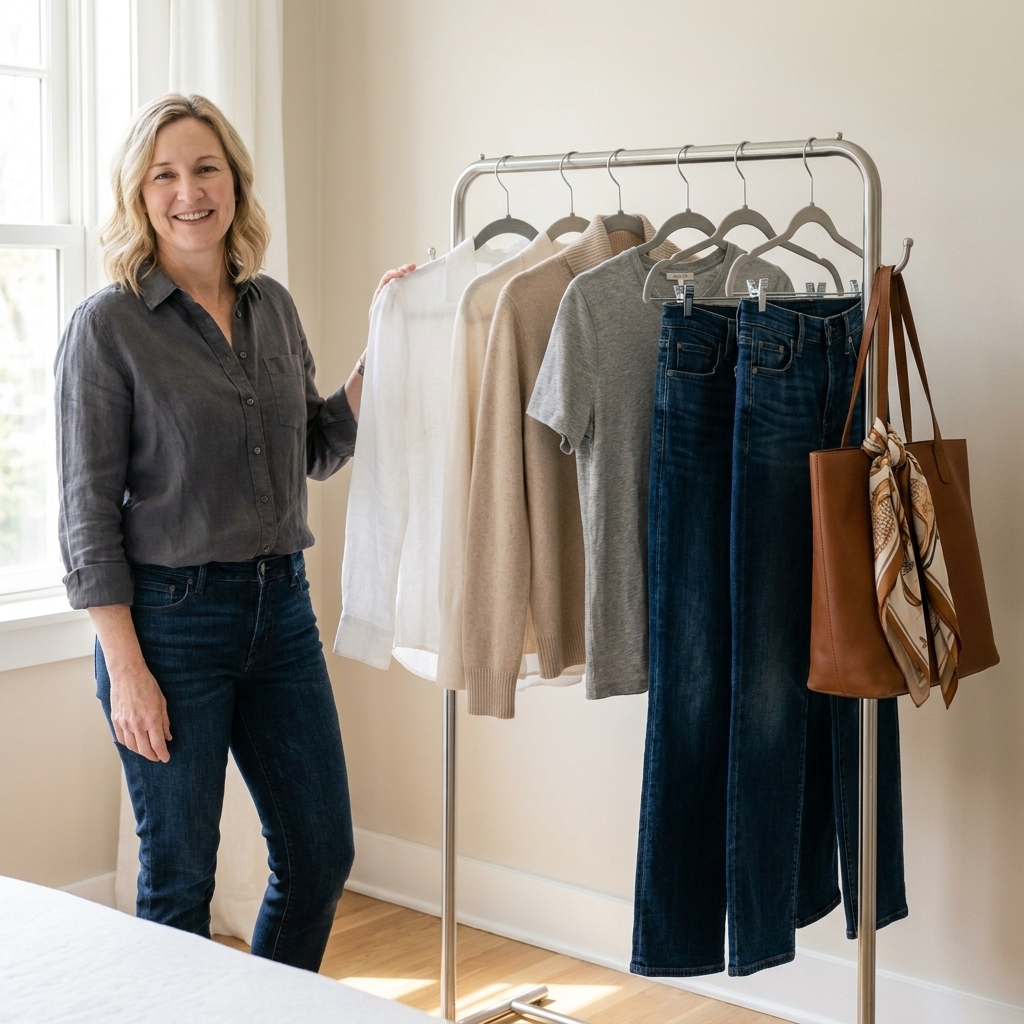
A capsule wardrobe is a curated set of clothing you actually wear, where most pieces work together. It is not a uniform, not a ban on fun, and not an excuse to purge everything you love.
Frugally speaking, the goal is simple: fewer total items, higher outfit count. When your pieces mix well, you stop panic shopping for “something to wear,” and that is where the long-term savings happen.
How many pieces do you need?
There is no magic number. Some people love 25 to 35 items per season, others prefer closer to 40 to 50. If you are brand new, start with what feels doable:
- Starter capsule: 20 to 30 pieces (not counting underwear, socks, workout clothes, and special occasion items)
- Comfortable capsule: 30 to 45 pieces (more flexibility while you learn what you reach for)
Remember, the most frugal closet is the one you will actually stick with.
Step 1: Define your real-life needs
Before you buy anything, get honest about what you do most days. A capsule wardrobe should support your life as it is, not the fantasy version of you who brunches every weekend in linen pants.
Quick lifestyle inventory
- How many days per week do you need work outfits?
- Do you need clothes for a uniform dress code, business casual, or hands-on work?
- How often do you attend events that require dressier pieces?
- What is your climate like most of the year?
- What shoes do you realistically wear when you leave the house?
This step prevents the classic thrift trap: buying cute pieces that never get worn.
If you have a strict dress code (business formal, uniforms, safety requirements), build around those compliant staples first. Everything else can be flexible, but the “must wear” categories are your foundation.
Step 2: Pick a simple color palette
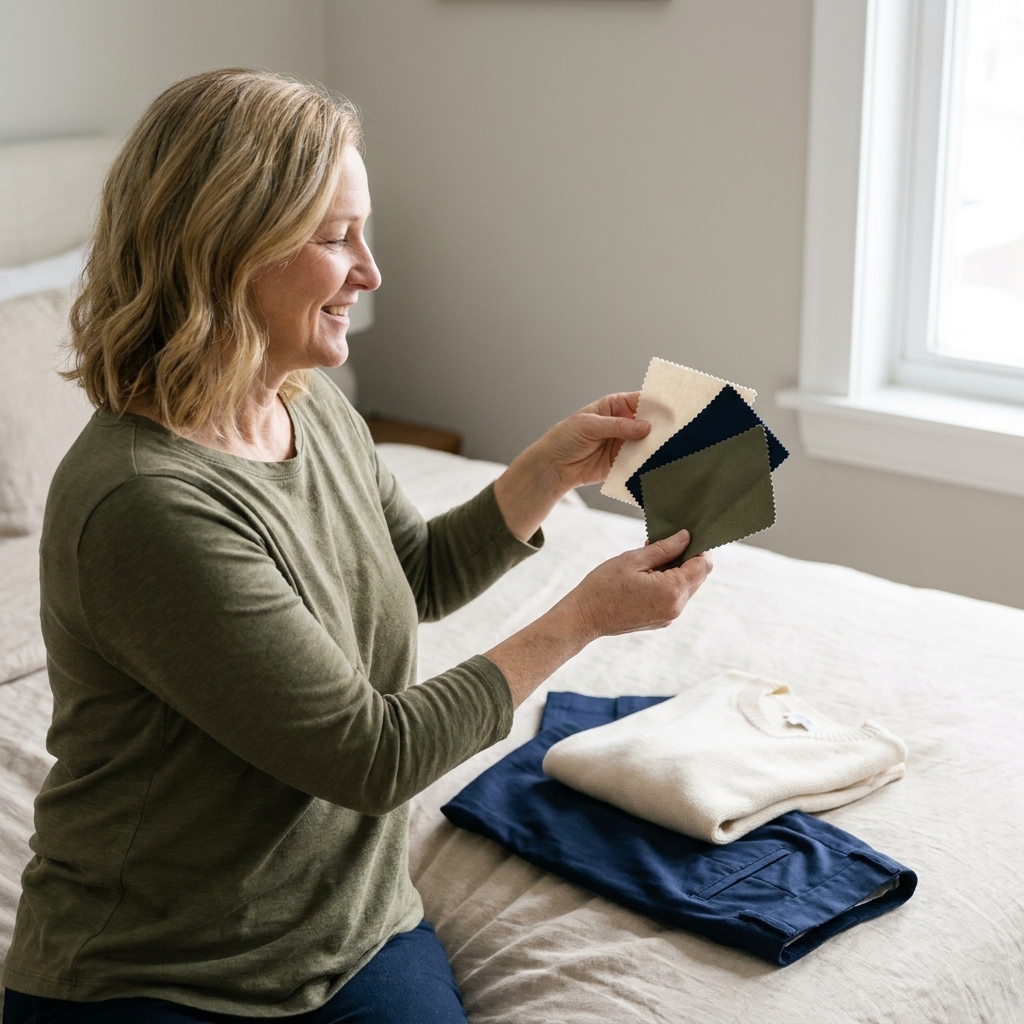
If you only do one thing from this article, let it be this. A limited palette makes mixing outfits almost effortless, which means you need fewer items overall.
An easy palette that works for most people
- 2 neutrals: black, navy, gray, brown, cream, or olive
- 1 to 2 accent colors: colors you love wearing and that flatter you
- 1 optional pattern: stripes, leopard, plaid, or a floral that matches your accents
I personally love building around navy and cream with one accent color, because it looks pulled together even when I am running on three hours of sleep.
Step 3: Shop your closet first
Before you hit a thrift store or a clearance rack, “shop” what you already own. I know it sounds obvious, but most of us skip this and end up rebuying basics we already have in a drawer somewhere.
Do a fast closet edit (no shame spiral)
- Pull out your favorites: the things you wear on repeat
- Separate maybes: items that fit but feel slightly off
- Remove the drains: itchy, constantly slipping, never fits quite right
Then ask: what is missing that would make these favorites into complete outfits? That list becomes your intentional shopping plan.
A quick personal example: when I did this the first time, I realized I owned plenty of tops and plenty of jeans. What I did not have was a layer that worked with both, like a cardigan or a casual jacket. I stopped buying more shirts and hunted for one great neutral layer instead. My outfits doubled overnight, and my shopping slowed way down.
Frugal Folio rule: If you cannot name at least three outfits you would wear this week with a potential purchase, it stays on the rack.
Step 4: Build around workhorse basics
Statement pieces are fun, but basics do the heavy lifting. When your basics fit well and feel good, everything else in your wardrobe looks better.
Core capsule checklist
Tops
- 2 to 4 everyday tops (tees, knit tops, or blouses)
- 1 to 2 layering tops (turtleneck, tank, or fitted tee)
- 1 to 2 nicer tops for work or going out
Bottoms
- 1 to 2 pairs of jeans
- 1 to 2 pairs of work-appropriate pants or trousers
- 1 casual bottom (shorts, skirt, or relaxed pant)
Layers
- 1 cardigan or sweater
- 1 versatile jacket (denim jacket, blazer, utility jacket, or coat depending on climate)
Shoes
- 1 everyday shoe (sneakers, flats, loafers)
- 1 dressier option
- 1 weather-specific shoe if needed (boots, sandals)
Personality piece
- 1 to 3 items that feel like you (a bold jacket, printed skirt, fun shoes, vintage bag)
Notice what is not on this list: trendy one-hit wonders that only work with one outfit. Those are budget leaks.
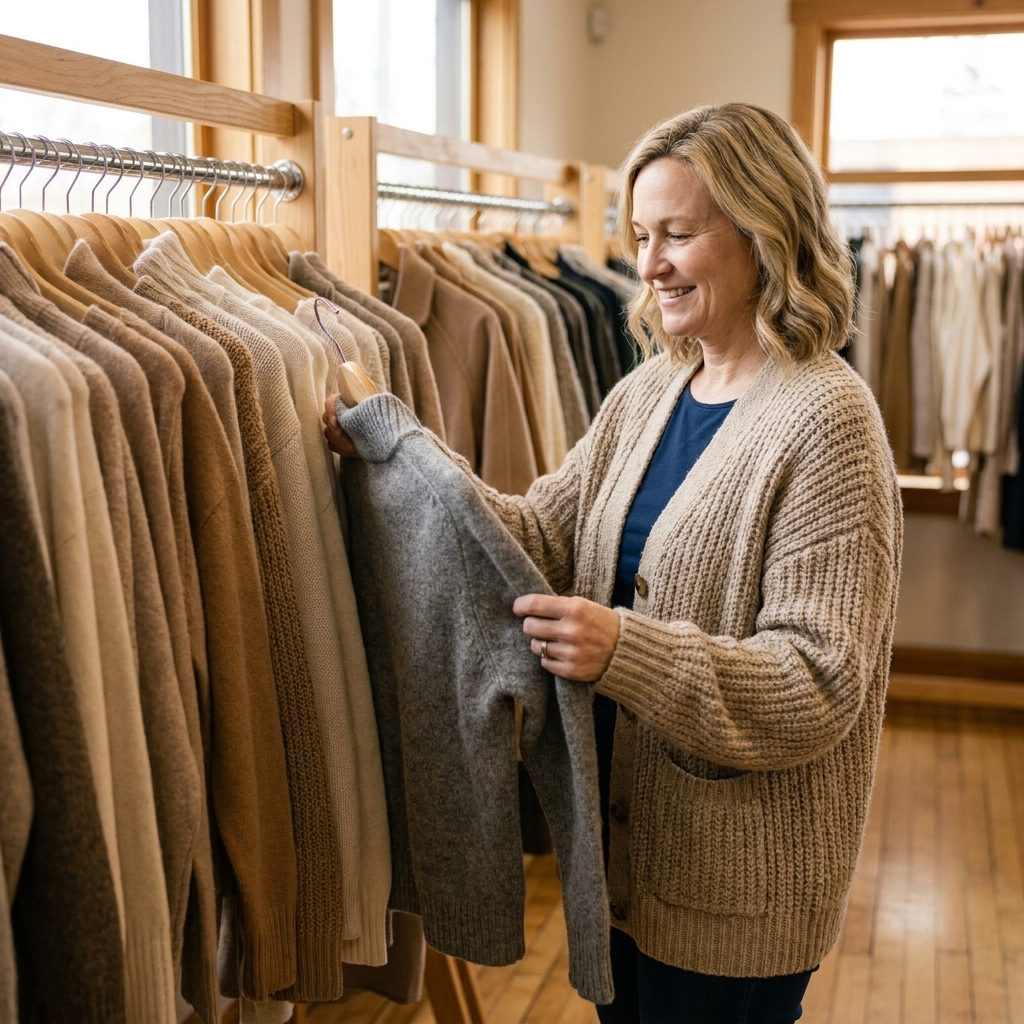
How to thrift like a capsule pro
Thrifting is a frugal capsule wardrobe superpower, but only if you go in with a plan. Otherwise it is easy to come home with three “almost right” items and still nothing to wear.
Go with a targeted list
Bring a short list of gaps, like “black ankle boots” or “cream cardigan.” This keeps you focused when the racks get overwhelming.
Check these spots first
- Men’s section: oversized sweaters, denim jackets, belts
- Blazers and outerwear: often great quality for the price
- Fabric feel test: when items are well-made, cotton, wool, linen, and silk often wear well. Check the content tag when possible, and pay attention to weight and construction too.
Fit and construction over brand
I love a good label, but I care more about:
- Stitching looks even and secure
- Fabric feels substantial, not flimsy
- No obvious pilling in high-friction areas
- Zippers and buttons work smoothly
- No lingering stains in armpits, collar, or hem
If fitting rooms are closed
- Wear a fitted tank and leggings so you can try items over your clothes
- Know your measurements (waist, hips, inseam, bust)
- Use your phone notes: save the flat measurements of a pair of pants that fits you well (waist laid flat, rise, inseam). In-store, lay the thrifted pants flat and compare. This is much more reliable than quick tricks, especially with different rises and stretch fabrics.
No method is perfect in the moment, but comparing measurements can save you from buying something that will never feel right.
How to shop clearance smart
Clearance can be fantastic for staples, but it is also where retailers quietly offload odd fits and impulse-friendly pieces.
My clearance rules
- Only buy from your list: no list, no purchase
- Stick to your palette: if it does not match at least two bottoms and one layer, pass
- Watch return policies: clearance is often final sale
- Buy boring wins: underwear basics, tanks, tees, socks, simple knit tops
Best times to shop clearance
- End of season transitions (late winter, late summer)
- Post-holiday markdowns (especially for cozy layers)
- Storewide extra percentage-off events
Not because you need to chase sales constantly, but because if you know you need one piece, timing it well can cut the price in half.
Outfit math that actually helps
This is the fun part. A capsule wardrobe feels stylish when you intentionally build outfits, not just individual pieces.
A quick way to estimate outfit potential
Instead of promising a specific number, here is a simple way to sanity-check your capsule. If you have:
- 8 tops
- 5 bottoms
- 3 layers (cardigan, jacket, blazer)
That is 8 x 5 = 40 base outfits, before you even add layers. Add a layer to many of those and you are easily in “dozens and dozens” territory. Shoes and accessories multiply it even more.
The point is not to hit a magical number. The point is to make sure your pieces combine easily, so you are not tempted to shop your way out of outfit boredom.
Use the 3 x 3 builder
Pick:
- 3 tops
- 3 bottoms
- 3 third pieces (layers like a cardigan, jacket, or blazer)
Mix them until you get at least 9 outfits. If you cannot, something is off in color, fit, or versatility.
Accessories do a lot of heavy lifting
You do not need a ton. You need the right ones:
- A belt that fits your most common pants
- A simple everyday bag
- One elevating accessory you love (gold hoops, a scarf, a watch)
Accessories are often cheaper to thrift and can make the same jeans and tee feel like three different looks.
A realistic capsule budget
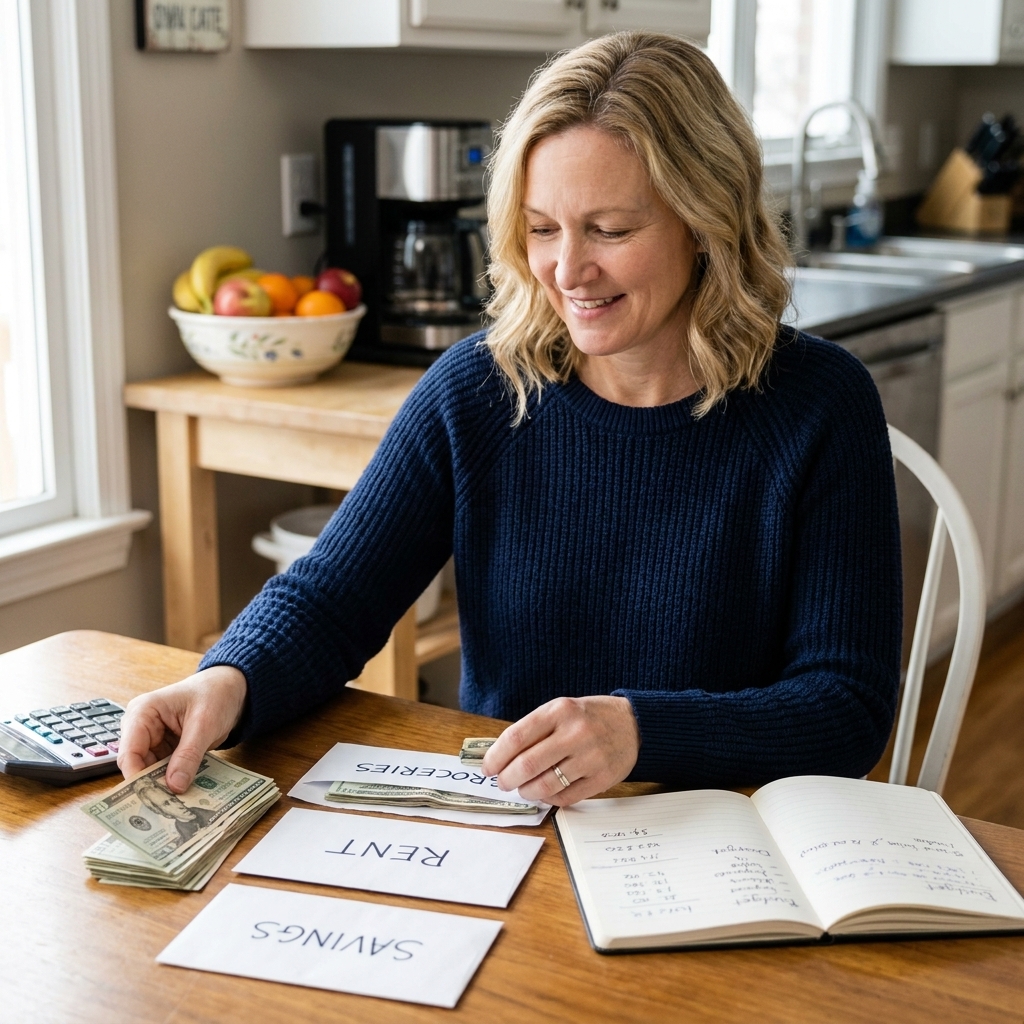
If your clothing spending has been all over the place, a capsule wardrobe is the perfect reason to set a simple monthly sinking fund. That way, you are not relying on credit cards when a needed item comes up.
Two frugal ways to budget for clothes
- Monthly sinking fund: set aside a small amount each month (even $20 to $50 adds up)
- Per-item caps: decide your max price for categories like jeans, shoes, and coats
My personal favorite is a mix: monthly sinking fund plus a price ceiling. It keeps me patient, which is where the best thrift and clearance finds happen.
Example price ceilings (adjust for your area)
- T-shirts and tanks: $3 to $12
- Sweaters and cardigans: $8 to $25
- Jeans: $12 to $35
- Blazers and jackets: $15 to $50
- Everyday shoes: $15 to $60
If you are thinking, “That is too low, I cannot find anything decent,” start where you can. Even a small reduction from your current spending is a win.
Do not forget outerwear
Coats, boots, and weather layers are often the most expensive pieces in a capsule. If your climate is intense, prioritize one truly warm coat and one weather-proof shoe early, then let the rest of the capsule fill in around them.
When it is worth buying new
I love thrifting, but I am not a purist. Some things are worth buying new for comfort, hygiene, or longevity.
- Underwear and socks
- Bras (unless you find a new-with-tags unicorn in your exact size)
- Workout shoes (for support and injury prevention)
- White tees or tanks if you struggle with thrift-store stains
Buying new does not cancel out frugality. Buying thoughtfully is the whole point.
Low-cost tailoring wins
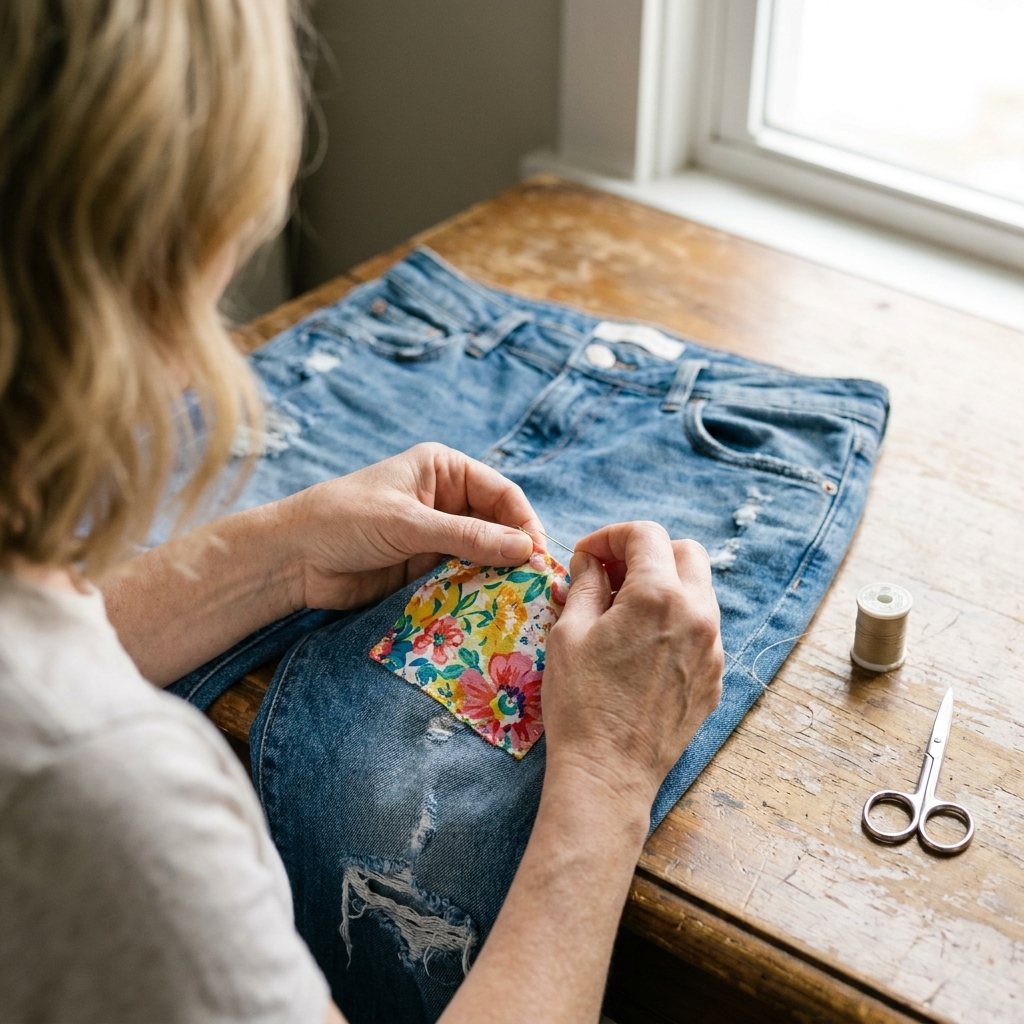
One of the most frugal skills you can lean on is small fixes. A thrifted piece that fits 90 percent of the way can become a capsule staple with a minor adjustment.
- Hemming pants: often the difference between “never worn” and “every week”
- Replacing buttons: cheap, quick, and makes a piece look more expensive
- Simple waist nips or sleeve shortening: worth pricing out on blazers and coats
- DIY options: fabric tape for temporary hems, a basic sewing kit for loose buttons
My rule is: tailor higher-impact items first, like pants you will wear twice a week or a coat you will live in all winter.
Common capsule mistakes
Mistake 1: Building for an imaginary life
Fix it by basing your pieces on how you spend your actual weekdays. If you work from home, you need comfortable basics that still make you feel presentable, not six blazers.
Mistake 2: Keeping almost-fits
They will sit in your closet and quietly stress you out. A capsule wardrobe should feel easy. If it pinches, pulls, rides up, or makes you fidget, it is not a keeper.
Mistake 3: Choosing a palette you do not love
Neutrals are helpful, but you are allowed to enjoy color. The most sustainable wardrobe is the one you are excited to wear.
Mistake 4: Buying duplicates too early
Wait until you have worn an item frequently before buying a backup. Your preferences can change once your wardrobe gets more cohesive.
Care tips to make it last
The cheapest clothes are the ones you do not have to replace. A few simple habits can stretch your capsule for years.
- Wash in cold water when possible
- Air dry knits and anything stretchy to prevent shrinking
- Launder less when you can, spot clean small marks, and rotate outfits
- Rotate shoes so they can dry out fully between wears
- Use a fabric shaver to remove pilling from sweaters
- Use a steamer or iron to refresh pieces between wears

Mini capsule example
Here is one frugal, everyday-friendly capsule idea built around black and denim with a soft accent color like sage or burgundy:
- 2 tees (black, white)
- 1 knit top (accent color)
- 1 button-down or blouse (neutral)
- 1 cardigan (neutral)
- 1 jacket (denim or utility)
- 1 pair dark jeans
- 1 pair black pants
- 1 casual skirt or relaxed pant
- 1 sneaker
- 1 ankle boot or flat
That is just 10 items, and you can already make weeks of outfits by swapping shoes and layering. Add one dressier piece and a coat for your climate, and you have a solid foundation.
FAQ
How do I start if I hate getting rid of clothes?
You do not have to do a dramatic purge. Put maybes in a box and store it for 30 days. If you do not miss those items, donate them. If you do, pull out what you truly use. Frugality and gentleness can coexist.
Is a capsule wardrobe only for neutrals?
Nope. A capsule wardrobe is about coordination, not beige everything. Choose colors you love, then repeat them intentionally across tops, layers, and accessories.
What if my weight fluctuates?
Build flexibility in. Include a couple of forgiving pieces like wrap styles, elastic waist pants, and roomy sweaters. And give yourself permission to keep a small backup-size bin if it prevents expensive last-minute shopping.
How do I keep it from getting boring?
Rotate one or two seasonal pieces, switch up accessories, or add one fun personality item per season. The capsule stays stable, and you still get that fresh feeling.
Your next frugal step
If you are feeling overwhelmed, do not start by buying anything. Start by picking your palette and identifying three wardrobe gaps that would make your current favorites easier to wear.
That is how you build a frugal capsule wardrobe that actually sticks. Not through perfection. Through small, intentional upgrades that make your closet feel calm, functional, and unmistakably you.