
I used to be the person who “accidentally” spent $40 at Target because I went in for toothpaste. When I was digging out of a big pile of consumer debt, I needed fast wins that did not require a finance degree or a perfect life. A 30-day no-spend challenge gave me exactly that: breathing room, momentum, and a much clearer picture of what I actually needed versus what I bought because I was stressed, bored, or tired.
This guide is the rulebook and the daily survival plan I wish I’d had the first time. It’s realistic, not punitive. The goal is not to prove you can suffer. The goal is to stop the money leaks, reset your habits, and keep your future self from whispering, “What did I even spend all that on?”
What it is (and is not)
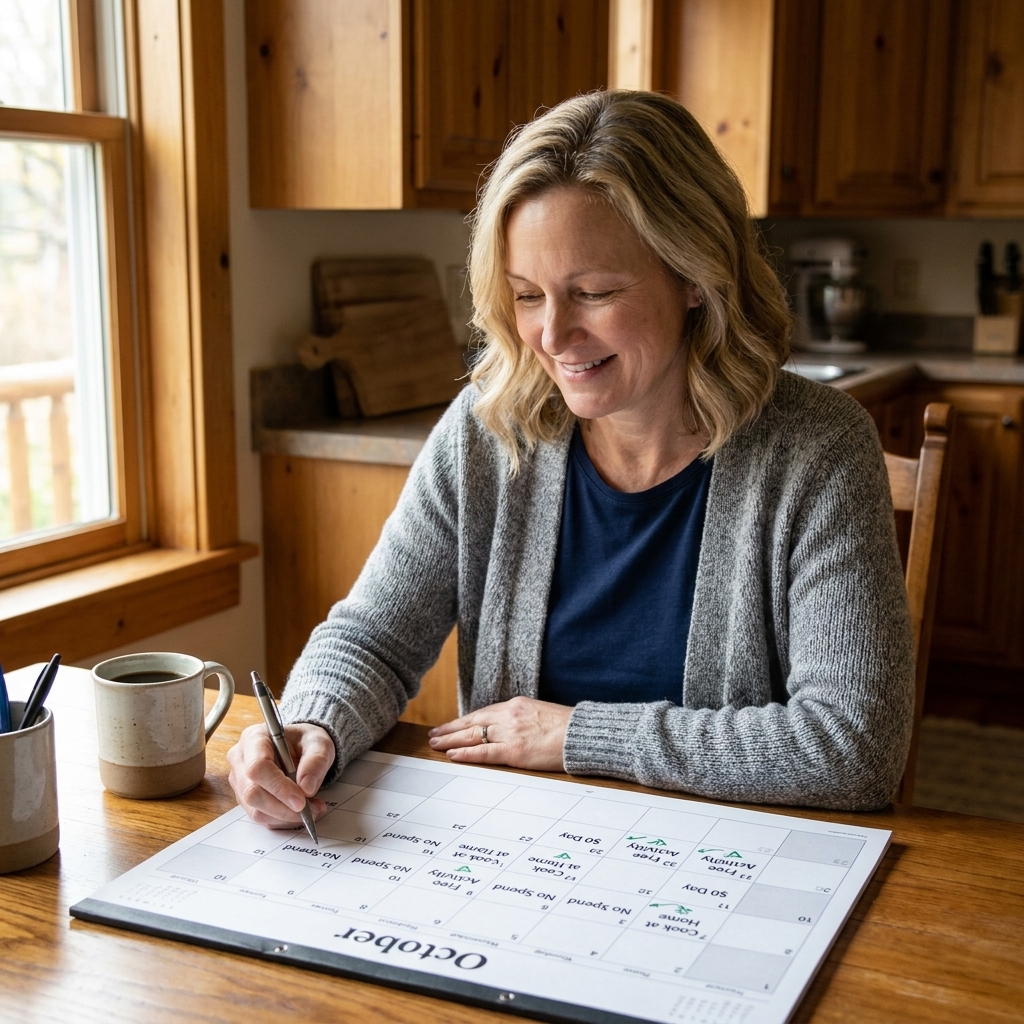
A no-spend challenge is a set time period where you stop all nonessential spending. You still pay your real obligations. You still buy true necessities. The difference is you do it intentionally, with clear rules, so your money stops slipping through the cracks.
It is not:
- A punishment for past spending.
- A contest to see who can be the most extreme.
- A reason to ignore medical needs or skip paying bills.
It is:
- A temporary spending freeze to build savings fast.
- A habit reset that can help you spot what triggers impulse spending.
- A confidence builder. You learn you can say no to temptation and still have a good month.
Set rules first
The easiest way to fail a no-spend challenge is to start with fuzzy rules. Your brain will negotiate you right back to DoorDash.
Step 1: Choose “allowed” categories
Many 30-day challenges allow:
- Housing: rent or mortgage, HOA
- Utilities: electricity, gas, water, trash, internet, phone
- Insurance: health, auto, renters or homeowners
- Transportation necessities: gas for commuting, transit passes, and pre-scheduled maintenance you can’t reasonably defer (especially safety-related)
- Groceries: simple ingredients, not “treat hauls”
- Medical: prescriptions, copays, truly needed items
- Childcare and school obligations: agreed fees, lunches if unavoidable
- Debt payments: minimums, plus extra if that’s your goal
- Irregular and annual bills: anything you legitimately owe during the month (car registration, quarterly insurance, annual subscriptions you cannot move)
Step 2: Choose “not allowed” categories
Common “no” categories:
- Restaurants, coffee runs, delivery
- Clothes, shoes, accessories
- Home decor, “organizing” bins, seasonal items
- Beauty extras: nails, brows, random skincare restocks
- Entertainment spending: movies, concerts, app purchases
- Impulse convenience purchases: snacks at the checkout, “just because” Amazon orders
Step 3: Pick a few exceptions
Exceptions are not loopholes. They are pre-decisions that prevent you from quitting.
Pick one to three exceptions total, such as:
- One planned social spend (example: your best friend’s birthday dinner, capped at $25)
- One household restock category (example: diapers or pet food only, with a firm limit)
- One professional obligation (example: parking for a required in-office day)
Write them down with a number. “I can spend a little” is how “I spent a lot” happens.
Step 4: Define what counts as spending
For the sake of your sanity, decide this now:
- Gift cards: Are you using them this month or saving them? (Using them can make the challenge easier, but it can also hide habits.)
- Cash spending: Still counts. Once it’s gone, it’s gone, so track it like any other spend.
- Returns: Returns do not “earn” you spending money unless you set that rule ahead of time.
- Subscriptions: You can keep paying existing ones, but plan a subscription audit week where you cancel anything you do not use.
Step 5: Pick a simple tracking method
Keep it low-effort:
- A note on your phone with two lines: “Allowed” and “Not allowed.”
- A tiny spreadsheet with date, amount, category, note.
- One envelope for your grocery cap (even if you pay by card, treat the envelope number as your limit).
Prep day (before Day 1)
If you do one thing before the challenge starts, do this: remove friction from the good choices and add friction to the bad ones.
My 45-minute setup checklist
- List bills due this month and schedule them. You do not want late fees during a no-spend challenge.
- Call out weird timing expenses (quarterly or annual charges, renewals, registration) so you don’t “accidentally” blow the month.
- Set a grocery limit and a plan for how many grocery trips you will allow (example: once per week, or four trips total).
- Unsubscribe and unfollow at least 10 shopping emails or “deal” accounts. Your inbox is a storefront.
- Delete saved cards from Amazon, food delivery apps, and your browser autofill.
- Make a boredom list of free activities you genuinely like.
- Start a challenge note on your phone labeled: “Before I Buy This.” (You’ll use it when cravings hit.)
If your income is irregular: set a weekly “must cover” number first (bills, groceries, gas, minimum debt payments), then do the challenge around that. The goal is to reduce nonessentials, not to pretend your expenses are predictable.
Daily survival guide
You don’t need a different task every single day to finish. You need a rhythm that keeps you focused, plus a few strategic days where you tighten the screws and make it easier to keep going.
Days 1 to 3: Detox
This is when you feel twitchy. You will suddenly “need” ten things. You don’t. It’s your brain looking for the dopamine hit of buying.
- Day 1: Write your rules somewhere visible. Tell one trusted person you’re doing this so you’re not white-knuckling in secret.
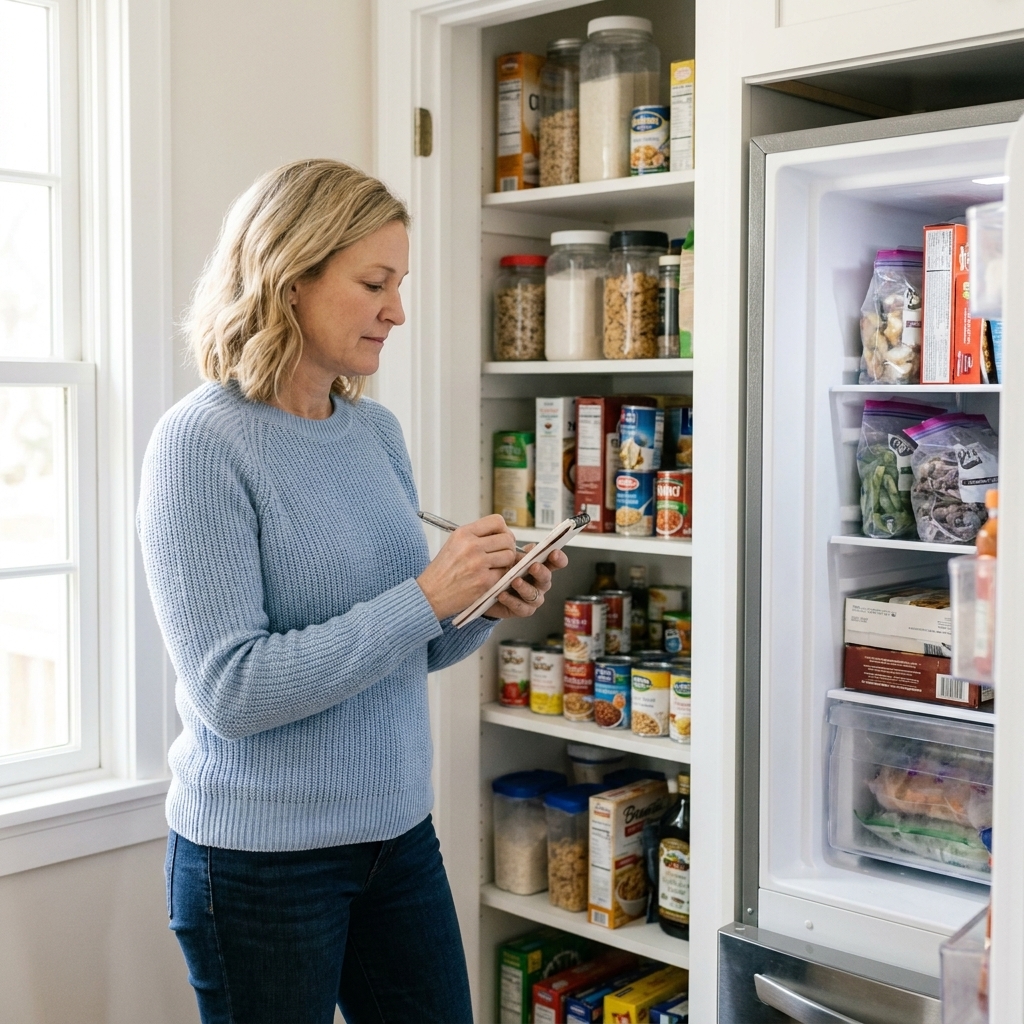
- Day 2: Do a pantry and fridge check. Plan three simple meals using what you already have.
- Day 3: Identify your top three spending triggers. Mine were stress, boredom, and “treating myself” after a long day.
Survival tip: When you want to buy something, set a 24-hour pause. Put it on a Later List. Most of the time, the urge disappears.
Days 4 to 7: Routines
These routines replace your old spending routines. If you used to browse stores at lunch or scroll Amazon at night, you need a new default.
- Meal routine: pick two breakfast options, two lunches, and rotate dinners.
- Errand routine: fewer trips to stores means fewer temptations. Combine errands.
- Weekend routine: schedule free fun on purpose so you don’t default to spending.
Free weekend ideas:
- Library day: books, movies, free events
- Walk a new neighborhood or park
- Host a “bring your own snack” game night
- Do a closet “shop your wardrobe” try-on session
- Deep clean one area while listening to a podcast
Days 8 to 14: The hard week
Week two is where motivation dips. This is also where the challenge starts doing its job: you’re seeing your habits clearly.
- Do a mid-month money check: look at your bank account and compare it to a normal week. Even small changes show up fast.
- Plan social scripts: decide what you’ll say when friends suggest spending.
Simple scripts that save money:
- “I’m doing a no-spend month. Can we do a walk and catch up?”
- “I’m skipping restaurants right now, but I’d love to come over and hang.”
- “I can do coffee at home. Want to swing by Saturday?”
Days 15 to 21: Momentum
By now, you’ll have a few wins. This is the best time to turn the challenge into long-term progress.
- Do a subscription audit: cancel one you won’t miss. If you do miss it, you can always restart later.
- Set a mini goal for your savings: “I will transfer $10 a day” or “I will save my usual takeout budget.”
- Try a pantry-forward meal week: use up the half-used items hiding in the back.
My go-to low effort, low spend dinners:
- Breakfast-for-dinner: eggs, toast, frozen veggies
- Beans and rice with salsa or a simple sauce
- Loaded baked potatoes with whatever toppings you have
- Pasta with pantry sauce and a bag of frozen broccoli
- Soup night: toss in leftover veg, beans, and broth

Days 22 to 27: The danger zone
This is where people self-sabotage with a celebratory purchase before the finish line. Your brain starts saying, “You’ve been so good, you deserve it.” And you do deserve good things. Just not impulsive things that undo your progress.
- Do a wishlist review: look at your Later List. Cross off what you no longer want.
- Plan post-challenge rules so you don’t rebound spend on Day 31.
- Choose one reward that doesn’t cost money (or costs almost nothing). Examples: a bubble bath, a long walk with a podcast, a movie night at home, an afternoon nap.
Days 28 to 30: Lock it in
These final days are for reflection and a gentle reset, not a frantic sprint.
- Calculate your win: Estimate what you did not spend. Put that number in writing.
- Move the money: Transfer savings to a separate account or apply it to debt immediately. If it sits in checking, it tends to disappear.
- Pick one habit to keep: Maybe it’s “no takeout weekdays” or “one grocery trip per week.”
Quick rules (screenshot this)
If you want something simple and firm for your first 30-day challenge, use this list.
- Rule 1: Only spend on bills, necessities, groceries, and medical needs (plus your pre-written exceptions).
- Rule 2: Grocery spending must have a list. No wandering.
- Rule 3: No online browsing “for fun.” If you need something, search with a purpose, buy it, and close the tab.
- Rule 4: If it’s not in your rules, it’s a no.
- Rule 5: Use what you already own first: pantry food, toiletries, cleaning supplies, hobby supplies.
- Rule 6: One slip does not end the challenge. You record it, learn from it, and continue.
Groceries without blowing it
Groceries are an allowed category for most people, which is why they can quietly balloon. So let’s make groceries boring in the best way.
Use a capsule grocery list
Pick a small set of ingredients you can remix all week. For example:
- Protein: eggs, chicken thighs, beans
- Carbs: rice, oats, potatoes
- Veg: frozen mixed veggies, onions, salad greens
- Flavor: salsa, soy sauce, broth cubes, basic spices
- Snacks: popcorn kernels, yogurt, bananas
Try one in, one out
If you buy a new snack or treat, you must use up one similar item at home first. This keeps the pantry from turning into a museum of half-eaten cravings.
Make home easier than takeout
My real-life trick: keep two emergency meals always available, like frozen dumplings and a bag of frozen vegetables, or boxed mac and cheese plus tuna and peas. It’s not gourmet. It’s a guardrail.
When you slip
I used to treat a budgeting slip like proof I was “bad with money.” That mindset kept me stuck. A slip is data, not a diagnosis.
The 3-step reset
- 1) Name it: “I spent $18 on takeout.” No excuses, no shame.
- 2) Find the trigger: Were you tired? Unprepared? Stressed? Socially pressured?
- 3) Patch the leak: Add one tiny fix. Example: keep an emergency meal, eat a snack before grocery shopping, or pack a lunch the night before.
Important: Do not punish yourself by skipping necessities later. That usually backfires and leads to more impulse spending.
Make it social for free
No-spend months can feel lonely if your whole social life is built around spending. The good news is that real friendship is flexible.
- Host a potluck: everyone brings one thing they already have at home.
- Do a swap night: books, puzzles, clothes, kids’ items.
- Start a walking date: same time each week, no money required.
- Plan a cook-together night: one friend brings ingredients, the other hosts, and you rotate next time.

How much can you save?
It depends on what your normal month looks like, but many people find the biggest wins come from:
- restaurant spending and delivery fees
- impulse online shopping
- convenience store snacks and drinks
- little treats that happen daily
If you normally spend $8 a day on coffee and snacks, that alone is about $240 in 30 days. If you add two $35 takeout meals per week, that’s another $280. Suddenly you’re staring at $500+ that can go to a starter emergency fund or a debt snowball.
After Day 30
The most overlooked part of a no-spend challenge is what happens next. If Day 31 turns into a shopping spree, you lose the habit reset.
My soft landing plan
- Keep two no-spend days each week (I like Monday and Thursday).
- Use a 48-hour rule for nonessential purchases for the next month.
- Create a fun-money category on purpose, even if it’s small. Frugality works better when you have permission to enjoy your money intentionally.
Turn your Later List into a plan
Go through what you wanted to buy during the challenge and sort it into:
- Still want (add a date and a budget)
- Nice, but not now (save it for a future month)
- Nope (delete it and enjoy the clarity)
FAQ
Can I do a no-spend challenge with kids?
Yes. Keep it simple and realistic. Allow true kid essentials, plan low-cost meals, and lean on free activities like parks, library events, and at-home crafts using supplies you already own. If you have a school obligation coming up, list it as a pre-approved exception with a cap.
Does buying groceries count as spending?
Technically yes, but in most challenges groceries are an allowed necessity. The key is boundaries: a list, a weekly limit, and fewer trips. If grocery shopping turns into snacks, candles, and seasonal treats, it stops being grocery shopping.
What if something breaks?
If it’s truly necessary (like a broken phone charger you need for work), replace it with the cheapest reasonable option and log it as a necessary replacement. If it’s not urgent, put it on your Later List.
Should I pay extra on debt during the challenge?
If you can, it’s a powerful combo. Many people split the win: part goes to debt, part goes to a small emergency fund so the next surprise expense does not go on a credit card.
What if my partner or roommates are not doing it?
You can still do a personal version. Set your rules for your spending, suggest a few free shared activities, and be clear about what you are opting out of this month. A calm, confident “Not this month” is a full sentence.
A quick pep talk
If you’ve ever felt ashamed about your money habits, I want you to hear this clearly: you are not broken. You’re learning. A 30-day no-spend challenge is not about being perfect. It’s about proving to yourself that you can choose your money instead of reacting with it.
Start with clear rules. Make your life easier with a plan. Track your wins. And if you mess up, you do not start over. You keep going.
Your future self is going to love what you’re doing this month.