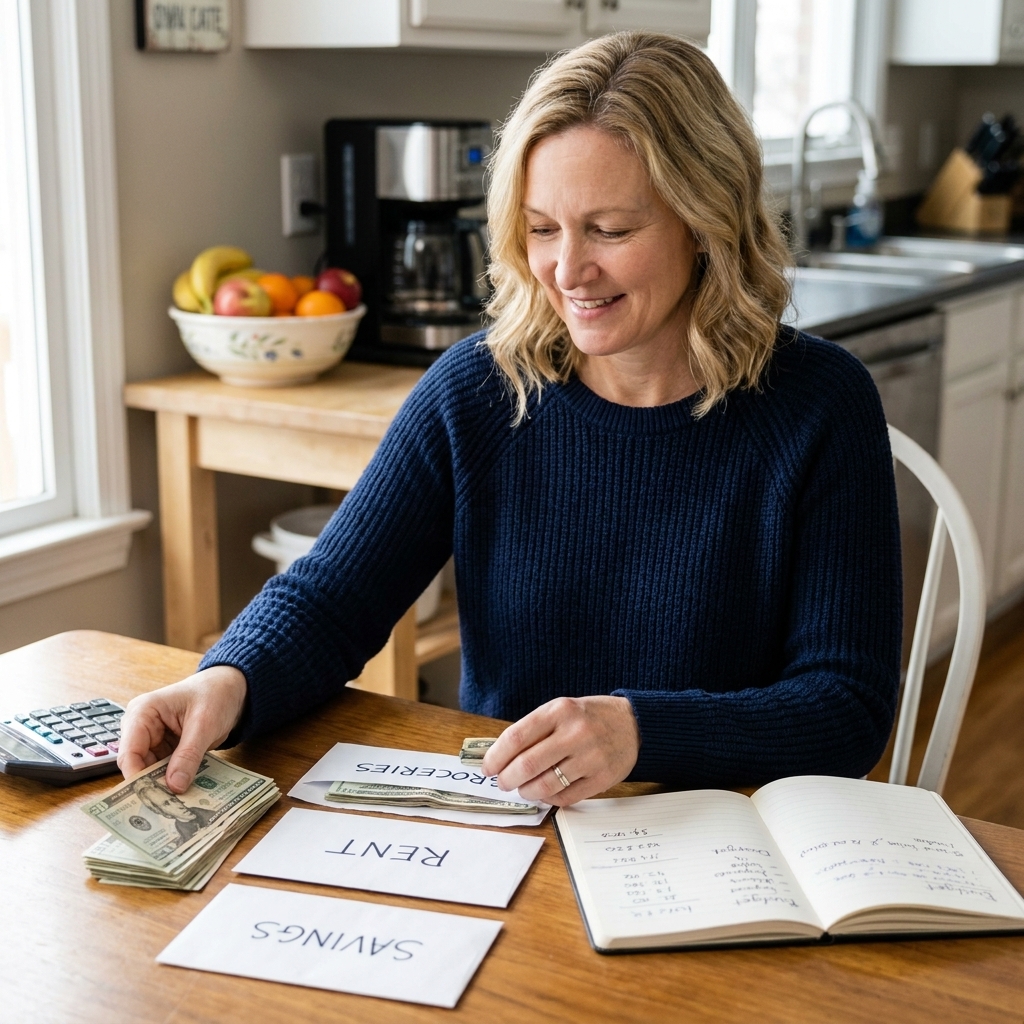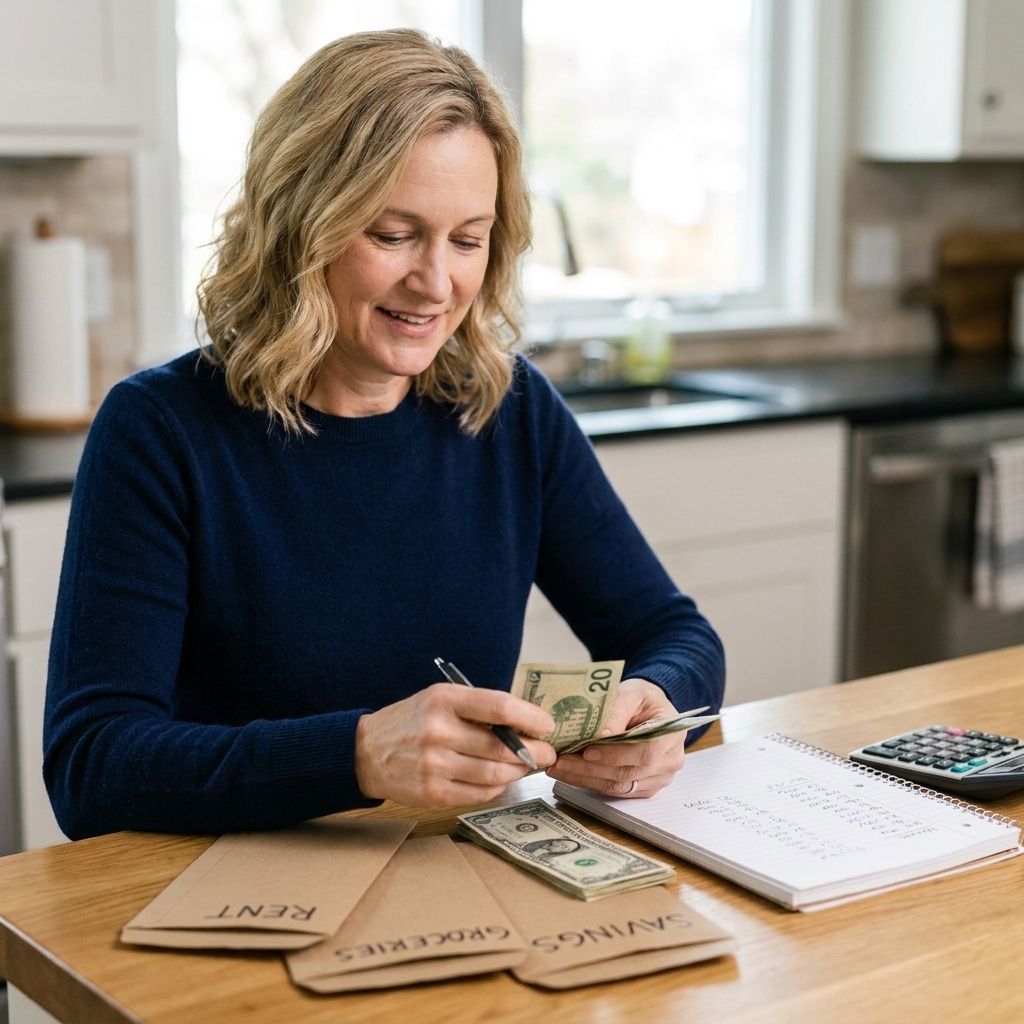
I used to think budgeting meant tracking every latte and feeling guilty about every “fun” purchase. Then I learned the pay-yourself-first method (also called reverse budgeting), and it changed everything for me. Instead of hoping you have money left to save at the end of the month, you save first on purpose, automatically, and then spend the rest without that low-grade panic.
This approach is especially powerful if you are busy, overwhelmed, or burned out on micromanaging categories. It is also one of the simplest ways I know to build savings and invest consistently while still living your life.

What reverse budgeting is
Reverse budgeting is a system where you decide your financial priorities first (like emergency savings, retirement investing, sinking funds, and debt payoff), automate those transfers, and then live on what is left.
Important guardrail: reverse budgeting only works if your essentials are covered. In practice, that means you either (1) pay your fixed bills first, or (2) set aside your bill money first in a “bills account,” and then automate your priorities right after payday. Minimum debt payments, rent, and keeping the lights on are not optional.
It is called “reverse” because most of us were taught to do it backward: pay bills, spend on life, and then save whatever is left. For many households, “whatever is left” is basically nothing.
Pay yourself first in one sentence
You set your savings and debt goals, automate them to happen right after payday (after your essentials are covered), and learn to live on the remainder.
Reverse vs. traditional budgeting
- Traditional budgeting: You assign spending limits across categories and track to stay within them.
- Reverse budgeting: You lock in the wins (saving, investing, debt payoff) first, then keep spending simpler.
To be clear, reverse budgeting is still budgeting. It is just budgeting with your priorities protected.
Why it works
I am a former serial spender, and I can tell you exactly why this method works: it reduces the number of daily decisions you have to get right.
It beats willpower with automation
When savings is automatic, it is not a moral test. It is just a system. You are not relying on the version of you who is tired after work and tempted by an impulse run to your favorite store.
It creates progress you can feel
Watching your emergency fund climb or your credit card balance drop is motivating in a way that “stayed under groceries by $12” will never be.
It removes shame from spending
Once your priorities are handled, spending from the remaining money becomes a lot less emotionally charged. You can buy the concert ticket or order pizza without the “I am ruining my life” spiral, because you already paid Future You.
Checklist (do this first)
Before you automate anything, you need two pieces of clarity: your baseline expenses and your priority targets.
Step 1: Add up your take-home pay
Add up what actually hits your bank account in a typical month. If your income varies, use a conservative average (or last 6 months divided by 6).
Step 2: List your must-pay expenses
These are your bills that keep life functioning:
- Rent or mortgage
- Utilities
- Insurance
- Minimum debt payments (on every debt)
- Transportation basics (gas, transit pass)
- Groceries (a realistic number, not a fantasy number)
Step 3: Pick 1 to 3 priorities
Common priorities include:
- Emergency fund (especially if you have no cushion)
- Employer retirement match (often a top priority once essentials are covered)
- High-interest debt payoff (credit cards and other high APR balances)
- Sinking funds (car repairs, medical, gifts, travel)
If everything feels urgent, start with the basics: a small emergency buffer and your highest-interest debt.
How to set it up
Here is the exact setup that helped me go from stressed and scrambling to calm and consistent.
1) Use two accounts
This is the simplest structure for most people:
- Bills account: income comes in, fixed bills are paid, and automated transfers happen from here.
- Spending account: for groceries, gas, eating out, and day-to-day life.
Optional but helpful: a separate high-yield savings account for your emergency fund and sinking funds. Rates vary, but the structure (separate savings that is harder to casually spend) is what really matters.

2) Time automations right after payday
The secret sauce is timing. Schedule transfers for the same day you get paid (or the morning after). The longer money sits in checking, the easier it is to accidentally spend it.
If your bills are due throughout the month, keep a small buffer in the bills account so an early transfer does not cause a late fee. Another option is to automate bill money into the bills account first, then run your priorities second.
3) Automate in this order
If you are unsure what to automate first, use this sequence:
- Cover essentials and minimums (rent, utilities, insurance, minimum debt payments)
- Employer retirement contributions (especially up to the match, when feasible)
- Starter emergency fund (even $500 to $1,000 can be incredibly calming)
- High-interest debt extra payments (above the minimum, especially for credit cards)
- Sinking funds (car, medical, home, gifts)
- Longer-term investing (IRA, brokerage, HSA if applicable)
Then, and only then, you decide how much is left for spending.
Example you can copy
Let’s say you bring home $3,600 per month (two paychecks of $1,800).
- Paycheck hits checking (per paycheck): $1,800
- Same-day automations (per paycheck):
- $150 to emergency fund
- $100 to car repairs sinking fund
- $100 extra to credit card
- $100 to IRA (or increase workplace retirement)
- Transfer to spending account (per paycheck): $450
- Remaining stays in bills account (per paycheck): $900 for rent, utilities, insurance, minimum debt payments
Is that the perfect breakdown for everyone? No. In many places, housing alone can be more than $900 per paycheck. The point is the workflow: priorities happen automatically, bills are protected, and spending becomes the part you adjust.
If you feel paycheck-to-paycheck
If you are thinking, “Cute idea, but there is no extra,” I hear you. I have been there.
Start painfully small
Your first automation can be $10 per paycheck. The point is to create the habit and the system. Once it is running, you increase it as you find breathing room.
Build a micro buffer first
If your account is constantly flirting with overdrafts, make your first goal a $250 to $500 buffer in savings. That tiny cushion can help prevent overdraft fees and reduce stress, which frees up money and energy.
Use found money to scale
Every time you reduce a bill, earn a little extra, or get a tax refund, increase your automatic transfers before lifestyle inflation grabs it. Even $25 more per paycheck adds up fast.
Make it easier with buckets
One thing that used to derail me was “surprise” expenses that were not surprises at all, like car registration or holiday gifts. Reverse budgeting gets smoother when you add sinking funds.
Sinking funds to consider
- Car maintenance and repairs
- Medical and prescriptions
- Gifts and holidays
- Travel
- Home maintenance or renter move-out costs
- Annual subscriptions
You can keep these in one high-yield savings account and track with notes, or use separate sub-accounts if your bank offers them.

Common mistakes
Automating too much
If you are constantly pulling money back out of savings to cover groceries, your automations are too aggressive for your current season. Dial them back, stabilize, then ramp up slowly.
Forgetting irregular bills
Quarterly and annual bills can wreck a reverse budget if you do not plan for them. Fix it by creating sinking funds and dividing those big bills into monthly amounts.
Never checking spending
Reverse budgeting is not permission to ignore spending. If you are consistently short, do a quick reality check on the big categories: groceries, eating out, subscriptions, and convenience spending.
Mixing bills and spending
If everything runs through one checking account, it is too easy to lose track. A separate spending account (or even a separate debit card) adds instant clarity.
30-minute quick start
- Pick one savings goal: $500 buffer, emergency fund, or a sinking fund.
- Set one automation: $10 to $50 per paycheck to a savings account.
- Set one debt automation (if applicable): an extra $10 to $50 toward your highest interest debt, while paying minimums on everything.
- Create a simple spending rule: one weekly transfer to a spending account, or one weekly cash withdrawal.
- Schedule a 10-minute money date weekly: check balances, confirm bills cleared, adjust if needed.
That is it. You do not need a fancy spreadsheet to start paying yourself first. You need one automated transfer and the willingness to let it be small at the beginning.
FAQ
Is reverse budgeting the same as zero-based budgeting?
They are cousins. Zero-based budgeting assigns every dollar a job ahead of time, often across many categories. Reverse budgeting assigns the most important jobs first, automates them, and keeps the rest simpler. You can absolutely combine them if you love details.
Should I pay off debt or save first?
For most people, it is both, in the right proportions. I like a starter emergency fund first (to reduce the odds you end up right back on the card), then prioritize high-interest debt while continuing to save a little. If you have an employer retirement match, that can be worth capturing early too, once essentials are stable.
What if my paydays are irregular?
Use percentage-based rules and automate the minimum. For example, 5 percent of each deposit to savings, plus a fixed $25 transfer on Fridays if your balance is above a threshold. Some banks and apps offer balance-triggered transfers, but not all.
Do I need an app?
No. You can run reverse budgeting with your bank, a calendar, and a notes app. If you enjoy apps, use one to monitor spending trends, not to shame yourself for being human.
Is this financial advice?
This is educational and based on what has worked for me. If you are dealing with complex debt, self-employed taxes, or a situation where basic needs are at risk, a reputable credit counselor or financial professional can help you build a safer plan.
The mindset shift
Paying yourself first is not about being perfect. It is about removing as many opportunities as possible for money stress to sneak into your everyday life.
You are not “bad with money” if you struggle to save after a long month. You just need a system that protects your priorities before the world gets a chance to spend them for you.
If you want, start tiny this week. Set one automatic transfer. Let it run. Then next month, increase it by the smallest amount that feels slightly brave but still doable. That is how real financial peace gets built.