
Winter utility bills used to feel like a personal insult. I would open my statement, panic, and then promise myself I would “do better next month” without changing anything. Once I started attacking my heating bill the same way I attacked my debt, with small, repeatable moves, my costs finally started to come down.
The good news: you do not need new windows, a new furnace, or a giant home renovation budget. You need a few cheap supplies, a little consistency, and a willingness to be slightly annoyed by drafts for one afternoon while you hunt them down.
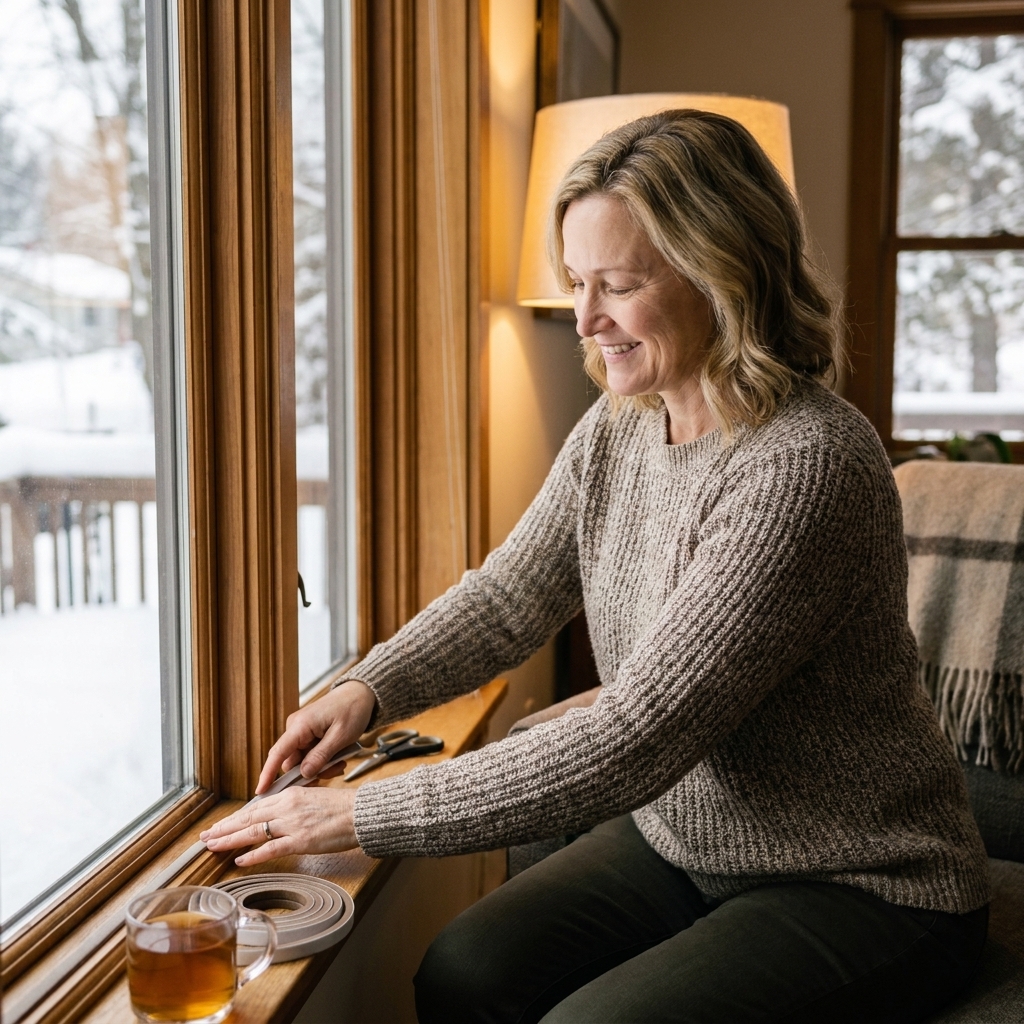
Start with the biggest win: stop heating the outdoors
If your home is leaky, your heater works overtime. Sealing air leaks is often the fastest, lowest-cost way to feel a difference and, in many homes, see a real change on the bill.
1) Weatherstrip exterior doors
Check the top and sides of doors that lead outside (front, back, garage entry). If you can see daylight or feel cold air, weatherstripping is your new best friend. Peel-and-stick foam is inexpensive and beginner-friendly.
- Cost: Low
- Best for: Obvious drafts and whistling doors
- Quick supply tip: Medium-density foam (not the squishiest) tends to seal better and last longer
- Frugal tip: Clean the surface first so the adhesive actually sticks all season
2) Add (or replace) a door sweep
The gap under a door can leak a shocking amount of air. A simple door sweep, or even a draft stopper “snake,” can cut that right down.
- Quick test: Turn off fans, hold a tissue near the bottom of the door, and watch for movement
3) Seal window drafts with rope caulk or temporary film
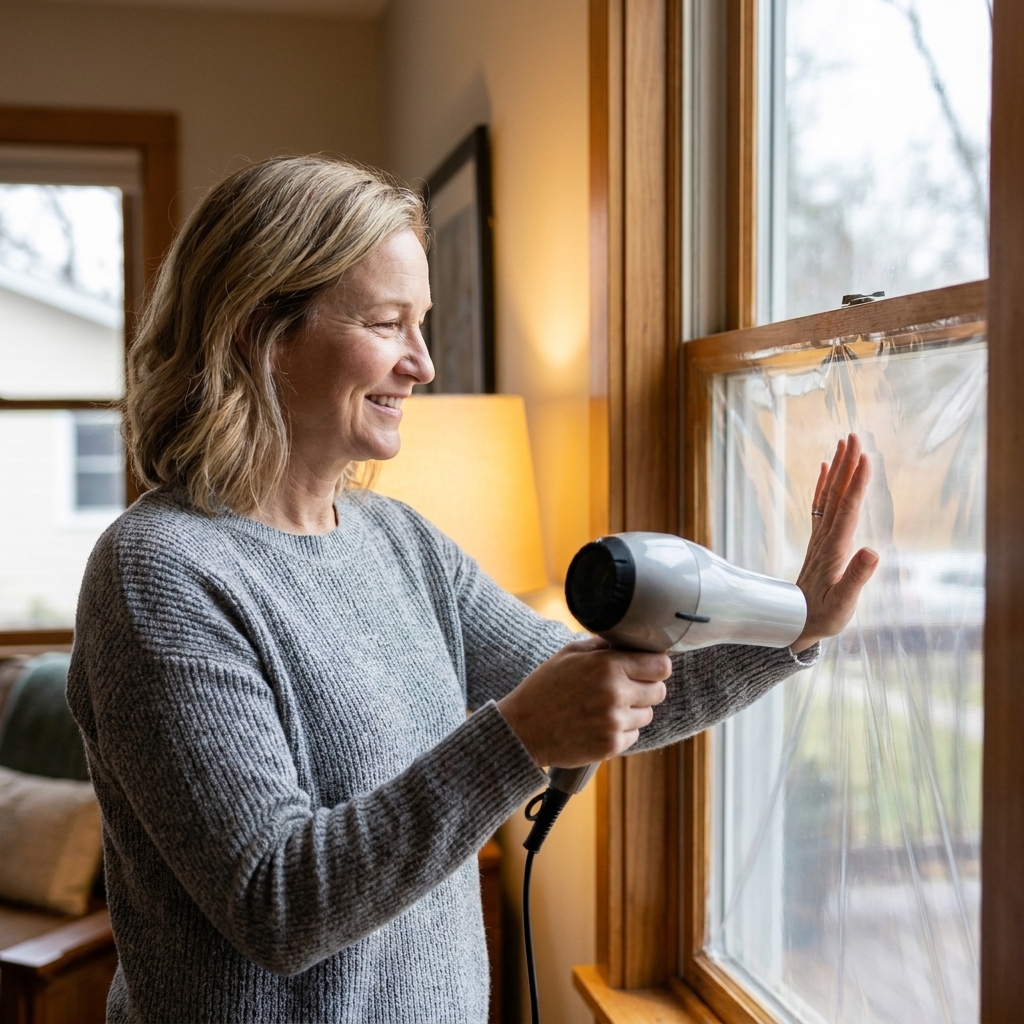
If your windows are older, you can still make them behave better. Rope caulk is great for small gaps around the frame. Window insulation film creates an extra layer of still air, like a budget approximation of double-pane performance.
- Where you will notice it: Rooms that feel cold even when the heat runs nonstop
- Heads up: Film works best on windows you do not need to open often in winter
- Renter note: Rope caulk is usually removable, but test a small spot first and peel slowly to avoid pulling paint
4) Find the sneaky leaks
Doors and windows get all the attention, but the bigger offenders are sometimes the weird spots you never think about.
- Attic hatch: Add weatherstripping around the edges and a piece of rigid foam on top of the hatch (if accessible)
- Basement rim joist: If it is exposed, it can be a draft factory
- Penetrations: Look under sinks, behind toilets, around pipe cutouts, and where cables enter the house
Run your hand around those areas on a windy day. If it feels like your house is lightly breathing on you, you found your project.
Make your heating system work smarter
You can have a perfectly good heater and still waste money if airflow is blocked or your settings are fighting your daily routine.
5) Change your HVAC filter (and set a reminder)
A clogged filter restricts airflow, making the system run longer to do the same job. That means higher bills and more wear and tear.
- Rule of thumb: Check monthly in winter, replace as needed (especially if you have pets)
- Frugal move: Buy filters in a multi-pack when they are on sale
6) Keep airflow balanced
This is where people accidentally make things worse. In many forced-air systems, closing supply vents can increase static pressure and reduce efficiency. The safer baseline is simple: keep supply vents open, keep return vents clear, and do not block airflow with furniture or curtains.
- Do this instead of vent games: Close doors only if the room still has a way for air to return (a return vent, transfer grille, or a decent gap under the door)
- If you want less heat in one area: Use a thermostat schedule, zoning settings (if you have them), or talk to an HVAC pro before you start closing things down
7) Use a sensible thermostat schedule
You do not have to live in an icebox to save money. Even a small setback can help when you are asleep or away.
- Try this: Lower the thermostat 1 to 3 degrees at night and when the house is empty
- If you have a heat pump: Avoid huge temperature swings. Steady and modest changes tend to be more efficient.
8) Run ceiling fans clockwise on low
Warm air rises. A fan on low in the winter helps push that warm air back down into the living space.
- Look for the switch: Many fans have a small direction switch on the base
- Goal: Gentle circulation, not a wind tunnel
Low-cost comfort upgrades
These are the “I can feel the difference immediately” changes. They are also the kind of upgrades I love because they make home feel cozier while saving money.
9) Hang heavier curtains and close them at night
Windows are beautiful and also basically giant cold panels in winter. Closing curtains after dark helps reduce heat loss. During sunny hours, open them on the sunny side to capture free warmth.
- Frugal option: Thrifted curtains or layered curtain panels
- Bonus: It makes the room feel instantly warmer

10) Add area rugs (especially on hard floors)
If you have tile, vinyl, or hardwood, rugs cut that cold “sink” feeling and can help you stay comfortable at a slightly lower thermostat setting.
- Where it matters most: Under the coffee table, beside the bed, and anywhere you stand still a lot (kitchen sink area)
11) Use draft blockers for problem zones
Even after weatherstripping, some spots still leak. Place draft stoppers at the bottom of doors, around a drafty sliding door, or near an old window that you cannot fully fix right now.
- DIY idea: A rolled towel works in a pinch, but a weighted draft stopper is easier to keep in place
12) Insulate the water heater and hot water pipes (when it makes sense)
If your water heater is in a cold garage or basement, an insulation blanket can reduce standby heat loss, especially on older units. Insulating the first few feet of hot water piping can also help you get hot water faster, which can reduce waste.
- Best for: Older tanks and colder locations
- Safety note: Follow manufacturer guidance and keep insulation away from burner areas and vents on gas units. If your tank has instructions on the outside, read those first.
Daily habits that shave dollars
I love home upgrades, but the habits are what keep savings coming month after month. These are small changes that add up.
13) Take shorter, smarter showers
Hot water is expensive. A 2 to 5 minute reduction per shower in a household adds up fast, because water heating is a real slice of the average energy budget.
- Make it painless: Set a playlist timer or use a simple shower timer
- Extra win: Wash laundry in cold water whenever possible
14) Lower the water heater temperature (carefully)
Many water heaters are set hotter than most families need. Lowering the setpoint can reduce energy use. Common guidance is around 120°F for many households, but your needs may differ.
- Important: If you have kids, immune-compromised family members, or specific plumbing concerns, look up guidance for your situation or ask a professional
15) Stop phantom electricity with a power strip routine
Some devices draw power even when they are “off.” The savings may be modest for some setups, but it is an easy win, and a few high-draw culprits can add up over time. If you have a TV area, older cable box, game console set to instant-on, or an AV receiver, plug it into a power strip and flip it off at night.
- Low effort version: Start with one strip in the room you use most

16) Cook in a winter-friendly way
Your oven and stovetop create heat. In winter, that can make the house feel cozier while you are already cooking anyway. Think soups, sheet-pan meals, and baked casseroles that give you leftovers too.
- Money-saving combo: Meal plan around oven nights, then reheat leftovers in the microwave or toaster oven (often cheaper than reheating the whole oven again)
- Don’t forget: Use lids on pots to reduce cooking time
Quick safety checks
Before you go full detective on every crack and gap, a quick reality check.
- Do not mess with vents: Never block combustion air or seal around gas appliance vents.
- Check your CO alarms: Make sure carbon monoxide detectors are installed and working, especially if you have any fuel-burning appliances.
- If you smell gas or feel dizzy: Leave the home and contact your utility or emergency services.
A simple one-hour reset
If you are overwhelmed, do not try to tackle everything at once. Here is a realistic order that tends to pay off quickly:
- First 15 minutes: Replace or clean your HVAC filter (if you have one), then set a thermostat schedule for nights
- Next 20 minutes: Check exterior doors for drafts, add a sweep or draft stopper
- Next 15 minutes: Seal the draftiest window with rope caulk or apply window film to one problem room
- Last 10 minutes: Put your TV or office setup on a power strip and start turning it off nightly
Small actions feel almost too easy, but that is the point. Frugality works best when it is sustainable, not heroic.
Quick FAQs
Will these tips really make a noticeable difference?
Sealing drafts and dialing in thermostat habits are usually the biggest needle-movers. Savings vary based on your climate, insulation, and energy rates, but many households notice both lower bills and better comfort.
What if I rent?
Most of these are renter-friendly: draft stoppers, window film, heavier curtains, rugs, power strips, and thermostat scheduling (if you control it). Skip permanent changes if your lease forbids them, and focus on removable options.
What should I do first if I can only pick one?
Find and stop the biggest draft. A single leaky door or window can make your whole home feel colder, which leads to cranking the heat higher all day.
Are there programs that can help?
Many utilities and local agencies offer rebates, free or low-cost home energy audits, and weatherization help. It is worth checking your utility website before you buy supplies at full price.
If you try even three of these this week, you are already ahead of where most people start. And you deserve a winter that feels cozy without the financial hangover.