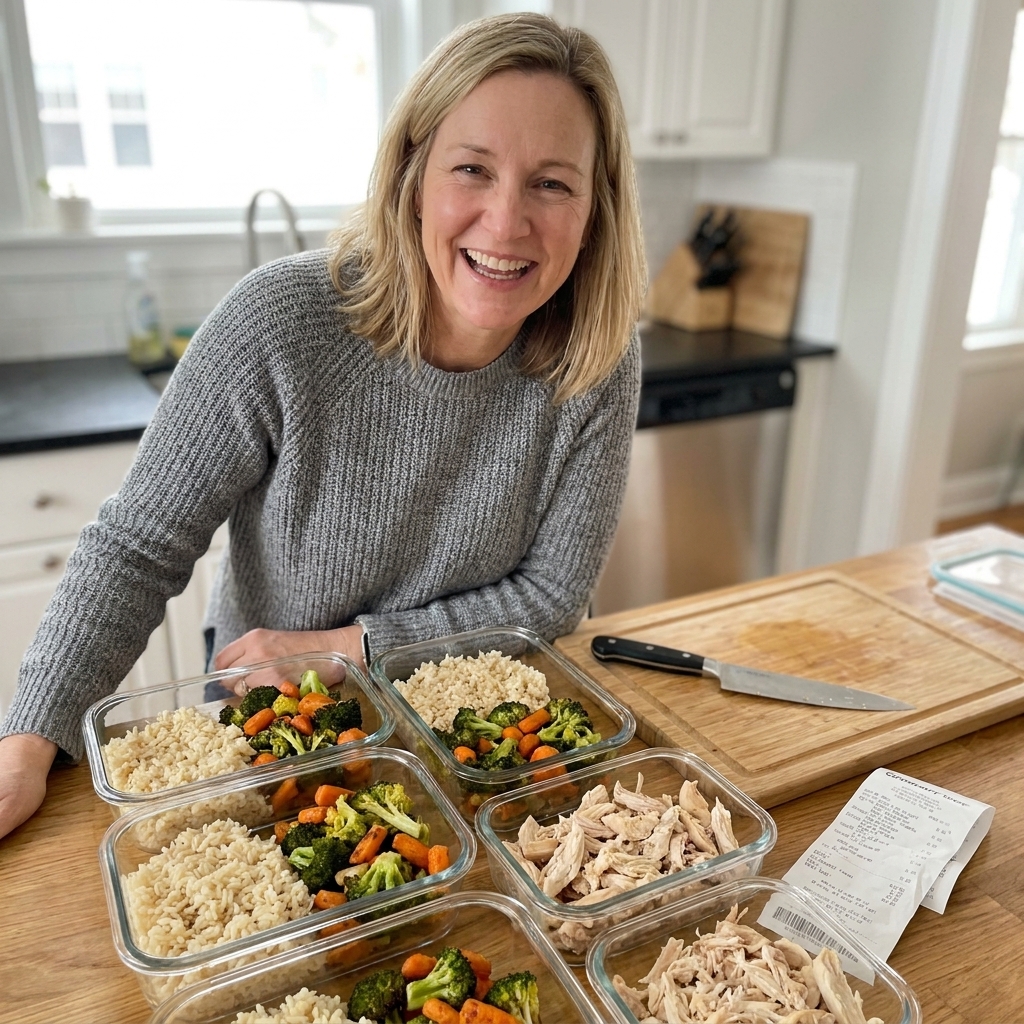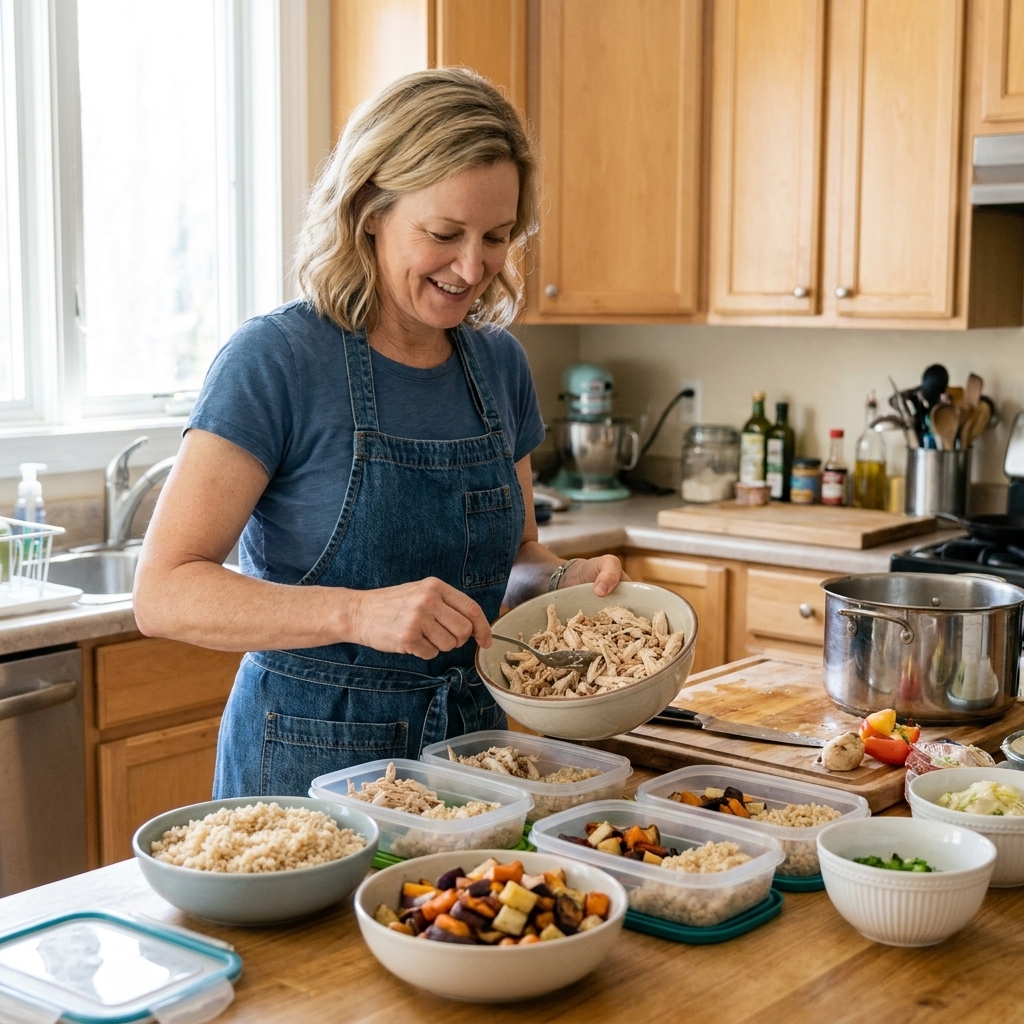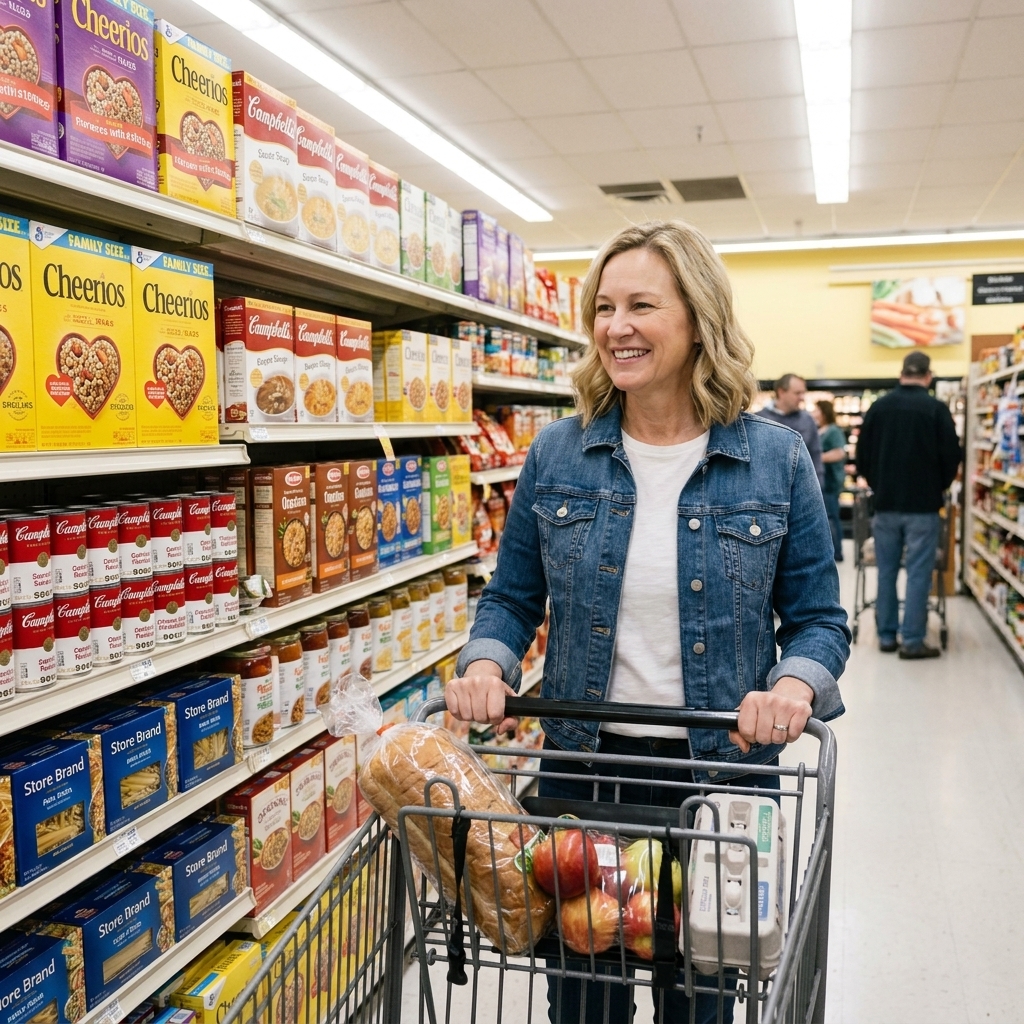
If your grocery total makes your stomach drop at checkout, you are not alone. Food prices have a way of quietly ballooning, especially when life is busy and you are doing your best just to get dinner on the table.
The good news: cutting your monthly grocery budget by 50% can be realistic for many households, especially if convenience foods, extra store trips, or food waste are currently doing a lot of the damage. It rarely happens from one magical trick. It happens when a handful of small, repeatable habits start working together: a tight meal plan, a short list, unit pricing, and a little bit of coupon strategy that fits real life.
Below is the game plan I use and teach in my budgeting and meal-planning workshops and community. It is practical, flexible, and designed to keep you well-fed, not miserable.
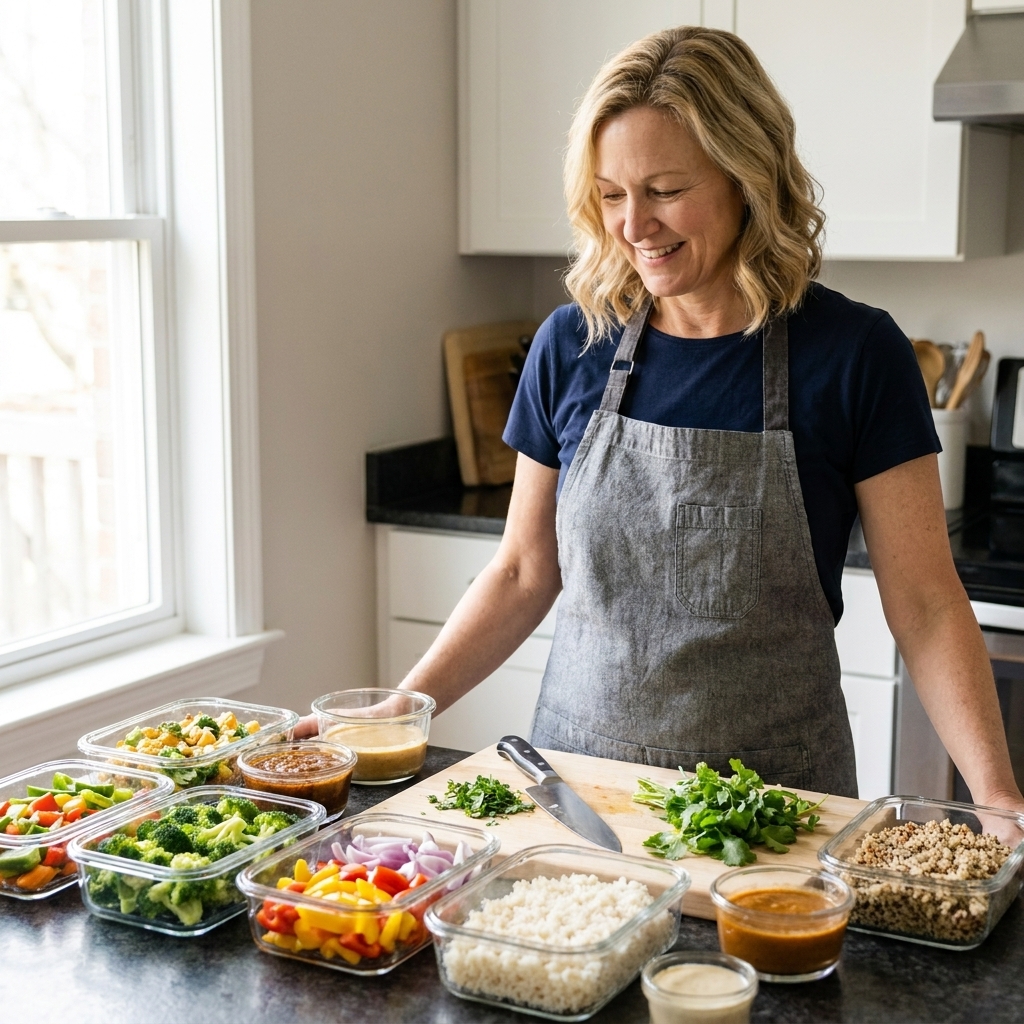
Start with your real number
Before we slash anything, we need a baseline. If you do not know what you are currently spending, it is easy to feel like you are failing when you are actually making progress.
Find your monthly grocery baseline in 10 minutes
- Look back at the last 30 days of transactions.
- Add up: grocery stores, big-box grocery runs, and grocery delivery fees.
- Decide whether to include household items like paper towels and toiletries. Either way is fine, just be consistent.
Now set your “50% target.” If you spend $800 now, your target is $400. If you spend $500, your target is $250.
No shame note: A high grocery bill does not mean you are bad with money. It usually means you are busy, stressed, feeding people you love, and leaning on convenience because you have to.
One quick reality check: Prices vary a lot by region, store, and season. Your results might not be perfectly linear week to week, especially during inflation spikes. What you want is a strong downward trend, not grocery perfection.
Meal plan to save money
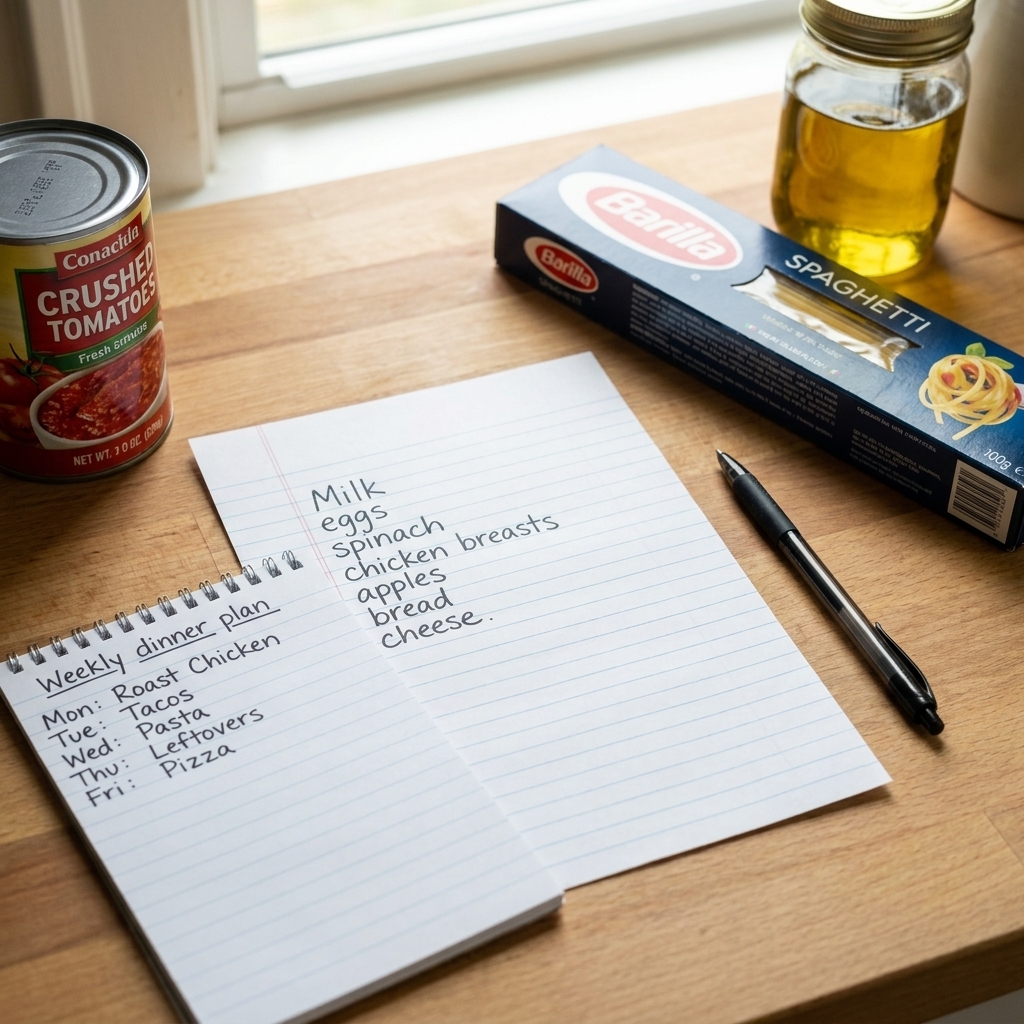
Meal planning is not about crafting a Pinterest-worthy menu. It is about making fewer decisions in the moment, so you buy less extra food and waste less of what you already have.
The pantry-first meal plan
Before you choose recipes, shop your kitchen.
- Pick 3 to 5 dinners for the week.
- Choose meals that reuse overlapping ingredients.
- Plan at least 1 “use-it-up” meal (stir-fry, soup, fried rice, omelets, sheet pan dinner).
Example of overlap that saves money: buy a big tub of plain Greek yogurt and use it for breakfast bowls, marinades, and a quick sauce for tacos.
Use a weekly rhythm
Novelty is often expensive. Routines are usually cheaper. Try assigning themes so planning is fast and ingredients repeat:
- Meatless Monday: lentil soup, veggie chili, egg sandwiches
- Taco Tuesday: beans plus a smaller amount of meat stretched with rice
- Sheet Pan Night: chicken thighs and whatever vegetables are on sale
- Breakfast for Dinner: oatmeal bar, frittata, pancakes
Make your list store-proof
A meal plan saves money only if your list survives contact with the snack aisle.
The list format that cuts impulse buys
- Meals: ingredients for your 3 to 5 dinners
- Breakfasts: 2 simple options for the week
- Lunches: leftovers plus one backup option
- Produce: only what you can realistically eat
- Staples: items you are truly out of
- Fun money: one planned treat, within a set amount
That last one is important. When you plan a treat on purpose, you are less likely to “accidentally” buy seven.
Master unit pricing
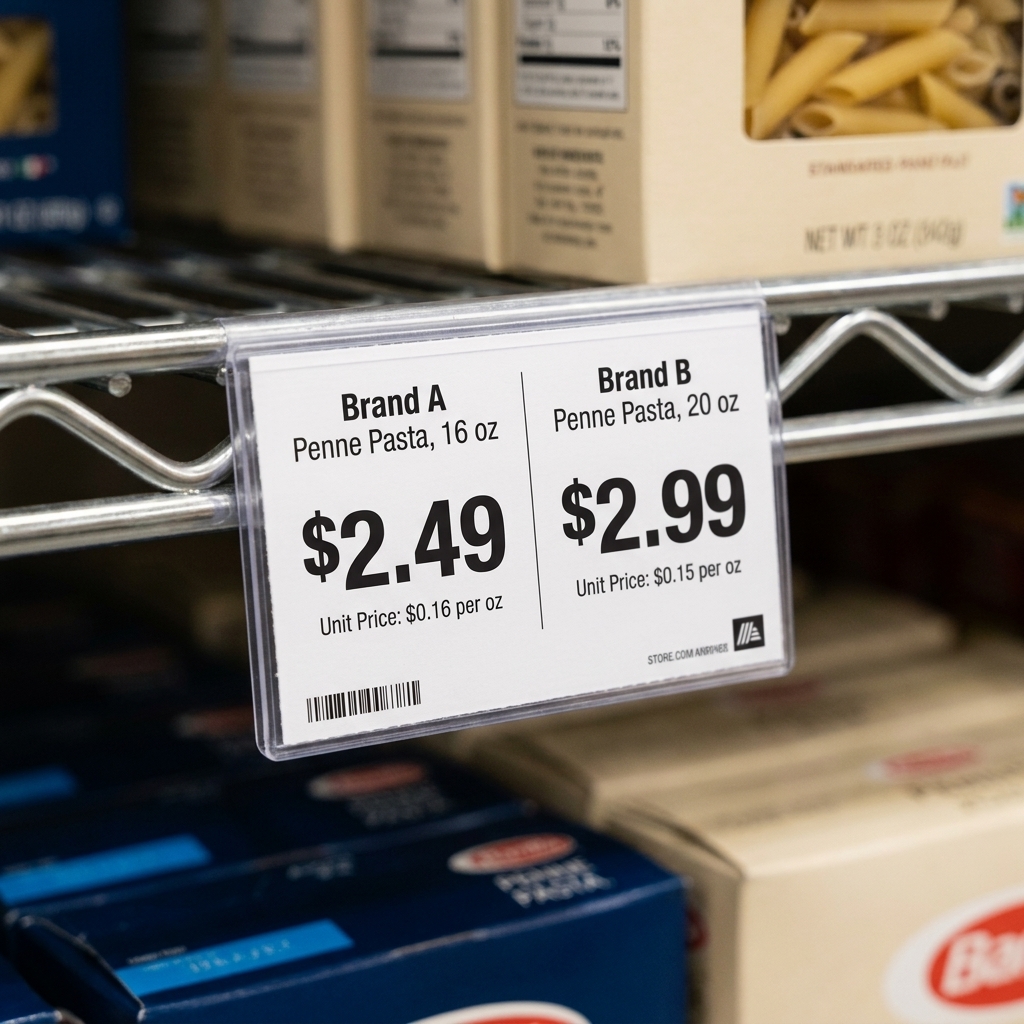
If I could hand every shopper one superpower, it would be unit pricing. Sales signs can be loud and misleading. Unit price is the quiet math that tells the truth.
What unit pricing is
Unit price tells you the cost per ounce, pound, count, or sheet. The lowest unit price is usually the best deal, but not always if it leads to waste.
How to use unit pricing
- Compare sizes: a “family size” bag is not automatically cheaper per ounce.
- Compare brands: store brand is often lowest, but not always on sale weeks.
- Compare forms: whole chicken vs parts, block cheese vs shredded, dried beans vs canned.
My personal rule: I will pay a slightly higher unit price for convenience only if it prevents takeout. Rotisserie chicken can be a budget hero if it replaces restaurant meals.
Shop sales with a plan
Sales are helpful only when they match your plan. Otherwise, “saving” $2 on something you would not have bought is just spending in disguise.
Two smart ways to use the weekly ad
- Method 1: Build meals around loss leaders. If chicken thighs, potatoes, and broccoli are on sale, that is your week.
- Method 2: Keep a price book for your top 15 items. Write down the best price you see for things you buy constantly, like oats, eggs, rice, ground turkey, frozen berries, and coffee. You will quickly learn what is truly a deal.
To keep it simple, use a note app on your phone. When you see a great price, jot it down (or snap a quick picture of the shelf tag and update your note later).
Use seasonal produce as your automatic discount
When produce is in season, it is usually cheaper and tastes better. If berries are pricey, switch to oranges or bananas. If salads feel expensive, grab cabbage, carrots, and onions and make a crunchy slaw.
Couponing for real life
Couponing can help, but only if it does not turn into a part-time job or tempt you to buy things you do not need.
My simple coupon rules
- Start with digital coupons. Clip them in your store app while drinking your coffee.
- Only coupon for things you already buy. This is the line between saving and spending.
- Stack when it is easy. Sale price plus store coupon plus manufacturer coupon (if allowed) can be excellent, especially on household basics.
- Skip most packaged “healthy” snacks. They are frequently expensive even after coupons.
If you want one place to focus: coupons and sales on coffee, cereal, yogurt, pasta sauce, canned tomatoes, frozen vegetables, and toiletries can free up money for fresh foods.
Lower meat costs
For many budgets, meat is the biggest lever. You do not have to go vegetarian to save a lot.
Stretch meat strategically
- Add lentils to ground beef in tacos or spaghetti sauce.
- Use half the meat and double the beans in chili.
- Turn one roast chicken into 3 meals: dinner, chicken salad, soup.
Choose cheaper proteins
- Chicken thighs instead of breasts
- Pork shoulder for slow cooker meals
- Canned tuna or salmon for quick lunches
- Eggs for breakfast, lunch, or dinner
Plant proteins can be fantastic, too: dried beans, lentils, peanut butter, tofu, and chickpeas are some of the best cost-per-serving foods you can buy.

Use your freezer
Food waste is a budget leak that does not get enough attention. A few freezer habits can save you as much or more than couponing, because they help you actually use what you buy.
Freezer habits that save money
- Freeze bread: toast slices as needed.
- Freeze leftovers in lunch portions: instant “no excuse” meals.
- Freeze chopped onions and peppers: save prep time and prevent spoilage.
- Freeze ripe bananas: smoothies and banana bread.
- Keep a freezer inventory note: a simple list taped inside a cabinet is enough.
If you have ever thrown away slimy spinach, this is your sign to buy frozen spinach instead. It has very similar nutrition, and you will waste a lot less.
Flavor on a budget
Flavor fatigue is one of the biggest reasons people drift back to takeout. A few low-cost sauces can keep “budget meals” feeling like real meals.
Low-cost sauces to keep on repeat
- Peanut sauce: peanut butter, soy sauce, a little sugar or honey, water, and hot sauce if you like.
- Quick tomato sauce: canned tomatoes plus garlic, onion, and Italian seasoning.
- Yogurt sauce: plain yogurt plus lemon or vinegar, salt, and whatever herbs or spices you have.
- Salsa plus lime: instant upgrade for rice bowls, tacos, eggs, and beans.
Healthy and cheap staples
Nutrition does not have to be pricey. The trick is to build meals around budget-friendly staples and use pricier items as accents.
My frugal grocery core
- Carbs: oats, rice, potatoes, pasta, tortillas
- Proteins: eggs, beans, lentils, canned fish, chicken thighs
- Produce: bananas, apples, carrots, cabbage, onions, whatever is in season
- Frozen: mixed vegetables, broccoli, berries, spinach
- Flavor builders: garlic, salsa, soy sauce, canned tomatoes, spices
- Fats: olive oil, peanut butter, nuts or seeds (when on sale)
This is the backbone of meals that feel filling and satisfying, without the premium price tag.
Diet needs and swaps
You can use all the same money-saving moves with dietary restrictions. You just need a few targeted swaps.
Gluten-free
GF specialty items add up fast. Build more meals around naturally gluten-free staples like rice, potatoes, oats labeled gluten-free if needed, corn tortillas, beans, eggs, and meat. Save GF bread, crackers, and snacks for the items you truly miss most.
Dairy-free
Use beans, eggs, and canned fish for protein, and lean on olive oil, avocado, and nut butters for fats. If dairy-free yogurt or cheese is expensive in your area, use it as an accent, not the base of every meal.
Vegetarian
This can be very budget-friendly if you center meals on beans, lentils, tofu, eggs, and frozen vegetables. Watch the “meatless convenience” category, since some plant-based substitutes can cost more than meat.
Checkout guardrails
Even with a great plan, the last 10 minutes in the store can undo your progress.
My personal guardrails
- Shop once per week if possible. More trips usually equals more impulse buys.
- Use a calculator as you shop. Your phone calculator works great.
- Do not shop hungry. If you are starving, grab a banana or yogurt first.
- Use curbside pickup if impulse buys are your downfall. The small fee can be worth it if it prevents extra snacks and “fun finds.”
A simple 30-day plan
If you want results quickly, you need a short sprint with clear steps. Here is a simple month-long approach.
Week 1: Track and reduce waste
- Write down everything you throw away.
- Plan 3 dinners using pantry and freezer items.
- Buy only produce you can finish.
Week 2: Use unit pricing and one-store shopping
- Compare unit prices for your top 10 staples.
- Choose one main store and stick to it.
- Try store brand on 3 items.
Week 3: Add strategic couponing
- Clip digital coupons for items already on your list.
- Stock up only if you have space and will use it within 4 to 6 weeks.
Week 4: Lock in your routine
- Repeat your best week of meals.
- Keep a running list of “cheap wins” meals your household will actually eat.
- Set a realistic ongoing grocery budget and automate it in your budget plan.
A sample week
If you want this to feel more concrete, here is a simple, budget-lean week that works for many households. Prices vary by region, so treat this as a blueprint, not a promise.
5 dinners built from overlapping ingredients
- Bean chili: beans, canned tomatoes, onion, spices (serve with rice)
- Sheet pan chicken: chicken thighs, potatoes, carrots (or whatever vegetables are on sale)
- Fried rice: eggs, frozen mixed vegetables, leftover rice, soy sauce
- Taco bowls: beans plus a smaller amount of meat, rice, salsa, cabbage slaw
- Use-it-up soup: leftover chicken or beans, frozen spinach, carrots, broth or bouillon
Notice the repeat players: rice, beans, onions, carrots, eggs, frozen vegetables, and one main protein. That overlap is where the savings come from.
Common sticking points
“My family refuses to eat budget meals.”
Start by keeping 70% of meals familiar. Swap ingredients quietly: mix lentils into meat, use frozen veggies, buy store-brand snacks, and serve fruit with dinner. Big changes all at once can backfire.
“I do not have time to cook.”
Choose meals that are fast by design: sheet pan dinners, slow cooker recipes, rotisserie chicken meals, bagged salad kits (when on sale), and breakfast-for-dinner. Convenience foods can be part of a frugal plan if they prevent takeout.
“I live far from multiple stores.”
That is okay. You can cut costs dramatically without store-hopping. Focus on unit pricing, store brands, reducing waste, and building meals around what is on sale at your one store.
“Coupons make me buy things I do not need.”
Then do not coupon broadly. Limit yourself to digital coupons for your top 15 items and ignore the rest. Consistency beats discounts if discounts pull you off track.
FAQ
Is cutting my grocery budget by 50% realistic?
For many households, yes, especially if you are currently buying lots of convenience foods, shopping multiple times per week, or throwing away unused produce. If you are already very frugal, you may still find savings, but 50% might be ambitious. Progress is still progress.
What is the fastest way to lower my grocery bill?
Meal plan 3 to 5 dinners, shop once with a strict list, and stop the midweek quick trip. Those extra trips are expensive.
How do I eat healthy on a tight grocery budget?
Build meals around oats, rice, potatoes, beans, eggs, frozen vegetables, and seasonal produce. Buy fewer packaged snacks and more ingredients that can become multiple meals.
The takeaway
You do not need gourmet recipes, extreme couponing, or a miserable life to cut your grocery bill. You need a plan that repeats, a list that is specific, and a few smart habits that protect you from impulse spending.
If you try just one thing this week, make it this: plan 3 dinners using what you already have, then buy only the missing ingredients. That one move alone has saved me hundreds of dollars in seasons when money was tight.
You have got this. And you deserve to eat well while you build some financial breathing room.