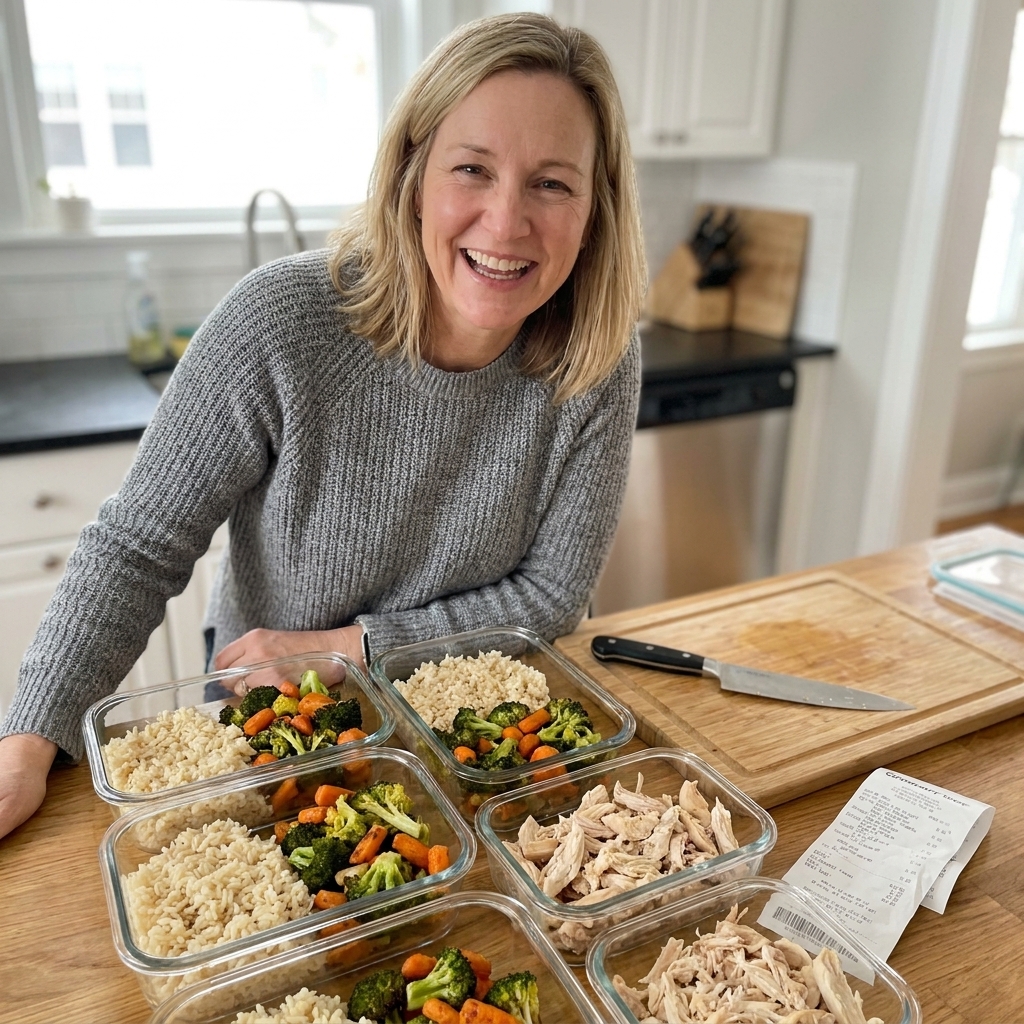
I remember the season of my life when dinner felt like a daily financial jump scare. I would open the fridge, see “random ingredients,” and end up swiping my card for takeout because I was tired and stressed. If that is you right now, I want you to know two things: you are not failing, and you can absolutely feed yourself well on a tight budget.
This is my complete blueprint for a week of dinners for around $50 using simple ingredients, smart leftovers, and a meal prep plan that does not take over your Sunday. Prices vary by region, store, and dietary needs, so consider $50 the target, not a moral scorecard. The method is what makes this work.
Serving note: This plan is designed for 1 to 2 adults (or one person plus leftovers). If you are feeding more people, you will want to scale up the staples (rice, potatoes, beans) and expect the budget to rise.
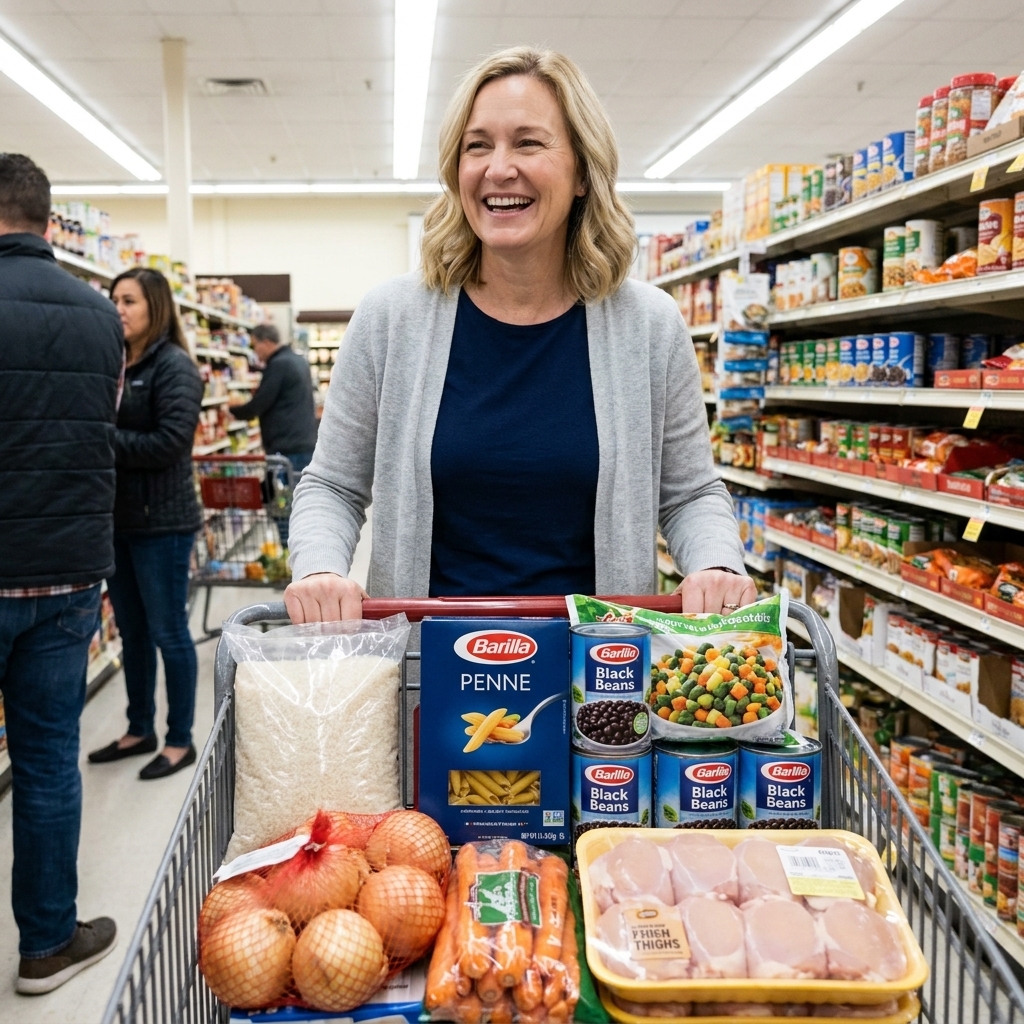
The $50 game plan
To keep dinner costs low without feeling like you are eating the same sad thing on repeat, we are going to:
- Build around inexpensive staples: rice, beans, pasta, oats, frozen vegetables, and chicken thighs.
- Use overlapping ingredients: one bag of rice shows up in multiple meals, one bag of frozen veg stretches across the week.
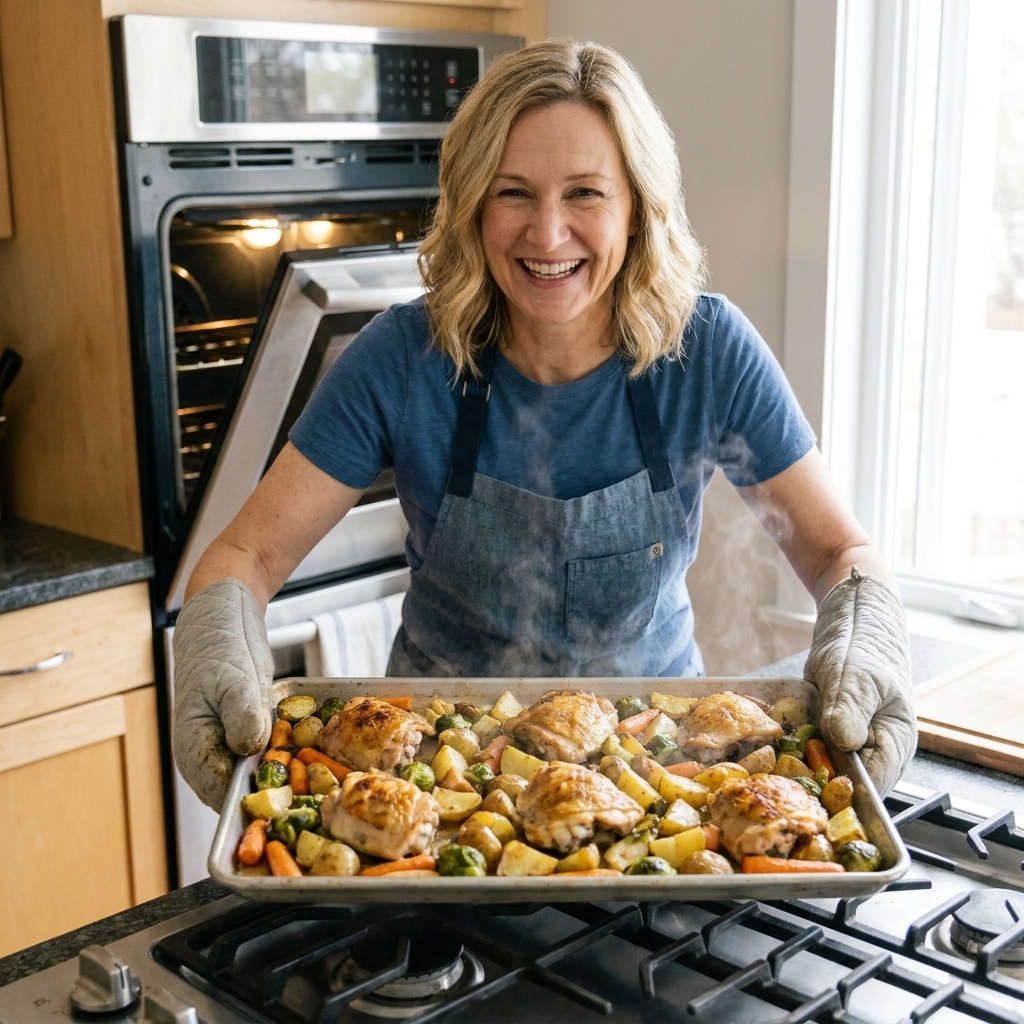
- Cook 2 “anchors” once: a pot of rice and a sheet pan of roasted chicken and vegetables become mix-and-match dinners.
- Plan for leftovers on purpose: leftovers are tomorrow’s fast dinner, not an accident that dies in the back of the fridge.
Target cost: about $50 total for the week (with pantry basics on hand). That typically shakes out to roughly $6 to $8 per dinner for the whole household in a 1 to 2 adult home.
Pantry note: If you need to buy oil, soy sauce, or spices from scratch, plan on spending $5 to $15 extra upfront, but those items will carry you for many weeks.
Budget grocery list
This list is intentionally simple. If you already have any of the pantry items (oil, spices, soy sauce, etc.), your total drops fast. Store brands are your best friend here.
Budget reality check: Protein prices are the most volatile. If chicken, eggs, or cheese are pricey where you live, use the swaps below to keep your total near the target.
Proteins
- Chicken thighs, about 2.5 to 3 lb (bone-in or boneless, whatever is cheaper)
- Eggs, 1 dozen
- Canned tuna, 2 cans
- Canned beans (black beans or pinto), 2 cans
Carbs and staples
- White or brown rice, 2 lb bag
- Pasta, 1 lb
- Old-fashioned oats, 18 oz (optional)
- Flour tortillas, 10-count (optional)
Choose-one tip: If you are trying to hold a hard line on price, pick either oats or tortillas. The plan works with both, but you do not need both.
Vegetables
- Frozen mixed vegetables, 2 bags (12 to 16 oz each)
- Onions, 2 to 3
- Garlic, 1 bulb
- Carrots, 1 lb
- Bell peppers, 2 (or swap for whatever is on sale)
- Potatoes, 3 to 5 lb bag (choose the size based on your household)
Flavor builders
- Marinara sauce, 1 jar
- Salsa, 1 jar
- Shredded cheese, 8 oz (optional but helpful for quesadillas and bowls)
Pantry seasonings (assumed)
- Cooking oil or butter
- Salt and pepper
- Chili powder or taco seasoning
- Italian seasoning
- Soy sauce (or any salty umami swap)
How this stays near $50: At discount grocers and many standard supermarkets, these are typically low-cost items. If your total is creeping up, the fastest fix is swapping half the chicken for another can of beans and one extra dozen eggs, or skipping cheese and choosing only oats or tortillas.
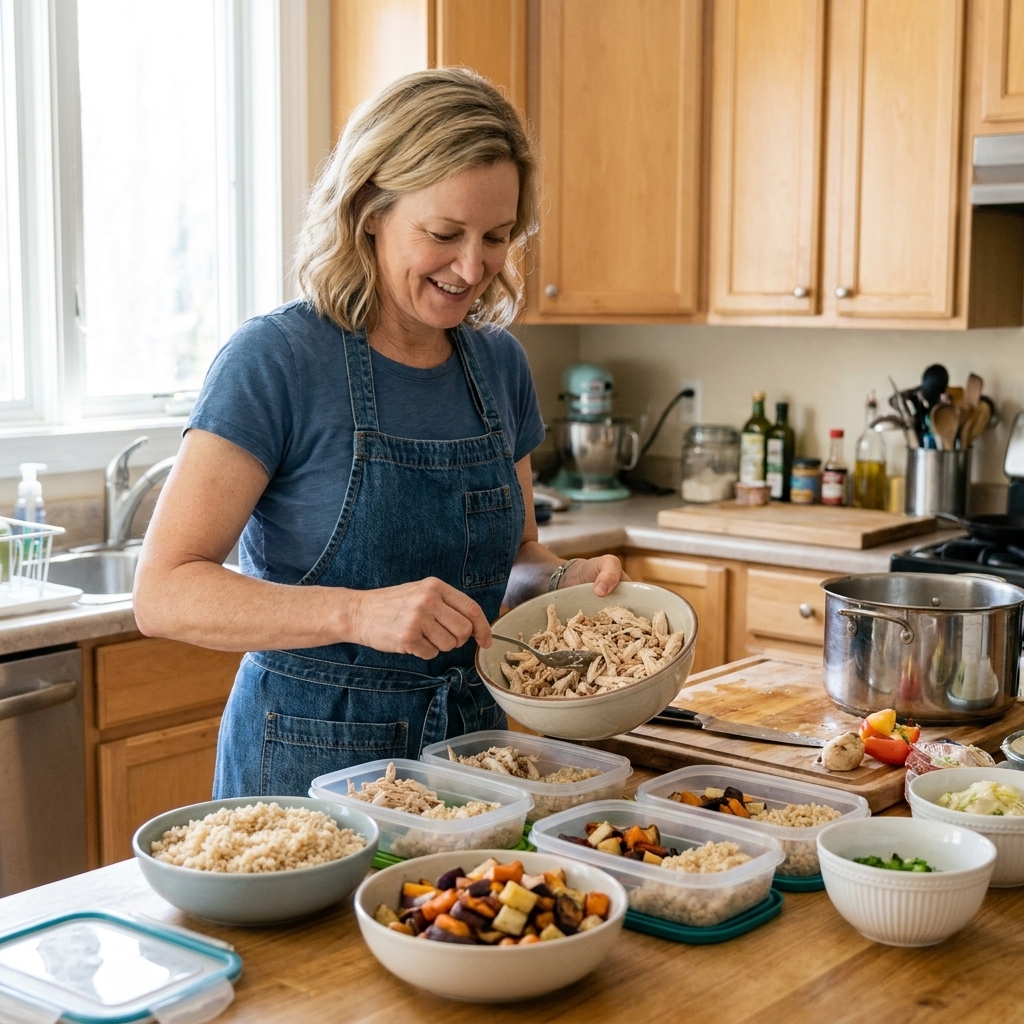
Prep day: 60 to 90 minutes
You do not need a Pinterest-worthy meal prep marathon. This is the highest impact, lowest effort plan I used when I was digging out of debt.
Step 1: Cook a big pot of rice
Cook 1.5 to 2 cups dry rice (you will get roughly 4 to 6 cups cooked, depending on the variety). Cool it quickly and store in the fridge. Rice becomes bowls, fried rice, and a quick side.
Step 2: Sheet pan chicken and vegetables
Toss chicken thighs with oil, salt, pepper, and either taco seasoning (for Tex-Mex flavors) or Italian seasoning (for pasta night). Roast at 425°F until cooked through (time depends on bone-in vs boneless). On a second sheet pan, roast chopped carrots, onions, and potatoes with oil and salt.
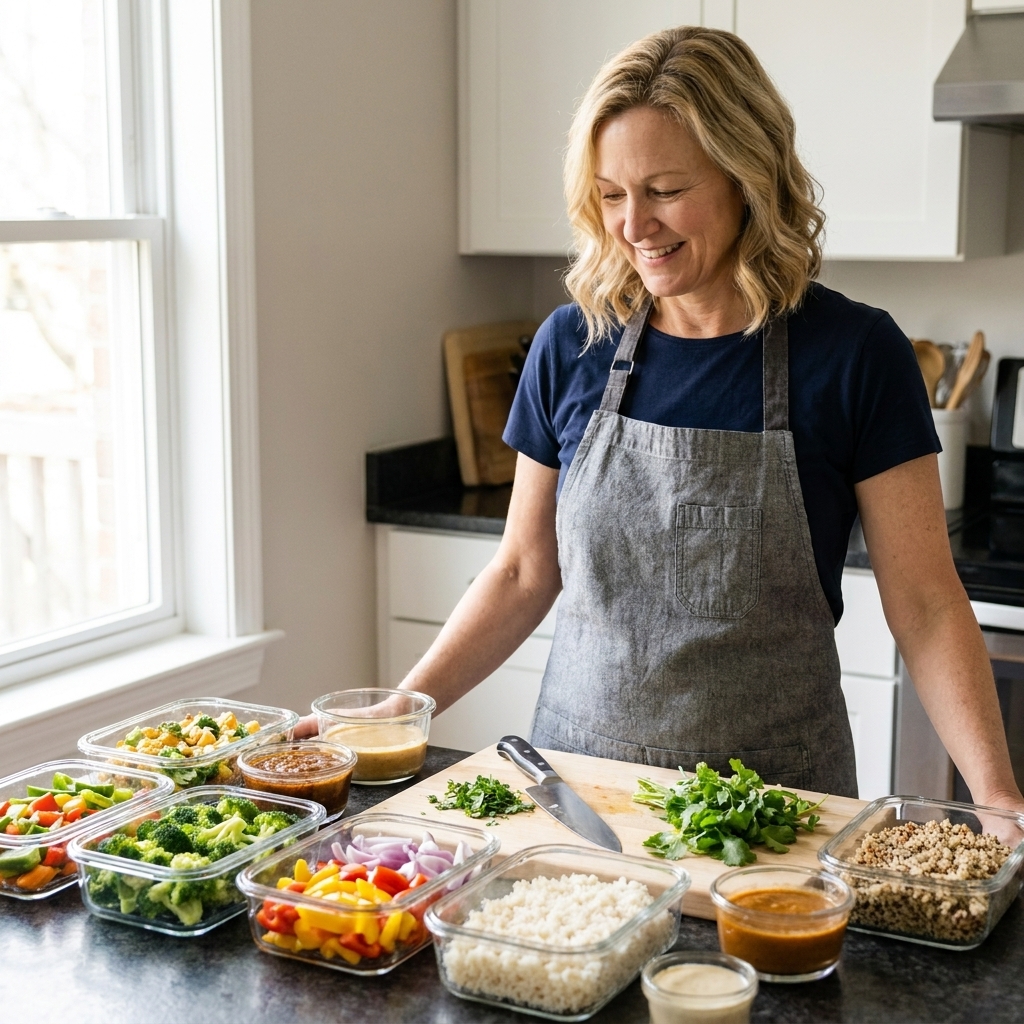
Step 3: Chop “shortcut” veggies
Dice one onion, slice one pepper, and mince a few cloves of garlic. Put them in a container so weeknight cooking is basically “dump and stir.”
Food safety quick note
For cooked rice, chicken, and vegetables, transfer hot food to shallow containers and refrigerate within 1 to 2 hours. Reheat leftovers until steaming hot. For poultry and mixed leftovers, aiming for 165°F (74°C) is a solid safety benchmark. Keep refrigerated cooked chicken and chicken dishes for no more than 3 to 4 days. Promptly freeze portions intended for later in the week rather than keeping them in the fridge until Night 7.
Your week of dinners
These are written as “dinner for a household” meals. If you are solo, expect extra leftovers and future-you will be thrilled. If you are feeding a family, you can stretch servings with more rice, potatoes, or a simple side like savory oats.
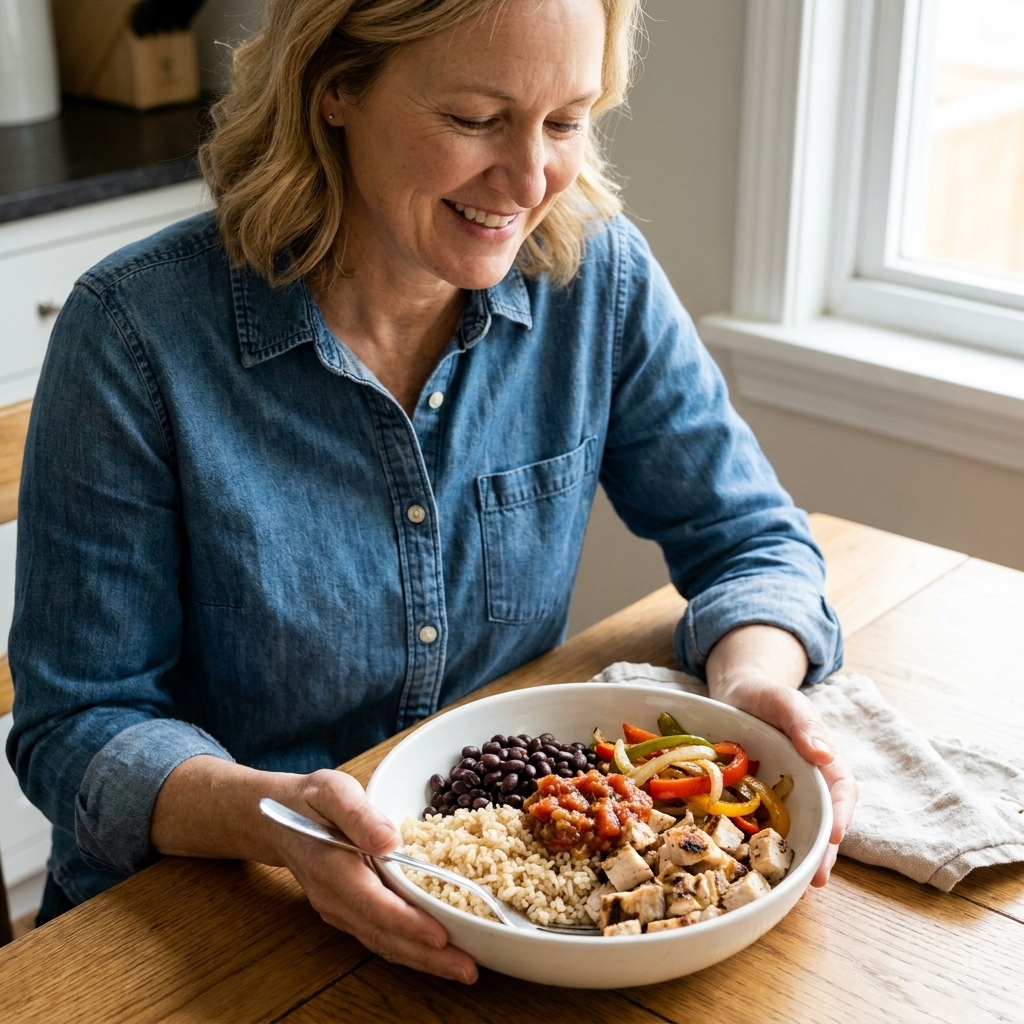
Night 1: Chicken rice bowls
What you do: Warm rice, top with chopped roasted chicken and roasted vegetables. Add salsa. If you have cheese, sprinkle a little on top.
Quick quantity cue: Plan on about 2 to 3 cups cooked rice total, plus a couple handfuls of chicken and vegetables.
Budget boost: Bulk up bowls with a spoonful of beans.
Night 2: Veggie fried rice with egg
What you do: In a skillet, sauté frozen mixed veggies. Add cold rice and a splash of soy sauce. Push everything to the side, scramble 3 eggs (use 2 if you are stretching, 4 if you want it extra filling), then mix together.
Make it feel fancy: Add a little garlic and onion from your pre-chopped container.
Night 3: Bean and cheese quesadillas
What you do: Mash 1 can beans with a few spoonfuls of salsa and a shake of taco seasoning. Spread on tortillas, add a bit of cheese, and toast in a pan until crispy. Serve with sautéed peppers and carrots (or frozen veg).
Leftover win: Any extra bean mash becomes tomorrow’s bowl topper.
No tortillas? Turn the same bean mixture into rice bowls instead.
Night 4: Pasta with marinara and chicken
What you do: Cook pasta. Warm marinara with garlic and chopped onions if you have them. Stir in chopped roasted chicken. Serve with a side of roasted potatoes or veggies.
Stretch tip: Add frozen mixed vegetables to the sauce to make it heartier without extra meat.
Night 5: Loaded potatoes with salsa beans
What you do: Bake or microwave potatoes until tender. Top with the remaining 1 can beans warmed with salsa and spices. Add cheese if you have it.
Why this works: Potatoes are one of the most budget-friendly “stick to your ribs” foods, and toppings make them feel like a real meal.
Night 6: Tuna veggie pasta
What you do: Cook a small pot of pasta. Sauté onions and garlic, then add tuna and frozen veggies. Stir in a little marinara (or oil and seasoning if you are out). Combine with pasta.
No shame note: Tuna is not everyone’s favorite, but it is a budget MVP when you need protein without another grocery run.
Night 7: Clean-out-the-fridge bowls
What you do: Build bowls or wraps from ingredients still within their safe storage time. For Night 7, use the chicken and other cooked components you froze earlier in the week, not prep-day leftovers kept in the fridge all week. Reheat the saved portions to 165°F (74°C), then add salsa, cheese, or other suitable toppings.
This is the secret: The plan is designed so the final night is satisfying, not sad.
Cost check
Your exact prices will vary, but here is how I keep the math realistic for a $50-ish goal:
- Chicken thighs: highly regional, often $8 to $15 for 2.5 to 3 lb, sometimes more
- Rice + pasta: often $4 to $7 total
- Oats or tortillas (choose one): often $2 to $5
- Frozen vegetables: often $4 to $7 total
- Onions, carrots, peppers, potatoes, garlic: often $10 to $18 total
- Eggs, tuna, beans: often $8 to $14 total
- Marinara + salsa: often $4 to $8 total
- Optional cheese: often $3 to $6
If your total is coming in high, these are the easiest swaps:
- Skip cheese (or buy the smallest bag)
- Swap bell peppers for whatever is cheapest (cabbage is usually a bargain)
- Replace tuna with an extra can of beans and use 1 to 2 extra eggs in the fried rice
- Buy chicken only if it is on sale, otherwise do two bean-based nights
Simple swap math: If chicken is $6 more than you expected, you can usually offset it by skipping cheese and choosing only oats or tortillas (not both), or by replacing one chicken-heavy dinner with beans and eggs.
Shop smarter
Start with your store’s loss leaders
Meat, potatoes, and pasta sauce go on deep discount regularly. Build the week around the best deal, not around a perfect fantasy menu.
Buy store brands for “invisible” ingredients
Rice, canned beans, pasta, frozen vegetables, and marinara are prime store-brand wins.
Use one “fun” ingredient strategically
If you have an extra $2 to $4, spend it where it changes the whole week: a bag of shredded cheese, a bottle of soy sauce, or a spice blend you love. Frugality is not punishment. It is leverage.
Storage and reheating tips
- Store components separately when you can (rice in one container, chicken in another). This keeps textures better and gives you options.
- Label with masking tape if your fridge turns into a mystery zone.
- Keep one “emergency” portion in the freezer. The night you do not want to cook will come, and you will feel like a genius.
Common questions
Is around $50 realistic for a family?
It can be, but household size matters. For a larger family, the method still works, but you may need a bigger budget or more bulk staples (more rice, more potatoes, more beans) and fewer meat-based servings.
What if I do not have time to prep?
Do a “mini prep” on a weeknight: cook the rice while you make dinner, and roast chicken and vegetables while you clean up. Even 20 minutes of prep makes the rest of the week easier.
Can I do this without chicken?
Absolutely. Swap chicken nights for eggs (omelets, fried rice, breakfast-for-dinner) and beans (burrito bowls, quesadillas, loaded potatoes). If lentils are cheap where you live, they are another great option.
How do I keep this from getting boring?
Change the sauce, not the whole plan. Salsa, soy sauce, marinara, and a basic spice blend can make the same ingredients feel totally different.
A gentle reminder
If you are trying to stretch $50, you are not “bad with money.” You are doing something brave: you are solving a problem with a plan. That is a skill, and it gets easier every week you practice.
If you want, tell me your rough grocery budget, household size, and any dietary needs, and I will help you tweak this exact plan to fit your numbers.