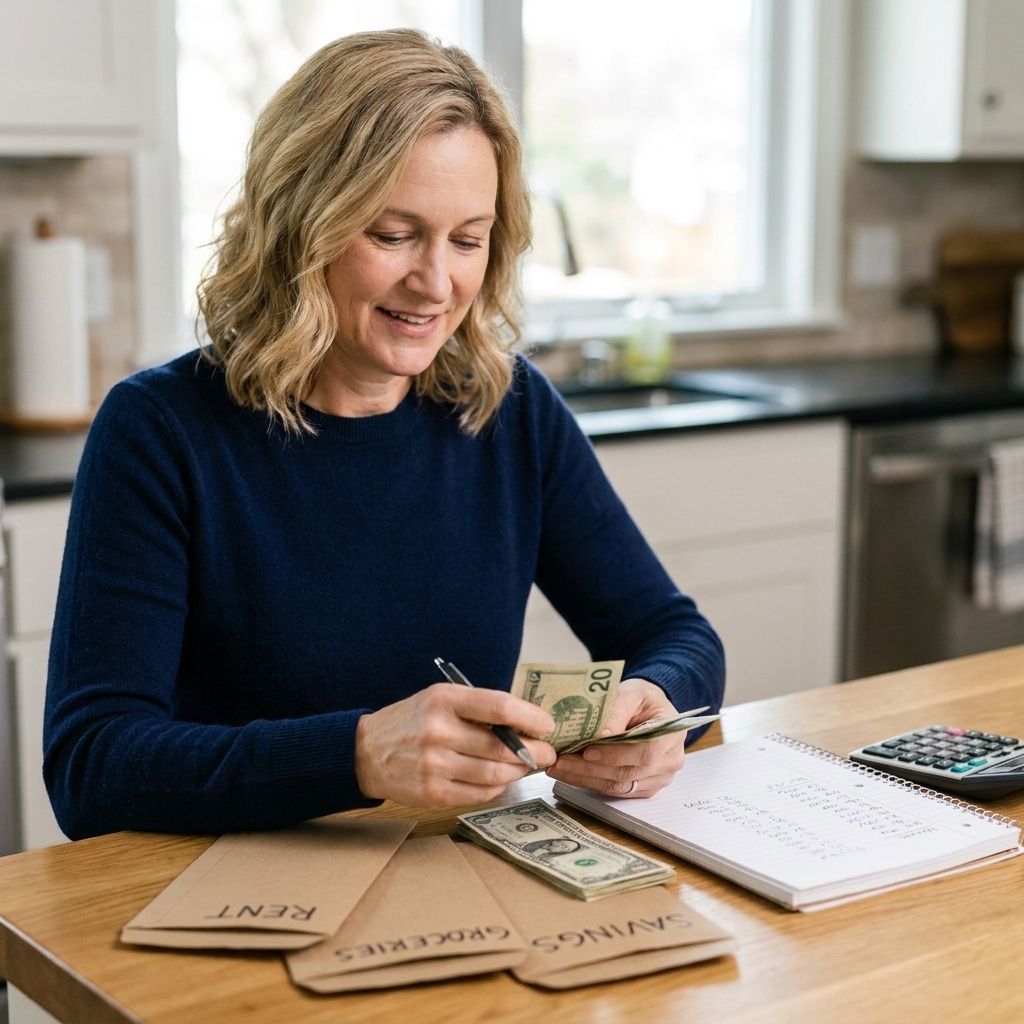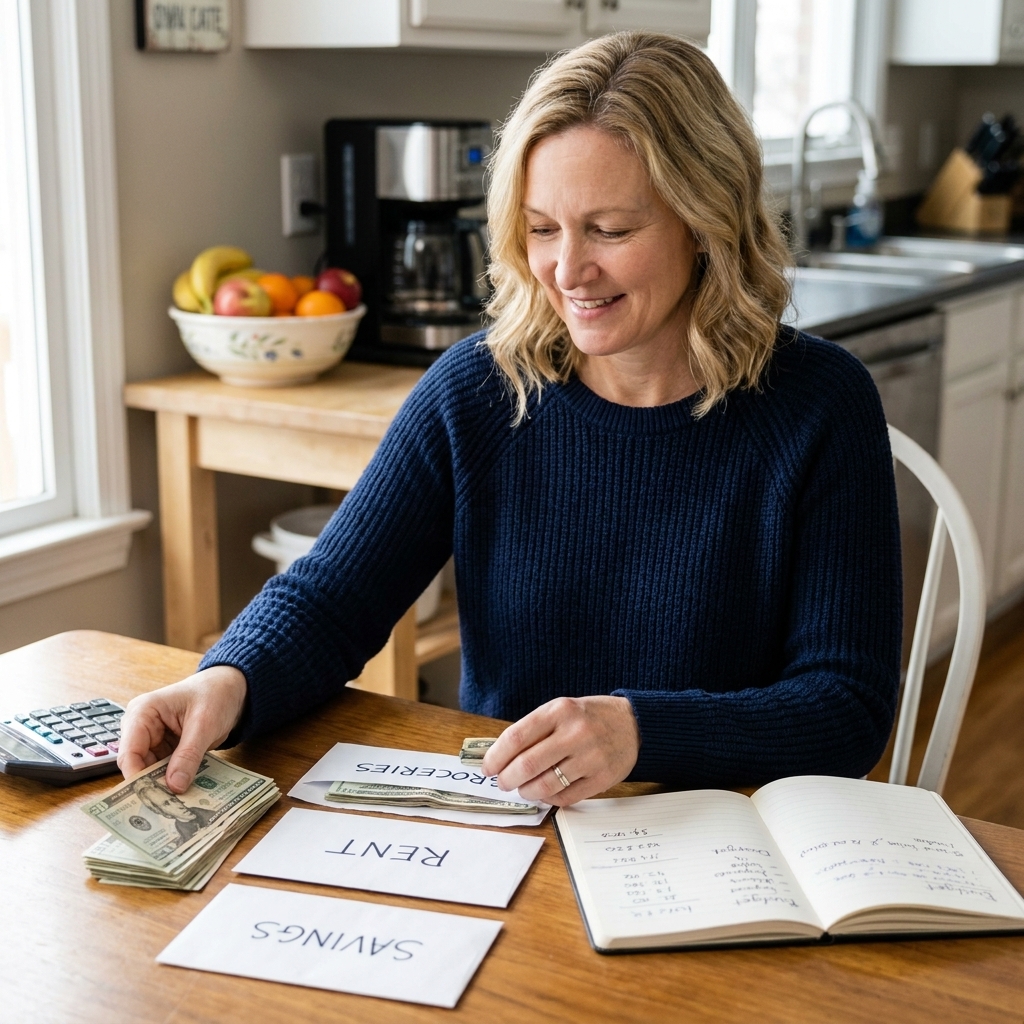
I used to be the person who could not walk into Target for toothpaste without leaving $73 poorer and vaguely confused about how it happened. If that is you, I get it. Cash stuffing helped me slow down my spending in a way that apps never did, because it made money feel real again.
Cash stuffing is basically the old-school cash envelope system with a fresh coat of paint. You assign cash to spending categories, physically separate it, and only spend from the envelope that matches your purchase. When the envelope is empty, you are done until your next reset.
Most people reset their envelopes per paycheck (weekly or biweekly), but you can also do it weekly or monthly. The best schedule is the one you will actually stick with.

What is cash stuffing?
Cash stuffing is a hands-on budgeting method where you:
- Set category limits (like groceries, gas, dining out)
- Withdraw cash for those categories
- Divide the cash into labeled envelopes (or a binder with zipper pouches)
- Spend only what is in each envelope
It works especially well for the categories where you tend to “oops” your way into overspending, like takeout, fun money, Amazon add-ons, and weekend errands.
Important: Cash stuffing is not meant for every expense. Many bills are better paid digitally. The magic is using cash for the problem areas, not forcing cash into parts of life where it is inconvenient or risky.
Why it helps with impulse spending
Impulse spending loves frictionless payments. Tap-to-pay and saved cards make it easy to spend without feeling it.
Cash stuffing adds gentle friction, and many people find that alone is enough to change habits:
- Cash is finite. You can see the category shrinking in real time.
- It creates a pause. You have to open an envelope, count bills, and decide.
- It reduces “category bleeding.” Groceries cannot quietly become “also a candle, also a throw pillow.”
When I was paying off debt, that pause was everything. It gave “future me” a fighting chance.
What you need to start
You do not need a fancy binder or aesthetic accessories. You can start today with what you have.
Absolute basics
- Envelopes (paper envelopes, a zip pouch, or a cash binder)
- A pen or marker to label categories
- A place to track totals (notebook, spreadsheet, or notes app)
- Your budget numbers for the pay period
Nice-to-haves
- Cash binder with zipper pouches
- Small wallet insert for the envelopes you carry
- A simple budgeting worksheet for your “cash stuffing session”
Step-by-step setup
Step 1: Choose your reset schedule
Most beginners do best budgeting per paycheck (every week or every two weeks). Shorter timeframes keep you from blowing the whole month’s “fun” money in the first weekend.
Step 2: Start with 5 to 8 categories
Too many categories get overwhelming fast. Choose the categories that actually cause overspending. A solid beginner list:
- Groceries
- Gas or transit
- Dining out
- Fun money
- Household (toiletries, cleaning supplies)
- Kids or pets (if applicable)
- Personal care (hair, skincare, etc.)
- Miscellaneous buffer
Pro tip: Do not make “miscellaneous” a black hole. Keep it small on purpose, like $20 to $50 per pay period, so it stays a safety net instead of a spending free-for-all.
Step 3: Set realistic amounts
If you have no idea where to start, look at the last 30 days of spending and use that as your baseline. Then set a goal that is a little tighter, not wildly unrealistic.
Example for a biweekly paycheck:
- Groceries: $180
- Gas: $60
- Dining out: $40
- Fun money: $30
- Household: $20
- Misc buffer: $20
That is $350 cash total. For some households, that is a comfortable amount to work with. For others, it is too much to keep at home or carry around. Use your real-life context here: your neighborhood, your household situation, your comfort level. You can also scale down and start with just one or two cash categories.
Step 4: Withdraw cash intentionally
Withdraw the total amount for your categories. If possible, request denominations that make dividing easier, like a mix of $20s, $10s, $5s, and $1s.
Quick ways to keep it cheaper and easier:
- Use your bank’s ATM network to avoid withdrawal fees.
- Withdraw less often by resetting per paycheck instead of making extra ATM trips.
- If it works for your budget, use grocery store cash back so you can combine errands.
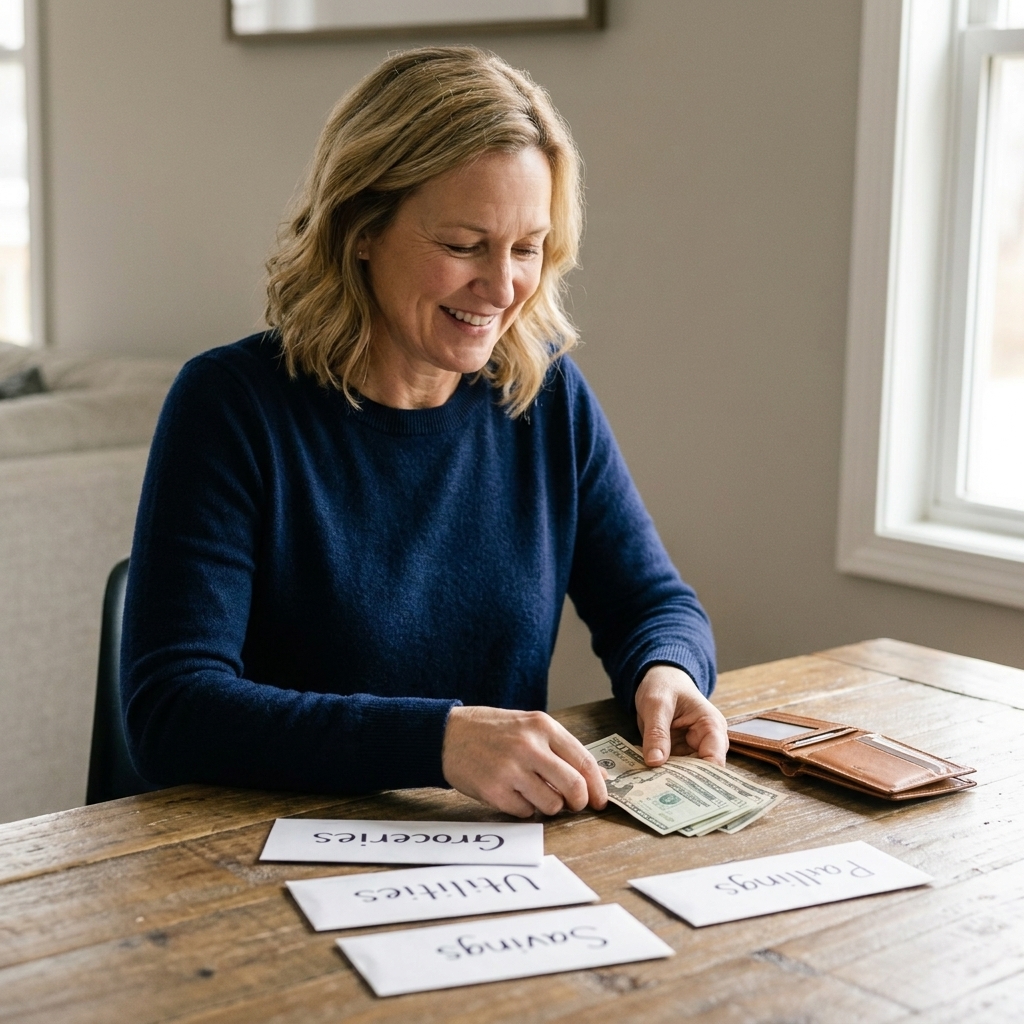
Step 5: Stuff envelopes and track starting balances
Label each envelope and add the cash. Write the starting amount on a simple tracker.
You can track in a notebook like:
- Groceries: Start $180
- Groceries: End $22
This is not about perfection. It is about awareness.
Bills and non-cash expenses
Cash stuffing is best for variable spending. For fixed bills, I recommend keeping them digital and automatic when possible.
Use digital for:
- Rent or mortgage
- Utilities
- Insurance
- Debt payments
- Subscriptions you are truly keeping
Use cash for:
- Groceries
- Dining out
- Personal spending
- Entertainment
- Overspending “danger zones”
If you want the best of both worlds, many people do a hybrid system: cash envelopes for variable categories and a digital budget for everything else.
Routines that stick
The method works because it is repeatable. Here is a simple routine you can borrow.
Weekly mini check-in (10 minutes)
- Count what is left in each envelope
- Decide if you need to adjust anything for the week ahead
- Write down one quick win (even “I did not overdraft” counts)
Payday stuffing session (20 to 30 minutes)
- Pay bills digitally first
- Withdraw your cash categories
- Stuff envelopes
- Set one specific goal for the pay period (like “no drive-thru coffee”)
How to reset at payday
At the end of the pay period, count what is left, then choose a plan before you restuff:
- Roll over leftovers in categories that need flexibility (often groceries or gas).
- Sweep leftovers into a goal envelope (debt payoff, sinking funds, savings).
- Start fresh by zeroing out and restuffing the same amount each paycheck if you want ultra-simple consistency.

Common mistakes
Making categories too strict
If your grocery budget is so tight you panic-buy ramen on day three, you are not building a sustainable habit. Tighten gradually.
Stuffing cash for expenses you pay online anyway
If you always order a bulk household item online, do not force that into cash. Keep cash for in-person and swipe-heavy spending.
Forgetting the “irregular regular” expenses
Things like birthdays, school fees, car registration, and holiday spending are predictable. They just do not happen monthly.
Solution: add a small sinking fund category that you contribute to each paycheck, either in cash or in a separate savings account.
Carrying too much cash
You do not need your whole binder on you. Consider carrying only the envelopes you plan to use that day (like gas and groceries) and leaving the rest at home in a secure place.
Getting tripped up by returns
Returns are a sneaky pain point with cash. Make it easy on yourself:
- Keep the receipt in the envelope until you are sure you are keeping the item.
- If you return something, put the refund cash right back into the same envelope.
- If a store refunds a purchase to a card, record it as a reversal of the original spending, not another expense. Check that the refund has posted and reconcile any cash you had set aside for that purchase. Keep the physical envelope balance equal to the cash actually in it; a credit-card refund reduces what you owe and does not put cash in the envelope.
If you mostly use cards
If you are thinking, “I love the idea, but I do not want to live entirely in cash,” you are not alone. Try one of these approaches:
Option 1: Cash for only two categories
Start with your two biggest impulse categories, like dining out and fun money. This is often enough to create a real shift.
Option 2: Cash for weekly spending, card for the big grocery run
If your main grocery trip is online or at a store that is just easier with a card, keep it digital and do cash for midweek extras and snacks.
Option 3: Cash rules, card backs it up
Use the envelope first. If you must use your card, write it down immediately and repay yourself from the envelope the same day. The goal is to keep the category limit honest.
Who it may not suit
Cash stuffing is helpful, but it is not one-size-fits-all. You may want a different approach, or a lighter hybrid version, if:
- You have safety concerns at home, or keeping cash could create conflict or risk.
- You are paid irregularly and need a more flexible plan than fixed envelopes each payday.
- Most of your spending happens online, making cash impractical.
- Getting to a bank or ATM is difficult due to mobility, time, transportation, or fees.
If any of that is you, you can still use the idea (category limits and a reset routine) without the literal cash.
Quick-start: First 7 days
- Day 1: Pick 5 categories and set your first limits
- Day 2: Withdraw cash and stuff your envelopes
- Days 3 to 6: Spend only from envelopes, track quick notes
- Day 7: Count leftovers and decide what to do next
When you count what is left at the end of the week, choose one:
- Roll it over to next week (great for groceries)
- Sweep it into a goal envelope (debt payoff, sinking funds, savings)
- Split it (half to savings, half to next week)
I love the “split it” option for beginners because it rewards progress without sabotaging your plan.
FAQ
Is cash stuffing safe?
It can be, with common-sense precautions. Do not carry your full cash supply everywhere. Keep cash at home in a secure place, and only bring what you need for the day or errand. If keeping cash at home feels uncomfortable or unsafe, use smaller cash amounts or a hybrid system.
What if I run out of money in an envelope?
You have three choices: stop spending in that category, move money from another envelope (and accept the tradeoff), or adjust next pay period because your original amount was unrealistic. The win is that you are making a conscious decision, not an accidental one.
Do I have to use a cash binder?
Nope. Regular envelopes work perfectly. I started with a stack of plain envelopes in a drawer and a spiral notebook, and it still changed my life.
Can cash stuffing help with debt payoff?
Yes, because it controls variable spending, which is usually where extra debt happens. Pair cash stuffing with an automatic debt payment each payday so your progress is consistent, as long as your cash flow supports it and you are not putting yourself at risk for overdrafts.
Before you start
If you are coming from a season of overspending, it is normal to feel a little emotional the first time you divide up cash. For me, cash stuffing was not just a budgeting trick. It was proof that I could keep promises to myself again.
Start small. Stay curious. And if you mess up, you are not “bad with money.” You are learning a skill, and skills get better with reps.