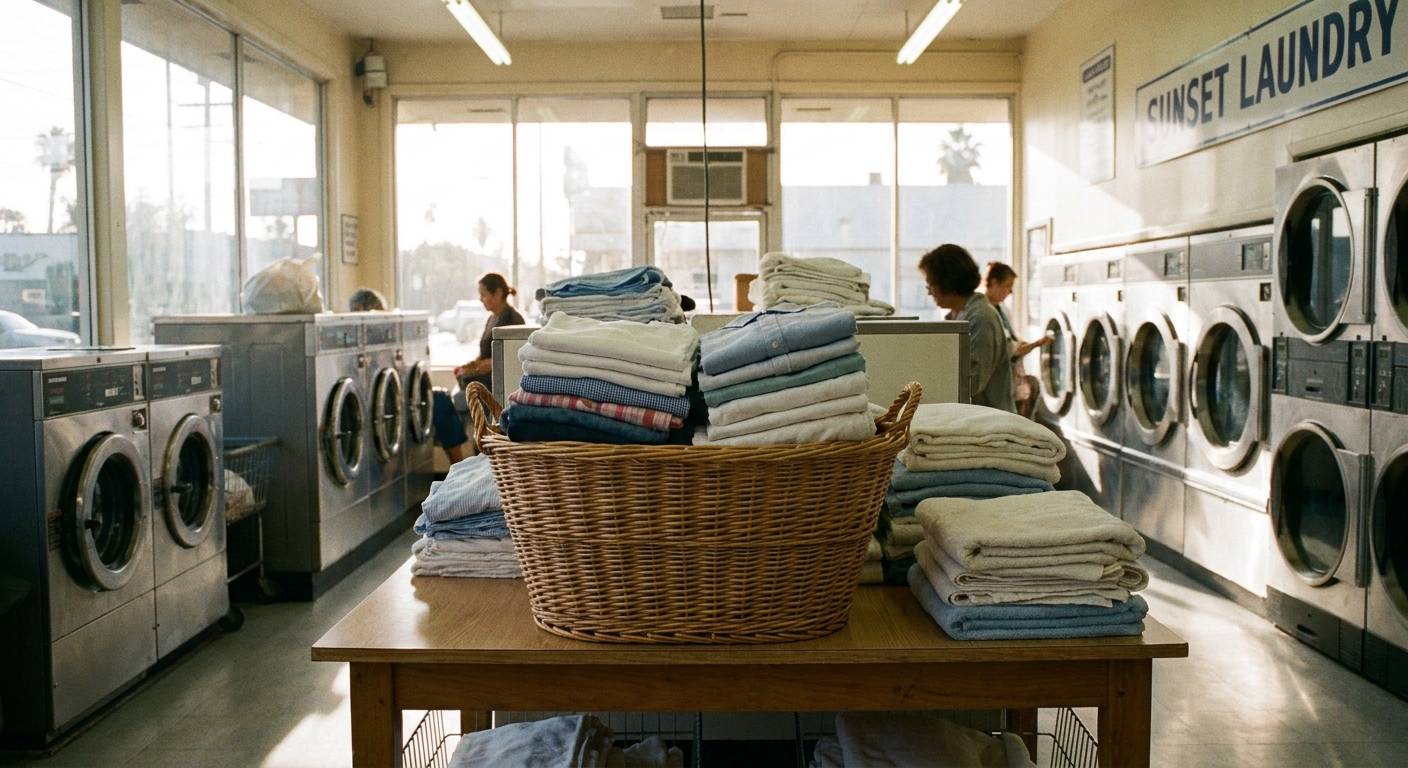
I used to treat laundromat day like a tax on being alive: show up, feed the machines, hope it was enough quarters, and leave $20 poorer with a vague sense I did something wrong.
What finally changed the game for me was price per load, but not the made-up “a load is whatever fits” version. The real version: washer-plus-dryer cost for the amount of laundry you actually brought, factoring in capacity, dry time, and the little fees that quietly sneak into your total.
What “price per load” should mean
At a laundromat, the sticker price on a washer is only half the story. Your true cost comes from:
- Washer price (per cycle)
- Dryer price (per minute, or per set number of minutes)
- How many loads you need based on machine capacity and safe filling
- How long your items take to dry (which changes with fabric, spin speed, and how full the dryer is)
- Extra costs like transportation, card reload fees, or ATM charges
- Add-ons like detergent, dryer sheets, bleach, and fabric softener (especially if you buy them on site)
So when I say “compare price per load,” I mean: What will it cost to wash and dry today’s laundry, start to finish, if I choose Machine A versus Machine B?
Step 1: Estimate your laundry amount
You do not need a scale to do this well. Here are three practical ways:
Option A: Count baskets
If you always bring the same hamper or basket, you already have a baseline. Example: “I brought 2 full baskets.”
Option B: Use a “standard load” anchor
A standard home washer load is often roughly one basket of mixed clothes. If you typically do 3 loads at home, your laundromat trip is roughly “3 standard loads.”
Option C: Pull bulky items first
Pull out bedding, towels, hoodies, and jeans. Bulky items are what blow up your cost because they eat capacity and take longer to dry.
My personal rule: if I have bedding or lots of towels, I plan the day like it is two categories: bulky and everything else.
Step 2: Compare capacity by usable fill
Most laundromat washers are labeled by size, but labels vary. Some show pounds, some show cubic feet, and some just say small, medium, large.
Whatever the label, your goal is the same: do not overload. Overloading can mean clothes do not agitate properly, detergent does not rinse well, and you end up paying for re-washes or extra dry time.
A simple way to avoid overloading
- Front-loaders: as a rule of thumb, aim for around 3/4 full, leaving space at the top so items can tumble.
- Top-loaders: as a rule of thumb, leave enough room at the top for clothes to move freely. If you have to mash things down, you are probably past the sweet spot.
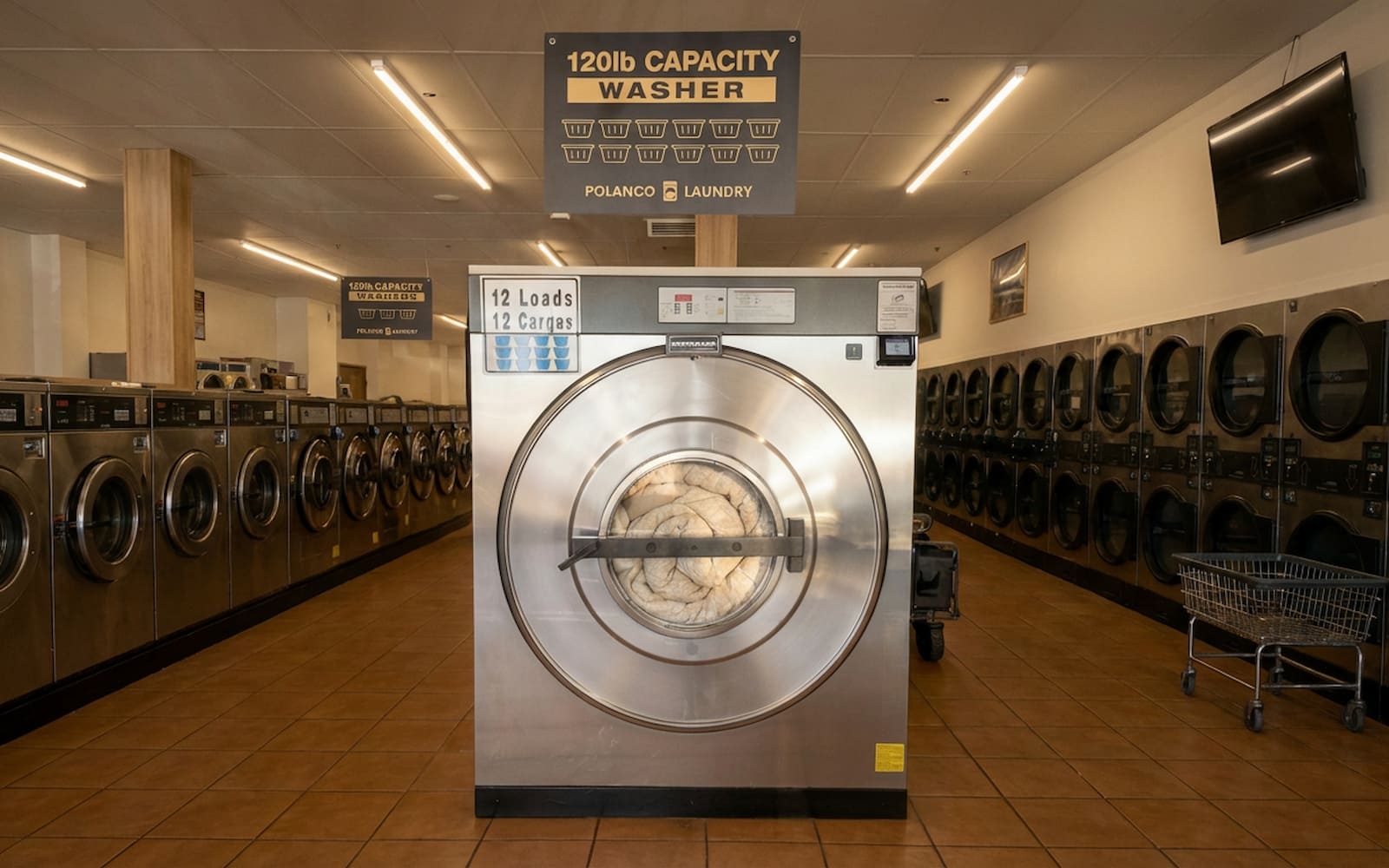
If you are comparing machine sizes, compare them based on how many “standard loads” they can wash without cramming. If a big washer is only “big” when it is stuffed, it is not really big for budgeting purposes.
Step 3: Compute washer-plus-dryer cost
Here is the math I actually use on laundry day. You can do it in your phone notes in under two minutes.
Washer cost formula
Washer total = (number of washer cycles) × (price per wash)
Dryer cost formula
Dryer total = ceil(dry minutes needed ÷ minutes per payment increment) × (price per increment)
Most dryers charge in increments. For example, you might see something like $0.25 for 6 minutes, or $0.50 for 10 minutes. The exact rate varies a lot by city, machine type, and even time of day in some places. Either way, round up to the next increment because that is what you will actually pay.
True trip cost formula
True cost = washer total + dryer total + add-ons + fees + transport
Add-ons can be close to zero if you bring your own detergent, or shockingly expensive if you end up buying single-use packets from the vending machine.
A worked comparison
Let’s say you brought:
- 2 standard loads of everyday clothes
- 1 bulky load (towels and one set of sheets)
Your laundromat has these choices:
Option A: Smaller washers
- Small washer: $3.00 per wash
- Dryer: $0.25 per 6 minutes
Assumption for this example:
- Each standard load uses 1 small washer cycle (so 2 cycles)
- The bulky load needs 1 small washer cycle (so 1 cycle)
- Total washer cycles = 3
- Drying time: everyday clothes dry in 36 minutes total, bulky items take 48 minutes total (thick towels and bedding hold water)
Option A washer total: 3 cycles × $3.00 = $9.00
Option A dryer total:
- Everyday: 36 minutes ÷ 6 = 6 increments → 6 × $0.25 = $1.50
- Bulky: 48 minutes ÷ 6 = 8 increments → 8 × $0.25 = $2.00
- Dryer total = $3.50
Option A trip total: $9.00 + $3.50 = $12.50 (before add-ons, fees, and transport)
Option B: One large washer for most items
- Large washer: $6.50 per wash
- Small washer: $3.00 per wash
- Dryer: $0.25 per 6 minutes
Assumption for this example:
- Large washer can handle both standard loads together without stuffing (so 1 cycle)
- Bulky items still get their own small washer (so 1 cycle)
- Total washer cycles = 2
- If the large washer extracts more water (higher spin speed), everyday clothes might dry in 30 minutes instead of 36
- Bulky drying stays 48 minutes (common with towels and sheets)
Option B washer total: (1 × $6.50) + (1 × $3.00) = $9.50
Option B dryer total:
- Everyday: 30 minutes ÷ 6 = 5 increments → 5 × $0.25 = $1.25
- Bulky: 48 minutes ÷ 6 = 8 increments → 8 × $0.25 = $2.00
- Dryer total = $3.25
Option B trip total: $9.50 + $3.25 = $12.75 (before add-ons, fees, and transport)
What this tells you: even though the large washer feels like it should be the money saver, in this specific scenario it costs slightly more. On a different day, with more standard loads and fewer bulky items, it might win. That is why the “price per load” mindset beats gut feelings every time.
Don’t forget overhead and fees
These are the two categories that used to wreck my “I only spent $X” math.
Transport costs to include
- Bus fare or rideshare
- Gas and parking
- The temptation cost of grabbing snacks or coffee while you wait
Even a quick convenience stop can change the economics of “cheaper” machines at a farther laundromat.
Payment system fees to watch for
- Card reload fees (some stores charge a small fee per reload or have minimums)
- ATM fees if you need cash unexpectedly
- Lost value when you load more than you need and leave money stranded on a laundry card
If you are comparing two laundromats, I like to compute a simple “overhead per trip”:
Overhead per trip = transport + fees
Then add it to whichever machine option you choose.

Sorting and drying that saves money
I know sorting sounds like extra work, but it is one of the easiest ways to avoid paying for extra dryer cycles. The key is sorting by drying speed, not just color.
A simple care-label-friendly approach
- Fast-dry: athletic wear that is labeled tumble dry low, thin cotton tees, lightweight synthetics
- Slow-dry: towels, denim, hoodies, sweatpants, heavy cotton
- Line-dry or air-dry items: anything labeled line dry, lay flat to dry, or do not tumble dry
Mixing fast-dry with slow-dry is how you end up paying to over-dry the easy stuff while the thick stuff is still damp.
Dryer tips (no perfection required)
- Do not pack the dryer full. Items need room to tumble or they stay wet and you pay for more time.
- Use the highest heat your care labels allow. High heat can save minutes, but it can also shrink or damage certain fabrics, so follow the label.
- Shake out bulky items before drying. It helps towels and sheets dry faster because air can circulate.
- Pull fast-dry items out early. When my tees are done, they come out. I keep drying towels.
Small machine extras to watch for
Some laundromats quietly turn “simple wash and dry” into a menu of upgrades. None of these are inherently bad, but they can change your true cost fast:
- Hot water surcharges at some locations
- Premium cycles like “super wash,” extra rinse, or sanitizer options
- Different dryer tiers where larger or newer dryers cost more per increment
If you are doing the math, treat upgrades like you would a coffee add-on: totally fine, but not invisible.
Quick checklist
- 1) Count your loads: standard and bulky
- 2) Identify washer options: price and realistic capacity without stuffing
- 3) Estimate dryer time: fast-dry vs slow-dry
- 4) Add add-ons and overhead: detergent, card reload, ATM, bus fare, parking
- 5) Choose the lowest true total: washer plus dryer plus everything else
Common questions
Is the biggest washer always the cheapest per pound?
Not always. Big washers can be a great deal when you can fill them appropriately with similar items. If you toss in a little of everything, you can create drying problems that erase the washer savings.
Should I always separate towels and sheets?
If you can, yes. They are both bulky but they dry differently. Sheets can ball up and towels hold water, so separating them often cuts total dry time. Not always, but often enough that I try.
What if my laundromat does not list machine capacity?
Use what you can observe: drum size, “small vs large” labeling, and whether items have room to tumble. If you consistently open the door to a tight, packed mass of fabric, that is a sign you are paying for poor agitation and extra drying.
How do I avoid wasting money on leftover card balances?
When possible, reload in smaller amounts that match your typical trip total. If your laundromat allows it, track your usual spend for two or three visits, then reload close to that number instead of rounding way up.
The frugal takeaway
Frugal laundry is not about suffering through cold water and crusty towels. It is about being intentional enough to stop donating money to guesswork.
Next time you go, pick two machine setups and do the math once. After that, you will have a baseline for your usual load size, and the “cheapest” choice will start to feel obvious.
If you want an easy first step, start with this: separate bulky items and time your dryer once. Knowing your real dry time is one of the quickest ways to cut surprises.