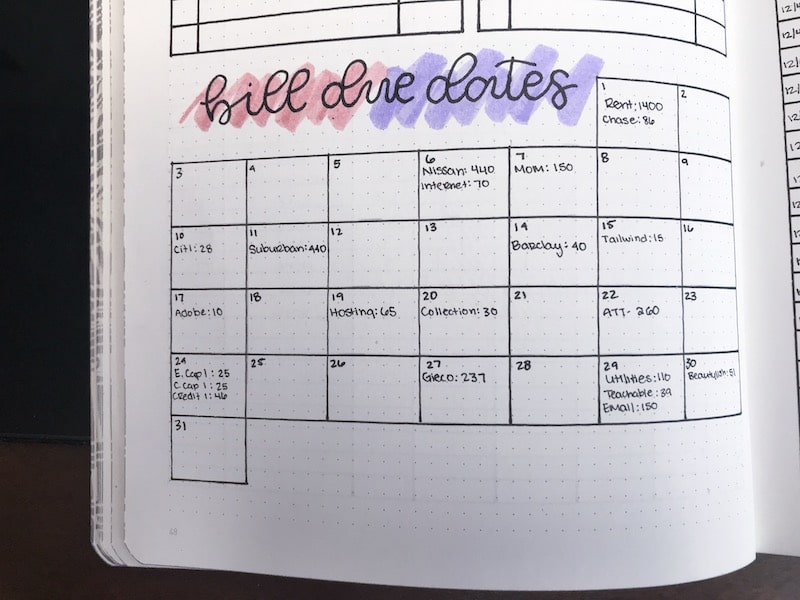
A refundable rental deposit is one of those sneaky money moments that can make a solid budget feel “off.” You hand over a big chunk of cash, your account balance drops, and then months later (hopefully) the money comes back. If you do not have a plan, it is easy to mentally count that deposit twice: once when you pay it, and again when you start daydreaming about what you will do with it when it returns.
I have done that kind of wishful math before. It feels harmless until you realize your budget is depending on money you cannot touch right now.
Let’s set this up the frugal, calm, zero drama way: you will track the cash leaving your account and the expected return separately, build in a buffer for delays or deductions, and make sure the same dollars never fund two commitments.
Why it is different
An expense is money that is gone for good. A refundable deposit is more like temporarily unavailable cash.
But here is the catch: even if you get it back later, it still affects your real life today because:
- Your cash flow changes immediately. Your checking balance drops, and your ability to pay bills this month drops with it.
- The timing is uncertain. Deadlines vary by state and city, and they can depend on things like whether you provided a forwarding address. Even with a legal deadline, refunds can still be delayed.
- The amount is uncertain. Allowable deductions vary by local rules and your lease. Unpaid rent or utilities and damage beyond normal wear and tear are common reasons a refund is reduced. Cleaning charges may be allowed in some places, limited in others, and often depend on whether it is restoring the unit to the move-in condition.
So your budget needs two truths at once: the money left your account (real cash outflow), and you may get some or all of it back later (expected return, not guaranteed).
Budget it as cash on hold
When I budget a deposit, I use three moving parts:
- Deposit Payment (outflow): the day the money leaves your account.
- Deposit Refund Tracker (expected return): a tracking line so you remember it is supposed to come back.
- Refund Plan (future job): a decision for what you will do with the money only after it actually returns.
This keeps you from accidentally using the same money twice.
Zero-based setup
1) Budget the payment in the month you pay it
The deposit leaving your account needs a category assignment like anything else, because it affects whether you can pay rent, groceries, and gas.
Common category names:
- “Move-in Costs”
- “Rental Deposit”
- “Apartment Setup”
If your deposit is $1,200 and you pay it in May, May needs a $1,200 plan. No fuzzy math, no “I’ll cover it somehow.”
2) Track the expected refund (but do not count it as income)
This can be as simple as a note in your budget app, a line in a spreadsheet, or a reminder in your calendar.
- Amount expected: $1,200
- Likely window: based on your lease and local law (this varies widely, but many areas fall somewhere around 14 to 60 days)
- Where it should be sent: your forwarding address or the method your landlord requires
The key rule: do not add this expected refund to a future month’s income until the money is actually back.
3) Decide what the refund will do later
This sounds small, but it is a game changer for “oops, it disappeared” moments.
Pick a default job for the refund before it hits. Examples:
- Rebuild your emergency fund
- Pay off credit card debt
- Start the next deposit fund (if you move often)
- Cover moving costs you put on a card
When the refund arrives, you will already know where it goes.
Plan for delays or deductions
I am a hopeful person, but I am also a “plan for the boring worst case” person. Here are three practical ways to keep your budget steady even if the refund is delayed or reduced.
Option A: Assume you will not get 100% back
My favorite low-stress approach is to assume you will not get the full amount. Even if your place is pristine, stuff happens. Mail gets delayed. Processing takes time. A small disputed charge appears.
Example: If the deposit is $1,200, mentally treat it like you might get $900. If you get the full $1,200 back later, it feels like a bonus.
Option B: Build a small buffer
If you want to be more methodical, set aside a small buffer (like $100 to $300 depending on your situation) in a category called “Deposit Deductions.”
If you get the full deposit back, roll that buffer into savings. If you do get charged, you will not need to scramble.
Option C: Use a realistic “back in hand” date
Write down a realistic “available again” date, not the earliest possible date. If your local rules say a deposit must be returned within a certain number of days, consider planning for a little extra time so you are not counting on a check that is still in someone’s inbox.

Avoid double-counting
The most common budgeting mistake with refundable deposits is this:
- You pay the deposit.
- You keep living as if that cash is still “basically yours.”
- You mentally earmark the future refund for something else.
That is how one deposit ends up funding two promises: today’s bills and tomorrow’s goals.
Here is the rule I use: Money is not available until it is in the account I can pay from. Not “expected,” not “pretty sure,” not “they have to give it back.” Available.
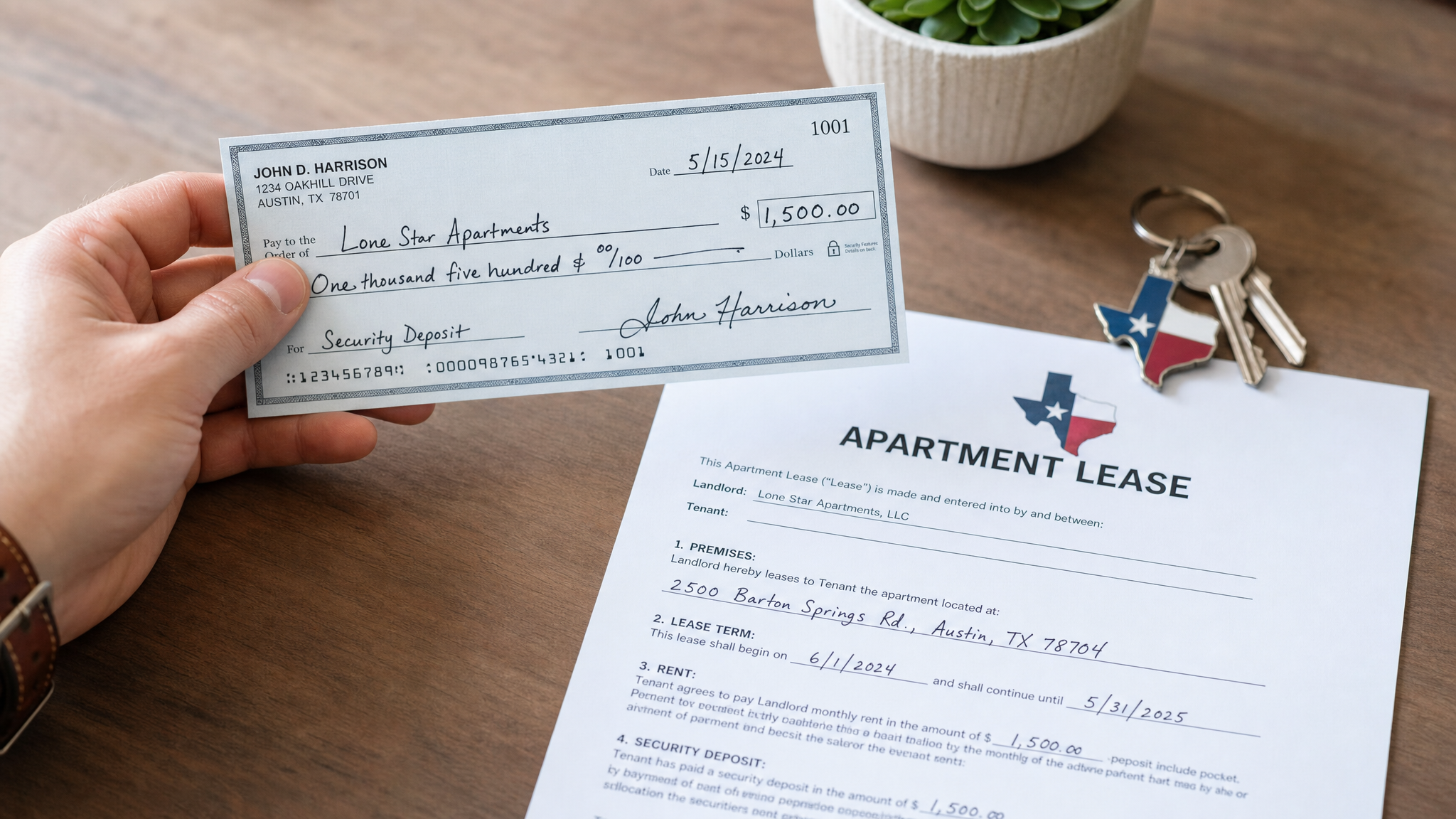
$1,500 example
Let’s say you are moving into a new apartment and you owe:
- First month’s rent: $1,600
- Refundable security deposit: $1,500
- Application and admin fees (not refundable): $200
Here is how I would budget it:
- Rent: $1,600 (expense)
- Rental Deposit: $1,500 (cash outflow, tracked as “on hold”)
- Move-in Fees: $200 (expense)
Then I would add a tracker note: “Security deposit expected back: up to $1,500 after move-out, may be reduced. Return timeline depends on lease and local law.”
When you eventually move out and receive a refund:
- If you receive $1,500, you budget that $1,500 as new money in the month it arrives.
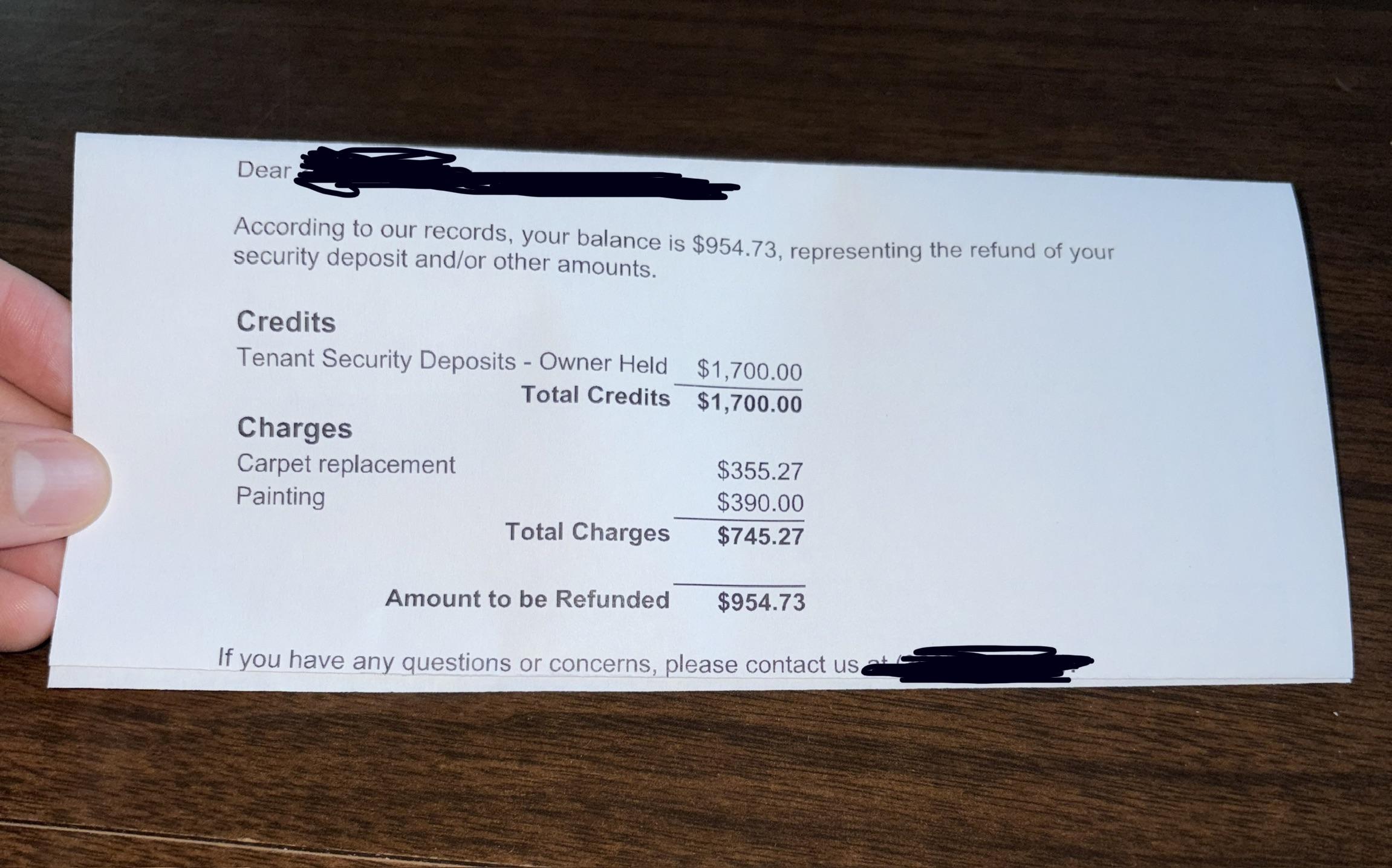
- If you receive $1,200, you budget $1,200 and close out the tracker (and you are grateful you did not pre-spend the missing $300).
Protect your refund
If you want the refund to come back as close to “full and fast” as possible, a little admin work goes a long way.
- Document move-in condition. Take date-stamped photos and video when you get the keys, and save them somewhere you can find later.
- Do a pre-move-out walkthrough. If your landlord offers it (or your local rules encourage it), it can surface fixable items before you are out of time.
- Keep receipts. Especially for professional cleaning, carpet cleaning (if required), and repairs you paid for.
- Provide your forwarding address in writing. Some landlords can legally delay processing if they do not know where to send the refund or itemized statement.
- Know the difference between wear and tear and damage. Normal wear and tear is usually not chargeable, but dents, broken fixtures, missing items, and unauthorized alterations often are. Local rules and your lease matter.
- Check local rules for interest or escrow. In some places deposits must be held in certain ways or may earn interest. It is not universal, but it is worth a quick look for your city and state.
Roommates and shared deposits
If you have roommates, decide upfront who is paying what and how the refund will be split. Even a simple written agreement helps, especially if one person fronted the full deposit or people move out at different times.
Where to store deposit savings
Before you pay the deposit, it helps to keep the money separate so you do not accidentally spend it on everyday life.
- High-yield savings account: Great if your move-in date is more than a few weeks away.
- Separate savings sub-account or bucket: Ideal for keeping it mentally and visually distinct.
- Checking (only if you must): If you keep it in checking, at least label it in your budget so it is clearly spoken for.
My personal rule is: if I would be heartbroken to accidentally spend it, it does not belong in my “swipeable” account.
When the refund hits
When the refund arrives, treat it like any other inflow event:
- Confirm the amount. Compare it to what you expected.
- Read the itemized statement. If deductions look wrong, follow up quickly and keep everything in writing.
- Give the dollars a job. Drop it into your emergency fund, debt payoff, or next goal.
Deposit refunds can feel like “found money,” which makes them easy to blow. If you assign the job immediately, you get to keep that win.
Quick FAQ
Should I categorize a refundable deposit as an expense?
In a practical month-to-month budget, you still need a category for the payment because cash leaves your account. But in your tracking notes, treat it as cash on hold, not as “gone forever.”
Is it okay to plan to use the refund for next month’s bills?
Only after the money arrives. If you need that refund to pay bills, build a backup plan now (extra buffer, temporary side income, or reduced spending) so a delay does not create a crisis.
What if I paid a deposit on a credit card?
Often the refund goes back to the original payment method, which can show up as a credit on the card and automatically reduce your balance. If you receive the refund as cash or a check instead, my default move is to apply it to the card balance first unless you have a more urgent need.
What about refundable utility deposits?
Same strategy. Budget the payment in the month it leaves, track the expected return separately, and do not count it as spendable until it is actually back.
The calm takeaway
A refundable deposit is not “extra” and it is not “gone.” It is simply your money, temporarily unavailable. Budget the outflow honestly, track the expected return separately, and make a plan that assumes delays or deductions.
That way, you are never relying on future-you to magically make the math work. You are making it work now, with the cash you really have. That is the kind of frugal confidence that feels like exhaling.